CNC Machining

CNC Machining (Computer Numerical Control Machining) is a manufacturing process where computers control machine tools to precisely cut, shape, or remove material from a workpiece. It is one of the most widely used methods for producing high-precision metal and plastic parts across industries such as aerospace, automotive, medical devices, electronics, robotics, and more.


Simple Definition

CNC machining uses computer programs (G-code) to tell machines exactly how to move, how fast to cut, and what shape to produce. Because of this, CNC machines can produce complex geometries with extreme accuracy and repeatability.


How CNC Machining Works

  1. Design the part
    A 3D model is created using CAD software.

  2. Generate toolpaths
    CAM software converts the design into cutting instructions (G-code).

  3. Machine executes the code
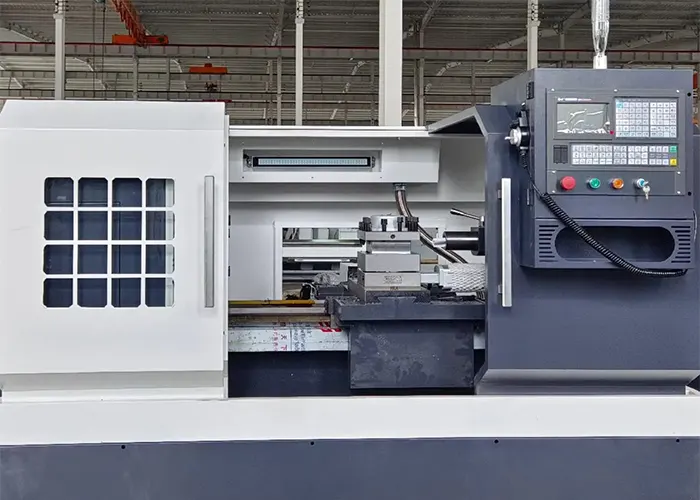
    CNC machines—like milling machines, lathes, routers, EDM machines—follow the code to remove material and create the final part.


Key Advantages

  • High precision & tight tolerances (±0.001 in / ±0.025 mm or better)

  • Excellent repeatability for mass or batch production

  • Works with many materials (aluminum, steel, titanium, plastics, copper, etc.)

  • Ability to create complex shapes

  • Fast turnaround for prototypes & production

  • Stable quality and minimal human error


Common CNC Machining Processes

  • CNC Milling – rotating cutting tools remove material in multiple axes

  • CNC Turning – material rotates while a stationary tool cuts it

  • 5-Axis CNC Machining – allows machining from multiple angles in one setup

  • CNC Drilling – precise hole making

  • EDM (Electrical Discharge Machining) – machining hardened steels and complex cavities


Where CNC Machining Is Used

  • Aerospace components (brackets, housings, impellers)

  • Automotive parts (engine blocks, gears, custom components)

  • Medical parts (implants, surgical tools)

  • Electronics (heat sinks, enclosures)

  • Robotics and automation systems

  • Industrial machinery components

Filter posts by category

Secondary High-Temperature Blackening Process and Quality Inspection for Wind Turbine Bearings

This paper introduces the principle, two-stage oxidation blackening process of wind turbine bearing rings and rolling elements, carries out coating performance inspection, analyzes influencing factors of black oxide film quality, and verifies that the film with thickness 1~2 μm meets bearing service requirements.
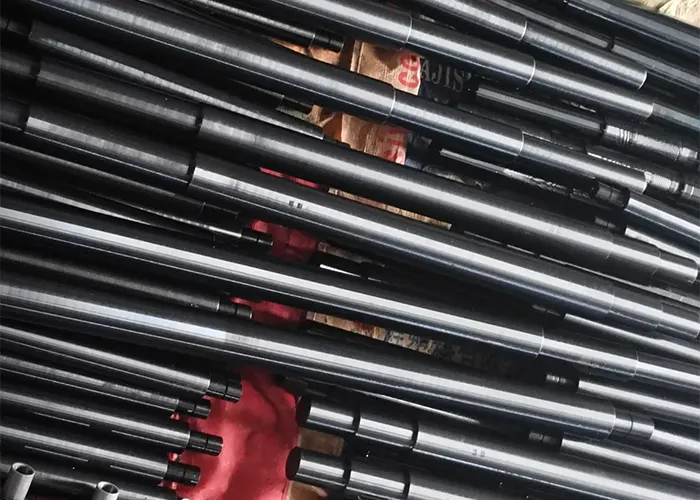
Secondary High-Temperature Blackening Process and Quality Inspection for Wind Turbine Bearings Read More »

feature

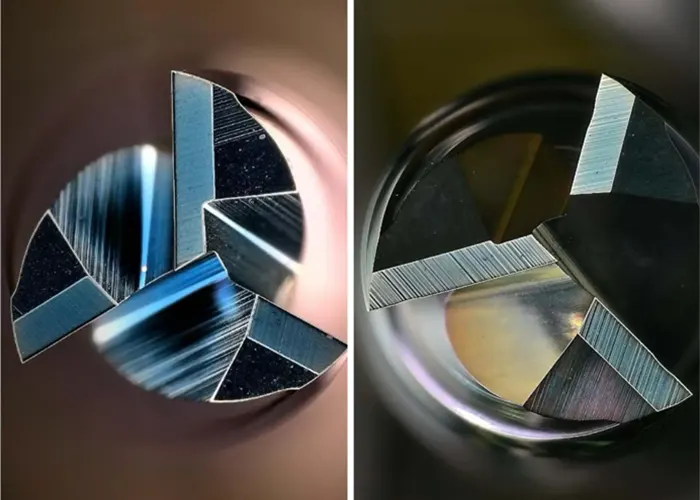
End Mill Selection Guide: External Machining Conditions & Flute-Related Geometric Parameters for Roughing and Finishing

Learn key factors for end mill selection including cutting depth, coolant, machine-tool performance and workpiece material. Analyze flute count, helix angle, rake angle, core diameter and outer geometry to select proper end mills for roughing and finishing milling.

End Mill Selection Guide: External Machining Conditions & Flute-Related Geometric Parameters for Roughing and Finishing Read More »

feature

Digital-Twin-Based Solution for Internal Cavity Machining with Right-Angle Milling Head on Horizontal CNC Boring-Milling Machine

Aiming at programming complexity and collision risks when machining internal cavities with right-angle milling head on horizontal CNC boring-milling machine, build digital twin via NX CAM and VERICUT, customize dedicated post-processor and conduct full-process collision simulation for higher machining safety and reliability.

Digital-Twin-Based Solution for Internal Cavity Machining with Right-Angle Milling Head on Horizontal CNC Boring-Milling Machine Read More »

feature

Slender Shaft Machining: Key Techniques to Control Deformation, Vibration and Machining Accuracy

Slender shafts (length-to-diameter ratio>25) suffer from bending deformation and chatter during turning. Learn practical solutions including optimized clamping schemes, adaptive tool holder setup, reverse feed technology and tool selection to guarantee straightness, cylindricity and surface quality in precision slender shaft machining.

Slender Shaft Machining: Key Techniques to Control Deformation, Vibration and Machining Accuracy Read More »

feature

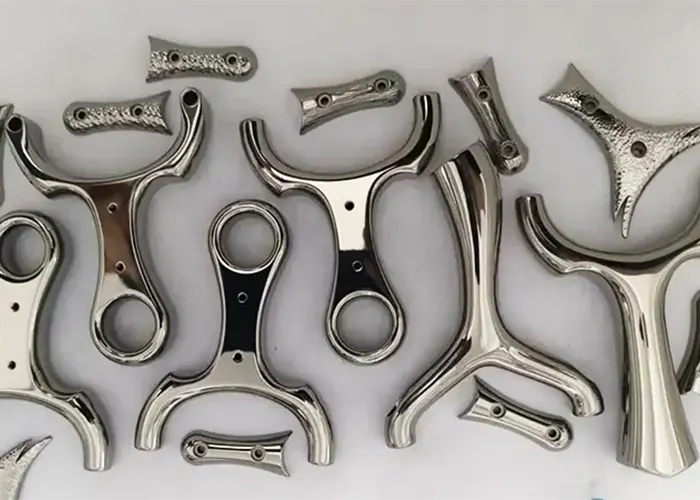
Titanium Alloy Slingshot Polishing: Wet Grinding and Dry Polishing Combined Process for 8K Mirror Finish

TC4 titanium alloy slingshots bring great polishing difficulties due to complex curved surfaces and deep holes. Discover the wet grinding plus compartmentalized dry polishing combined process to remove CNC tool marks, avoid collision scratches, achieve consistent 8K mirror finish and realize stable mass production of titanium alloy hardware.

Titanium Alloy Slingshot Polishing: Wet Grinding and Dry Polishing Combined Process for 8K Mirror Finish Read More »

feature

Mold Steel Heat Treatment Processes: Quenching, Tempering, Nitriding, Cryogenic Treatment and Oxidation Explained

Learn mainstream mold steel heat treatment processes including quenching, tempering, nitriding, deep cryogenic treatment and oxidation. Understand process principles, functions and how heat treatment boosts mold hardness, wear resistance and dimensional stability.

Mold Steel Heat Treatment Processes: Quenching, Tempering, Nitriding, Cryogenic Treatment and Oxidation Explained Read More »

feature
Scroll to Top