
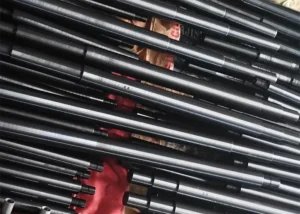
Can I 8mm lead screw for CNC?
TonZaMaking
Can I Use 8mm Lead Screw for CNC?
In CNC machining, the type of lead screw you choose greatly impacts the machine’s precision, speed, and overall performance. Engineers frequently encounter the question of whether an 8mm lead screw is the right fit for their CNC setup.
This article delves into the advantages and potential drawbacks of using an 8mm lead screw, helping you determine if it’s the best option for your specific machining and manufacturing requirements.
What is a Lead Screw?
Before diving into the specifics of using an 8mm lead screw for CNC, it’s essential to understand what a lead screw actually is.
A lead screw is a mechanical device that converts rotational motion into linear motion, typically by the use of a threaded screw.
This mechanism is commonly found in CNC machines, 3D printers, and other precision equipment where accurate positioning is crucial.
Benefits
There are several advantages to using an 8mm lead screw for CNC applications:
- Precision: The smaller diameter of an 8mm lead screw allows for finer resolution and more precise movements, making it ideal for applications that require high accuracy.
- Compact Design: The compact size of an 8mm lead screw makes it suitable for space-constrained environments, where a larger lead screw may not be feasible.
- Efficient Power Transmission: Despite its smaller size, an 8mm lead screw can still efficiently transmit power and torque, ensuring smooth and reliable operation of the CNC machine.
- Cost-Effectiveness: 8mm lead screws are often more affordable compared to larger lead screw options, making them a cost-effective choice for budget-conscious engineers.
Considerations When Using an 8mm Lead Screw for CNC
While there are significant benefits to using an 8mm lead screw for CNC applications, there are also some considerations to keep in mind:
- Load Capacity: The smaller diameter of an 8mm lead screw may limit its load capacity compared to larger lead screw options. It is essential to calculate the required load capacity for your specific application to ensure optimal performance.
- Speed and Efficiency: Depending on the speed and efficiency requirements of your CNC machine, an 8mm lead screw may not be the most suitable choice. In high-speed applications, a larger lead screw may be more appropriate.
- Backlash: Like all lead screws, an 8mm lead screw may experience backlash, which can impact the overall precision and accuracy of the machine. Proper maintenance and adjustment are necessary to minimize backlash effects.
Conclusion
In conclusion, the decision to use an 8mm lead screw for CNC applications depends on a variety of factors, including precision requirements, load capacity, speed, and efficiency.
While an 8mm lead screw offers benefits such as compact design, precision, and cost-effectiveness, it is essential to carefully consider the specific needs of your manufacturing process before making a decision.
By evaluating the advantages and considerations discussed in this article, you can determine whether an 8mm lead screw is the right choice for your CNC machine.
Ultimately, the goal is to select a lead screw that will optimize the performance and accuracy of your CNC applications, leading to efficient and reliable manufacturing processes.

1 thought on “Can I 8mm lead screw for CNC?”
Bookmarking this for later. So useful.