Silicon-molybdenum ductile iron (hereinafter referred to as silicon-molybdenum ductile iron) is widely used to manufacture components for high-temperature applications.
For example, it is commonly used in automotive engine exhaust pipes.
This is due to its excellent high-temperature strength, oxidation resistance, and thermal fatigue resistance.
However, the increased silicon (Si) content (typically 2.0%–3.0%) and molybdenum (Mo) content (typically 0.3%–1.0%) in silicon-molybdenum ductile iron significantly enhance the material’s hardness.
The matrix hardness can reach 220–260 HBW.This also increases the difficulty of machining.
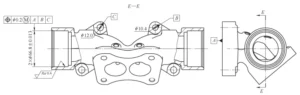
Figure 1 shows that a certain export exhaust pipe component has an inner bore diameter of φ(66.8 ± 0.013) mm and a surface roughness of Ra = 0.4 μm.
A CNC vertical lathe originally performed the machining of this component.
However, rapid tool wear and excessive cutting vibrations occurred during processing, leading to surface roughness values exceeding the specified tolerance range (Ra of 0.8–1.2 μm) and causing dimensional fluctuations of ±0.05 mm.
Multiple rework operations were required to ensure dimensional accuracy, resulting in low production efficiency and unstable quality.
To address these issues, this paper leverages the high rigidity and high positioning accuracy of machining centers.
By replacing the original carbide turning tool with a CBN precision boring tool and optimizing process parameters, we achieved a dual improvement in both the quality and efficiency of internal bore machining.
Analysis of Issues with the Original Process
The original process flow for the exhaust pipe was: rough turning → semi-finish turning → finish turning.
The equipment used was an LC600 CNC vertical lathe, and the cutting tool was a YT15 carbide turning tool with a front angle of 5°, a rear angle of 8°, and a main rake angle of 75°.
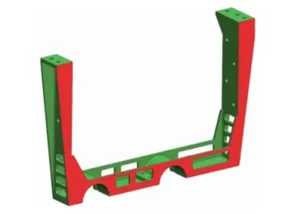
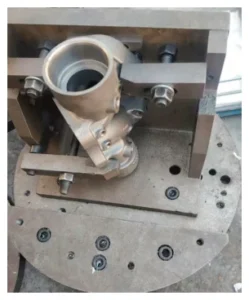
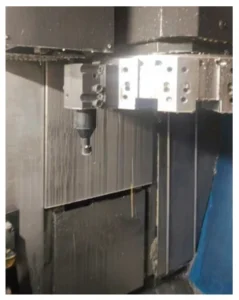
The fixture for the CNC vertical lathe is shown in Figure 2, and the turning of the inner bore on the CNC vertical lathe is shown in Figure 3.
After on-site machining and inspection, the following major issues were identified:
1. The Surface Roughness of the Internal Bore Exceeded Tolerances after Turning.
Due to the spherical distribution of graphite in the silicon-molybdenum ductile iron matrix, high-hardness pearlite (comprising more than 80%) alternates with ferrite.
As a result, the tool is prone to a “plowing effect” during cutting.
This leads to microscopic scratches on the machined surface.
The carbide turning tools lack sufficient wear resistance; after machining 5 to 8 parts, the cutting edges become dull, and the surface roughness value Ra increases from an initial 0.7 μm to 1.2 μm, requiring frequent tool changes.
2. Significant Variation in the Diameter of the Bore.
The lathe spindle has low radial runout accuracy (0.03 mm) and the guideways have low straightness accuracy (0.02 mm/1000 mm).
During cutting, thermal deformation of the cutting tool occurs, with the turning temperature exceeding 500 °C.
At the same time, the workpiece has insufficient clamping rigidity, as the cantilever length exceeds 400 mm.
In addition, structural limitations of the angle-iron-type fixture and the lathe’s inherent weight further constrain the process.
As a result, the cutting speed is restricted to ≤400 rpm.
Consequently, the inner bore diameter fluctuates by ±0.025 mm, resulting in a 22% out-of-tolerance rate.
3. Low Production Efficiency.
The processing time per part (including clamping, tool change, and inspection) reached 25 minutes, making the production line unable to meet the demands of large-volume orders.
To address these issues, the improved process leveraged the high rigidity and positioning accuracy of machining centers and replaced the original carbide turning tools with CBN precision boring tools.
Process parameter optimization further enhanced both the quality and efficiency of internal bore machining.
Process Improvement Plan
In response to the issues identified in the original process, the following improvement plan is proposed.
1. Equipment and Tool Selection.
To improve machining accuracy and rigidity, a standard machining center (Youjia 850 vertical machining center) will be used in place of a lathe.
It features a positioning accuracy of 0.005 mm and spindle runout of <0.002 mm. CBN (cubic boron nitride) cutting tools were selected.
With a material hardness of 3000–4500 HV and thermal stability (oxidation resistance up to 1300°C), CBN significantly outperforms cemented carbide and is suitable for the precision machining of high-hardness cast iron.
The final choice was the Seco CBN-300 precision boring tool, with a cutting edge radius r = 0.4 mm, a principal rake angle κr = 45°, and a solid, rigid shank structure (overhang ratio ≤ 4).
2. Optimization of Process Parameters.
The L9(3⁴) orthogonal experimental design optimized the cutting parameters, using surface roughness (Ra) and tool wear (VB) as evaluation criteria.
Orthogonal experiments identified the most effective machining parameters.
The selected settings included a spindle speed of 800 r/min, a cutting speed of 170 m/min, a feed rate of 0.08 mm/rev to prevent burr formation caused by excessive feeding, and a depth of cut of 0.15 mm to limit the cutting load on a single cutting edge and suppress vibration.
Dry cutting to prevent chemical corrosion of the CBN tool by cutting fluid.
3. Process Route Adjustment.
The process changed the original turning sequence to a machining center boring sequence consisting of rough boring → semi-finish boring → finish boring.
Rough boring leaves a 0.3–0.5 mm boring allowance; semi-finish boring (using a carbide boring tool) leaves a 0.08–0.12 mm allowance for finish boring; finish boring directly ensures the final dimensions and surface quality.
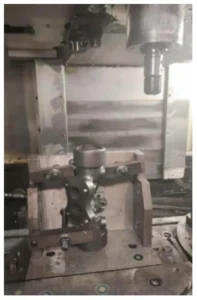
Figure 4 illustrates the semi-finish boring process using a carbide boring tool on a machining center.
Test Validation and Results Analysis
The following analysis and validation results demonstrate the effectiveness of the process improvements.
1. Comparison of Surface Roughness.
Figure 5 shows the surface roughness of the exhaust pipe’s inner bore before and after the process improvements, as measured using a Taylor-Hopkins roughness tester.
The surface roughness value (Ra) of the inner bore after finishing under the original process was 0.8–1.2 μm, with an average of 1.0 μm.
In contrast, the improved process reduced the Ra value of the inner bore to 0.2–0.4 μm after finishing, with an average of 0.3 μm.
These results fully meet the drawing specifications.
Scanning electron microscopy (SEM) analysis of the surface morphology revealed that the surface produced by the original turning process exhibited distinct plow marks and tear marks.
In contrast, the surface produced by the improved boring process had a uniform texture and no macroscopic defects.
2. Comparison of Dimensional Accuracy Stability.
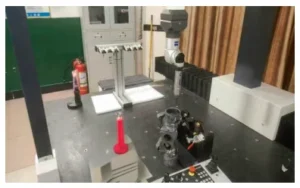
Figure 6 shows the results of inner-diameter measurements of 50 exhaust pipe workpieces conducted using a ZEISS PRISMO coordinate measuring machine.
After process improvements, the inner diameter dimensions ranged from φ66.79 to φ66.81 mm, with a 100% pass rate.
Under the original process, the inner diameter dimensions ranged from φ66.78 to φ66.82 mm, with a 22% out-of-tolerance rate.
3. Comparison of Production Efficiency.
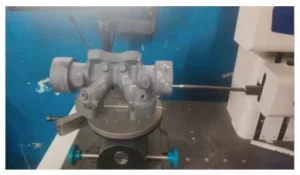
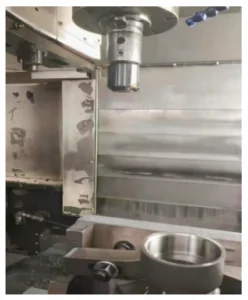
Figure 7 shows the use of a CBN boring tool to bore the inner diameter of an exhaust pipe on a machining center.
The improved process reduces the finishing boring time per part (including setup) to 16 minutes, compared with 25 minutes for the original finishing turning process.
Tool life has increased from 8 parts per edge to 50 parts per edge (machining can continue normally even when CBN tool wear reaches VB ≤ 0.1 mm). Monthly production capacity has risen from 4,200 to 6,500 parts, fully meeting order demand.
Conclusion
The inner bores of silicon-molybdenum ductile iron exhaust pipes require high dimensional accuracy and surface quality, making machining particularly challenging and hindering efforts to improve processing efficiency.
Through the practical application of precision boring on a machining center—combined with adjustments to the process flow, optimization of machining parameters, and the use of CBN tools—we effectively resolved the challenges associated with machining the inner bore of the exhaust pipe, ultimately producing qualified parts.
Verified through the machining of multiple consecutive parts, the dimensional stability of the workpieces was excellent.
We successfully developed the new exhaust pipe product, providing a technical solution that serves as a reference for the precision bore machining of high-hardness ductile iron parts.