

Table of Contents
Current inspection processes suffer from issues such as inconsistent standards, data silos, and difficulties in tracing errors.
These problems lead to the continuous accumulation of assembly deviations, which significantly hinder improvements in product quality.
In light of this, this paper proposes a standardized inspection system that integrates reverse tracing algorithms with dynamic feedback mechanisms.
The system aims to break down data barriers between design and manufacturing, enable end-to-end precision control, and provide both theoretical and practical support for optimizing manufacturing processes.
Architecture of a Standardized Inspection System
Specifications for the Integration of Multi-Source Heterogeneous Data
The geometric features of mechanical parts are represented as multidimensional data during the manufacturing process;
The most critical aspect of building a standardized inspection system is the effective integration of data from multiple sources.
The standardized system requires the establishment of a unified data exchange interface to integrate process data—such as machine tool motion parameters, tool wear status, and cutting force magnitude—along with geometric and positional deviation data of finished products into a single analytical framework.
Researchers employ intelligent methods, such as the fruit fly optimization algorithm, to perform data cleaning and denoising on massive amounts of heterogeneous data, ensuring accuracy and consistency at the data collection stage.
Based on this, technicians use computer vision technology to extract features from microscopic geometric errors on part surfaces, establishing a connection between microscopic indicators—such as surface roughness and waviness—and macroscopic geometric tolerances.
This creates a comprehensive, multi-dimensional data mapping spectrum that spans both macro- and micro-levels, providing a solid data foundation for subsequent deviation analysis.
Logical Optimization of Inspection Path Planning
Inspection path planning directly impacts the efficiency and coverage of data acquisition;
Standardized path planning logic is key to ensuring the reproducibility of inspection results.
Standardization research advocates developing adaptive sampling strategies based on the geometric topology of parts and in conjunction with tolerance zone definitions.
For geometric tolerances such as flatness and straightness, the system employs a grid-density-based adaptive point placement method to automatically increase the number of sampling points in areas with significant curvature changes.
For related tolerances such as concentricity and positional accuracy, the system must plan continuous paths that simultaneously cover both reference features and the features under test.
This logic not only optimizes and standardizes the motion trajectories of probes or laser scanners but also establishes clear principles for selecting process parameters such as probe approach angles and scanning speeds.
This ensures that inspection results maintain a high degree of consistency and comparability regardless of the equipment used or the operator performing the task, thereby eliminating random errors introduced by human factors.
Closed-Loop Calibration of Dynamic Feedback Mechanisms
Static inspection reports struggle to meet the real-time control requirements of dynamic manufacturing processes;
Establishing a standardized dynamic feedback mechanism is key to achieving adaptive adjustments in the manufacturing process.
This mechanism requires the creation of a bidirectional communication protocol between the inspection system and the machining equipment, promptly converting deviation data obtained from inspection into machining compensation commands.
The system utilizes displacement sensors and force sensors installed at key locations on the machine tool to acquire real-time data on thermal deformation and vibration during machining.
It then combines this data with geometric deviation information fed back by the online monitoring system to construct a dynamic error compensation model.
Standardized calibration procedures define the response thresholds and adjustment increments for the feedback loop, preventing system oscillations caused by overcompensation.
This ensures that the manufacturing process remains under control at all times, thereby shifting the focus from post-production inspection to in-process control and significantly reducing scrap rates.
Standardization of Geometric Error Analysis Techniques
Reverse Analysis of Error Traceability Algorithms
Accurately identifying the source of errors is a prerequisite for implementing effective control.
Standardization research has introduced reverse traceability algorithms as a core tool for error analysis.
The final deviations in mechanical parts are often the result of the interaction of multiple factors, such as machining errors, reference deviations, and positioning errors;
It is difficult to isolate the root causes through forward analysis alone.
Reverse analysis technology utilizes a deviation propagation network model to trace back along the process chain from the measured deviations of the final product, pinpointing the specific process step responsible.
This algorithm applies the concept of node connections from graph theory, abstracting machined surfaces and locating surfaces as network nodes, and machining paths and assembly relationships as edges.
By calculating the weights of each path, it quantifies the contribution of different processes to the final error.
Supported by online modeling technology, this analytical method can rapidly distinguish between systematic and random errors, clarifying whether cylindrical deviation is caused by spindle rotational error or positional deviation is triggered by inaccurate fixture positioning.
Standardized algorithmic procedures define the steps and criteria for identifying error sources, enabling technicians to formulate targeted process improvement measures based on quantifiable metrics, thereby avoiding the blindness of trial-and-error approaches based on experience.
Unified Characterization of Tolerance Transfer Models
Tolerances exhibit complex propagation and accumulation characteristics during part manufacturing and assembly processes; establishing a unified tolerance propagation model is fundamental to achieving system-wide accuracy prediction.
The theory of small-displacement rotors provides a standardized mathematical language for describing this process, decomposing minute deviations in geometric features into translational components along coordinate axes and rotational components about coordinate axes, and using homogeneous transformation matrices to describe the propagation paths of deviations between parts.
The requirement for standardized model construction involves uniformly converting the geometric tolerances, dimensional tolerances, and clearance between moving pairs of all parts into tolerance rotors, and using matrix multiplication to simulate the cumulative effects of the assembly’s dimensional chains.
This representation method is not only applicable to the calculation of static dimensional chains but can also effectively describe changes in precision of moving mechanisms under different poses.
By establishing unified coordinate system definition rules and matrix transformation logic, researchers enable seamless integration and interoperability among models created by different designers, accurately predicting closed-loop deviations after assembly and providing theoretical support for the optimization of tolerance allocation.
Weight Allocation for Key Node Control
In complex deviation propagation networks, different nodes have significantly varying degrees of influence on the final accuracy.
Standardization research focuses on identifying and controlling key nodes using weighted semi-local centrality algorithms.
This method comprehensively considers a node’s degree, betweenness centrality, and clustering coefficient, and assigns importance weights to each node in the network based on the actual characteristics of the manufacturing process.
By calculating the weights of each node along the deviation propagation paths, analysts can precisely identify critical processes or feature surfaces located at core hubs.
This weight-based control strategy prevents waste caused by the equal distribution of resources and achieves the optimal allocation of quality control resources.
The introduction of the self-adjusting weighting method enables the system to dynamically adjust node weights based on real-time fluctuations in production data, ensuring that the control strategy remains aligned with the current manufacturing status and facilitating a transition from static, rigid management to dynamic, precise governance.
Engineering Applications of Standardized Inspection Strategies
Tolerance Calibration Through Design-Manufacturing Collaboration
The starting point for standardized inspection strategies lies in deep collaboration between design and manufacturing, aimed at resolving the fundamental disconnect between design tolerances and manufacturing capabilities.
By incorporating tolerance analysis during the design phase, designers no longer rely solely on experience to set tolerance grades but instead conduct cost-benefit analyses based on statistical data regarding manufacturing capabilities.
Leveraging digital manufacturing technologies, designers can simulate machining costs and assembly yield rates under different tolerance settings to identify the optimal balance between functional requirements and manufacturing costs.
For non-critical fit dimensions, designers can moderately widen the tolerance range to reduce machining difficulty; conversely, for core features affecting motion precision, designers strictly limit the tolerance band.
The collaborative calibration mechanism requires the design team to clearly specify functional and process tolerances, while the manufacturing team provides feedback on the distribution patterns and specific values of actual machining accuracy.
Both parties then conduct multiple rounds of iterative optimization based on unified data standards.
This model transforms tolerance design from a one-way directive into a two-way interactive optimization process, ensuring the manufacturability of design drawings and reducing manufacturing challenges and over-engineering caused by unreasonable tolerance settings at the source.
Control of Assembly Accuracy Under Dynamic Loads
Mechanical systems often endure complex dynamic loads during actual operation, necessitating the extension of standardized inspection strategies to include dynamic accuracy control during the assembly phase.
Taking the assembly of the third-stage connecting rod bracket on a crankshaft as an example, its motion accuracy is directly affected by the dimensional tolerances of the crankshaft mounting holes and the parallelism errors of the connecting rods.
Under the coupled effects of dynamic loads and vibrations generated by high-speed rotation, minute static geometric errors are amplified, causing the connecting rod’s motion trajectory to deviate from the theoretical path.
In this case, the dimensional tolerances of the crankshaft mounting holes significantly contribute to assembly accuracy and represent the core challenge in quality control.
Based on this, the standardized strategy incorporates Monte Carlo simulation technology to conduct virtual simulations of the assembly process and predict the distribution of motion trajectories under different tolerance combinations.
Engineers incorporated a shim-based fine-tuning mechanism into the assembly process and optimized the tolerance bands for critical dimensions based on simulation results—for example, by confining errors within a specific, narrow tolerance range.
This successfully elevated assembly accuracy to a high pass rate.
This demonstrates that a standardization approach combining tolerance analysis with kinematic simulation can effectively resolve assembly accuracy challenges under dynamic operating conditions and enhance product performance.
Intelligent Compensation for Environmental Disturbances
Fluctuations in the inspection environment are a key external factor leading to inaccurate geometric error measurements; therefore, standardized applications must incorporate intelligent compensation strategies for environmental disturbances.
Metal parts exhibit thermal expansion and contraction; changes in workshop temperature can cause minute dimensional drifts in precision parts and may even alter their geometric shapes.
To address this issue, standardized strategies require the integration of environmental sensing modules into the inspection system to monitor temperature, humidity, and vibration parameters in real time.
Technicians must establish a database of thermal deformation coefficients for heat-sensitive materials used in various manufacturing processes, utilizing algorithms to automatically subtract system errors caused by temperature deviations from the standard constant-temperature state.
To address the accumulation of cutting heat during machining on large machine tools, the system employs a combination of in-machine measurement and thermal error compensation models to dynamically correct the machining coordinate origin.
In terms of system hardware design, specifications have been established for sensor layout and vibration isolation measures to ensure the purity of data acquisition.
Through intelligent compensation enabled by hardware-software coordination, the system eliminates the interference of environmental noise on inspection results, ensuring that reliable and traceable geometric tolerance inspection data can still be obtained in non-constant-temperature workshop environments.
Conclusion
Research on the standardization of geometric tolerance inspection methods for mechanical parts is a fundamental endeavor for the upgrading of the manufacturing industry.
This paper establishes a standardized inspection system that integrates multi-source data fusion, path planning optimization, and dynamic feedback mechanisms.
By combining reverse traceability algorithms with tolerance propagation models, it elucidates the mechanisms and evolution patterns of error generation.
Engineering practice demonstrates that applying this standardized strategy to design collaboration, dynamic assembly, and environmental compensation not only enhances the motion accuracy and reliability of mechanical systems but also effectively reduces manufacturing costs.
FAQ
Impedit egestas aliquet?
Lorem ipsum dolor sit amet, consectetur adipiscing elit. Ut elit tellus, luctus nec ullamcorper mattis, pulvinar dapibus leo.
Sapien class quo temporibus?
Lorem ipsum dolor sit amet, consectetur adipiscing elit. Ut elit tellus, luctus nec ullamcorper mattis, pulvinar dapibus leo.
Elementum voluptate sodales?
Lorem ipsum dolor sit amet, consectetur adipiscing elit. Ut elit tellus, luctus nec ullamcorper mattis, pulvinar dapibus leo.
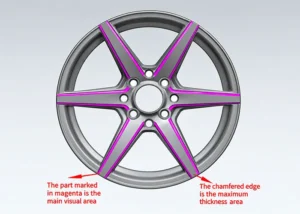
Automotive Aluminum Alloy Wheel Milling: Positioning Deviation Analysis and Fixture Optimization
September 10, 2026 No Comments
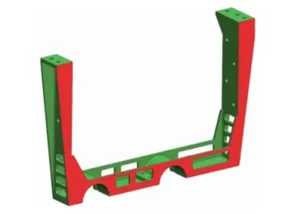
Thin-Walled Aluminum Alloy Parts Machining: Deformation Control for Low-Rigidity Aerospace Components
September 6, 2026 No Comments