

What is the difference between CNC cutting and laser cutting?
TonZaMaking
In manufacturing discussions, CNC cutting and laser cutting are often compared in terms of speed, precision, and cost. These comparisons sound logical—but they frequently lead to poor equipment decisions, production bottlenecks, and unexpected downstream costs.
The core issue is not the machines themselves. It is the assumption that they solve the same type of problem.
In reality, CNC and laser cutting are not competing technologies in the same category. They are fundamentally different physical processes designed for different geometries, materials, and production logic.
1. The Hook: The Mistake Almost Everyone Makes
Most purchasing decisions start with a simple comparison:
- Which is faster?
- Which is more precise?
- Which is cheaper per part?
These questions appear rational, but they ignore the real production context. A machine is not just a cutter—it is part of a system that includes fixturing, tool paths, heat effects, secondary finishing, and geometry constraints.
This leads to a more accurate framing:
The real question is not “Which machine is better?”
It is: “What kind of problem are you actually trying to solve?”
At a physical level, CNC and laser cutting are governed by different energy interactions with material. They don’t compete—they behave under different physics.
2. The Core Truth: They Don’t Cut the Same Way at All
2.1 CNC Cutting = Forcing Material Away
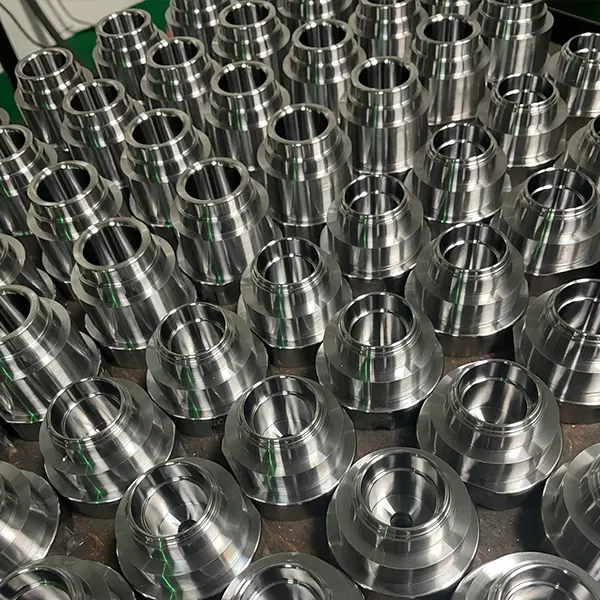
CNC machining is a subtractive mechanical process. A rotating cutting tool physically engages the material, shearing it away in the form of chips.
Key characteristics:
- Direct physical contact between tool and workpiece
- High mechanical force and torque
- Chip formation and material removal
- Tool wear is a primary constraint
In mechanical terms, CNC behaves like controlled fracture under shear stress. The cutting tool acts as a continuously moving wedge.
You can think of it as sculpting with a rotating knife—precision comes from tool path control, rigidity, and vibration management.
2.2 Laser Cutting = Erasing With Heat
Laser cutting is a non-contact thermal process. A focused beam of high-energy photons heats the material locally until it melts, burns, or vaporizes.
Key characteristics:
- No physical contact
- Extremely high localized temperature (often > 10,000°C at the focal point)
- Material removal via phase change (melting/vaporization)
- Minimal mechanical stress
Unlike CNC, there is no cutting force. The “tool” is energy itself.
You can think of it as drawing with heat instead of force.
2.3 The Real Difference
The essential distinction can be summarized as:
CNC fights material. Laser transforms it.
This single difference explains most downstream behavior differences: material compatibility, geometry limitations, edge quality, and production constraints.
3. The Hidden Divide Nobody Talks About: 2D vs 3D Reality
One of the most misunderstood aspects of this comparison is geometry capability.
3.1 Laser: The King of Flat Reality
Laser cutting excels in planar operations:
- Sheet metal profiles
- Thin plastics and films
- Engraving and marking
- Nesting-based mass production
Because the beam is essentially a 2D projection of energy, laser systems are optimized for flat material processing.
However, limitations appear quickly when geometry becomes volumetric:
- Cannot create undercuts
- Limited depth control in thick materials
- Edge taper and heat-affected zones increase with thickness
A typical industrial fiber laser cutting system performs best under ~20–25 mm steel thickness, with performance degrading beyond that depending on power class.
3.2 CNC: The King of Volume
CNC machining operates in full 3D space.
It can:
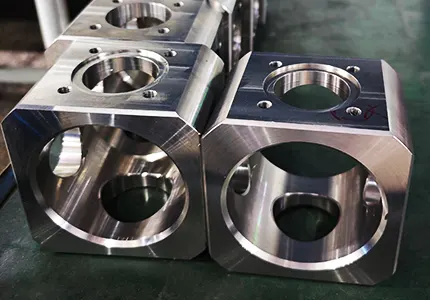
- Mill pockets and cavities
- Create complex contours and undercuts (with multi-axis systems)
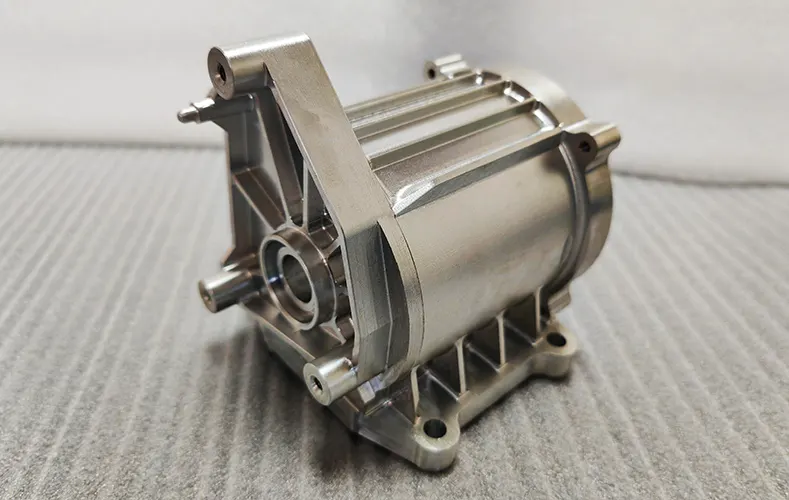
- Produce functional mechanical parts with tight tolerances
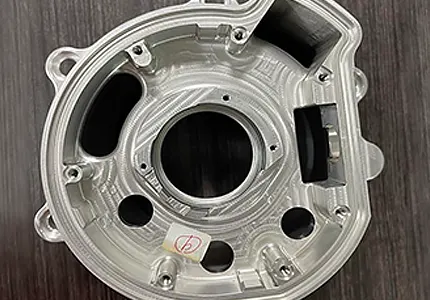
- Machine structural components with internal features
This makes CNC the dominant process for:
- Functional prototypes
- Mold tooling
- Aerospace components
- Structural brackets and housings
Where laser is constrained by line-of-sight energy delivery, CNC is constrained only by tool access.
3.3 Simple Mental Model
A useful abstraction:
| Process | Dominant Domain | Best For |
|---|---|---|
| Laser cutting | 2D surface processing | Profiles, sheets, engraving |
| CNC machining | 3D volume processing | Functional parts, cavities, structures |
4. The Speed Myth: Why “Faster Machine” Is a Misleading Idea
Laser cutting is often perceived as “faster” than CNC because the beam moves rapidly and material removal appears instantaneous. CNC, by contrast, looks slower due to visible tool engagement and multiple passes.
However, this comparison is incomplete.
4.1 Cutting Speed vs Production Speed
In industrial environments, total production time includes:
- Programming (CAM or nesting)
- Setup and fixturing
- Tool changes (CNC)
- Calibration and focusing (laser)
- Secondary finishing (deburring, edge cleaning)
- Inspection and handling
A simplified comparison is shown below:
| Factor | CNC Machining | Laser Cutting |
|---|---|---|
| Raw cutting speed | Moderate | High |
| Setup complexity | Higher | Lower |
| Tool changes | Required | None |
| Thickness flexibility | High | Limited |
| Post-processing | Often required | Sometimes required |
| 3D capability | Strong | Weak |
4.2 Industry Reality
In sheet metal production, laser cutting often achieves high throughput for flat parts due to:
- High traversal speed (often 30–100 m/min depending on system)
- Efficient nesting software
- Minimal mechanical setup
However, CNC machining compensates with:
- Multi-feature integration in one setup
- Reduced assembly steps
- Higher part functionality per operation
So the real metric is not cutting speed—it is total value per production cycle.
5. The Invisible Cost: Setup Time vs Cutting Time
One of the most underestimated differences between CNC machining and laser cutting is not the cutting process itself—but everything that happens before the machine actually starts cutting.
In industrial production, “cycle time” is often mistakenly equated with “cutting time.” In reality, total production time is dominated by preparation steps, especially for CNC systems.
5.1 CNC Workflow Reality
A typical CNC workflow involves several non-cutting stages that are mandatory for accuracy and safety:
- Mechanical clamping or fixturing of raw stock
- Work coordinate system setup (zeroing X/Y/Z axes)
- Tool selection and toolpath loading
- Simulation or verification of toolpaths (to avoid collisions)
- Dry run or safety clearance checks in many production environments
Each of these steps introduces variability. Even in a well-optimized shop, setup time is often comparable to—or longer than—actual cutting time for small batch production.
In industrial studies of job-shop CNC environments, setup-related activities can account for 20% to 60% of total machining time depending on batch size and complexity (SME manufacturing process studies, summarized across job shop benchmarks).
5.2 Laser Workflow Reality
Laser cutting systems, particularly fiber laser sheet cutting machines, are structurally optimized for minimal setup:
- Material sheet is placed on the bed
- Digital cutting file is loaded
- Nesting and path optimization are applied
- Machine starts cutting automatically
Because there is no physical tool contact and no tool wear, the setup process is significantly reduced.
In many production environments, laser cutting setup time is typically limited to material loading and program selection, which can be under a few minutes for standardized jobs.
This is why laser systems are often favored in high-mix sheet production environments.
5.3 Critical Insight
The real distinction is not just operational—it is architectural:
CNC delays the start of production; laser constrains the output instead.
CNC requires preparation before execution because it must physically define interaction with material. Laser, being a non-contact energy process, shifts most complexity into digital control and material handling rather than physical setup.
6. Material Behavior Changes Everything
Material compatibility is where CNC and laser cutting diverge most sharply in practical manufacturing decisions.
6.1 When CNC Wins
CNC machining dominates when material thickness and structural integrity are critical.
Typical applications include:
- Thick wood and engineered timber components
- Metals (aluminum, steel, titanium) requiring structural precision
- Load-bearing mechanical parts
- Functional assemblies with threaded features, pockets, and cavities
From a physical standpoint, CNC is independent of optical or thermal constraints. Its limitation is mechanical access rather than energy absorption.
This is why CNC remains essential in aerospace, automotive fixtures, and mold manufacturing.
6.2 When Laser Wins
Laser cutting is highly efficient in thin, flat, or non-structural materials:
- Thin acrylic sheets (clean edge vaporization behavior)
- Plywood and MDF panels in signage and design work
- Leather cutting in apparel and accessories
- Branding, engraving, and surface marking
Laser processing excels when thermal interaction produces acceptable or even desirable edge effects, especially in organic or polymer-based materials.
Industrial fiber laser systems are widely optimized for sheet metal cutting in ranges typically below ~20 mm thickness for carbon steel, where kerf quality and speed remain stable.
6.3 Hidden Reality: Thickness Is Not a Detail
A common engineering mistake is treating thickness as a secondary parameter.
In reality:
Material thickness is a process selection trigger, not a design detail.
Thickness determines:
- Whether heat dissipation becomes a defect (laser)
- Whether tool deflection becomes a tolerance issue (CNC)
- Whether secondary finishing is required
- Whether production scalability changes entirely
Ignoring this often leads to choosing a process that appears cost-efficient on paper but fails in real production conditions.
7. Edge Quality: Beauty vs Function Trade-Off
Edge quality is often where perception and engineering reality diverge most sharply.
CNC Output Characteristics
CNC machining produces mechanically generated surfaces:
- Visible tool marks depending on feed rate and tool geometry
- Highly consistent dimensional geometry when properly programmed
- Excellent structural integrity due to cold mechanical cutting
- Can be refined using finishing passes or polishing operations
The key advantage is that CNC edges are not thermally altered. Material properties remain largely unchanged near the cut zone.
Laser Output Characteristics
Laser cutting produces thermally influenced edges:
- Very sharp and visually clean cuts in thin materials
- Potential heat tinting or oxidation in metals
- Possible micro-burrs or carbonization in organic materials like wood or leather
- Heat-affected zone (HAZ) depending on power and feed rate
According to industrial laser processing standards (ISO 9013 classification for thermal cutting), edge quality is directly influenced by energy density, material absorption rate, and cutting speed.
Laser edges can be visually superior in design applications, but structurally altered at the microscopic level.
Functional Interpretation
A practical way to interpret this difference:
- CNC edges = mechanically precise, structurally stable
- Laser edges = visually refined, thermally modified
Neither is universally “better”—they serve different downstream requirements.
8. The Production Psychology Problem (Unique Section)
Beyond physics and engineering, there is a less visible factor that strongly influences decision-making: human perception.
Most procurement decisions are influenced by simplified metrics:
- Machine speed (often based on cutting motion only)
- Purchase price
- Spec sheet comparisons (power, axis speed, resolution)
However, these metrics ignore the actual production system.
What is often missing is:
- Workflow friction
- Setup complexity
- Repeatability across operators
- Failure recovery time
- Integration into existing production lines
In real manufacturing economics, these factors often dominate total cost of ownership.
Key Insight
The most expensive machine is not the one with the highest price.
It is the one that slows down your workflow.
A machine that appears efficient in isolation can become inefficient when inserted into a real production environment with variability, human operators, and changing job requirements.
This is why many manufacturing inefficiencies are not caused by machine limitations—but by mismatches between process physics and production logic.
9. Real Factory Logic: Why Industry Uses Both
In actual manufacturing environments, CNC machining and laser cutting are rarely treated as competing options. Mature factories almost always deploy both technologies because they solve fundamentally different segments of the production pipeline.
CNC Role in Industrial Systems
CNC machining is positioned where geometry and function matter more than speed:
- Structural fabrication of load-bearing parts
- High mechanical accuracy requirements (tight tolerances, typically ±0.01–0.05 mm depending on setup)
- True 3D machining (pockets, cavities, threaded features, complex surfaces)
- Prototype-to-production functional components
CNC’s value is not throughput—it is geometric authority over volume. It defines how a part behaves mechanically.
Laser Role in Industrial Systems
Laser cutting systems are optimized for planar efficiency:
- High-speed sheet processing for metals and polymers
- Precision engraving and surface marking (traceability, branding, QR codes)
- Mass production of flat geometries through nesting optimization
- Rapid turnaround for 2D parts with minimal setup overhead
Industrial fiber laser cutting systems are commonly used for sheet metal thickness ranges where speed and edge quality remain stable, typically within low to medium thickness regimes depending on power class.
Combined System Logic
In modern production lines, the two systems form a complementary structure rather than a substitution relationship:
CNC builds structure, laser handles surface efficiency.
A simplified factory logic looks like this:
- Laser processes flat input material quickly and efficiently
- CNC transforms selected components into functional 3D assemblies
- Downstream processes (welding, assembly, finishing) integrate both outputs
This division of labor is one of the reasons hybrid manufacturing systems are so widely adopted in automotive, electronics enclosures, and industrial equipment fabrication.
10. Decision Framework (Most Valuable Section)
Selecting between CNC and laser cutting should not begin with machine specifications. It should begin with problem classification.
A practical decision framework can be reduced to four core questions:
1. Do I need depth or just outlines?
This is the most fundamental geometric filter.
- If the part requires cavities, pockets, threads, or 3D relief → CNC
- If the part is defined primarily by perimeter geometry → laser
Depth capability is a binary constraint, not a gradual preference.
2. Is my material thick or thin?
Material thickness directly influences process feasibility.
- Thin sheets and flexible materials → laser is typically efficient
- Thick or structural materials → CNC is required for stability and integrity
In practice, thickness thresholds vary by material type and machine class, but the decision logic remains consistent: laser efficiency decreases rapidly as thickness increases, while CNC capability remains relatively stable until tool deflection or rigidity limits are reached.
3. Is setup time or cutting time my bottleneck?
This question shifts the decision from machine capability to workflow economics.
- High mix / low batch production → setup time dominates → laser advantage
- Complex multi-feature parts → cutting time is secondary → CNC advantage
In many job-shop environments, setup operations can represent a significant portion of total production time, especially for CNC machining where fixturing and toolpath validation are required.
4. Is this structural or visual output?
This is the functional classification layer.
- Structural / load-bearing / functional parts → CNC
- Visual / decorative / branding / flat pattern parts → laser
This distinction often overrides all other parameters because it defines end-use constraints.
Simple Rule of Decision
A simplified mapping can be expressed as:
- If the answer leans flat + fast → laser cutting
- If the answer leans deep + functional → CNC machining
This rule is not a simplification of technology—it is a reflection of underlying physical constraints.
11. The Misconception Trap: Hybrid Machines
Hybrid CNC–laser machines are often marketed as “best of both worlds” solutions. In theory, they appear efficient: one system handling both cutting and machining.
However, in practice, the underlying physics introduces unavoidable trade-offs.
Core Conflict: Rigidity vs Energy Delivery
- CNC machining requires high structural rigidity to resist cutting forces
- Laser cutting requires optimized optical alignment, beam delivery systems, and thermal control
These systems operate under fundamentally different design constraints.
Practical Engineering Trade-Off
When combining both systems into a single platform:
- CNC rigidity is often reduced to accommodate laser optical paths
- Laser performance may be constrained by mechanical enclosure and motion system limitations
- Maintenance complexity increases due to dual-system integration
The result is not full performance of either system, but a compromise state between two incompatible optimization targets.
Industry Reality
For this reason, most high-performance manufacturing environments prefer:
- Dedicated CNC machining centers for 3D structural work
- Dedicated laser systems for sheet processing and marking
Hybrid systems are typically used in niche applications where space constraints outweigh performance optimization.
12. Final Conclusion: Stop Comparing, Start Matching
The most persistent mistake in manufacturing procurement is treating CNC and laser cutting as competitors on a single performance scale.
They are not competing technologies.
They are different solutions to different dimensions of manufacturing:
- CNC operates in mechanical volume space
- Laser operates in thermal surface space
Each is optimal only within its own domain.
Final Principle
The correct decision framework is not:
“Which machine is better?”
It is:
“Which machine removes my real bottleneck?”
Once this question is correctly framed, the choice between CNC and laser cutting is no longer a comparison—it becomes a matching problem between physics, geometry, and production system design.
And in manufacturing, correct matching is almost always more important than peak performance.



1 thought on “What is the difference between CNC cutting and laser cutting?”
CNC heads will love this.