CNC machining accuracy

Manufacturers can improve CNC machining accuracy for complex parts by combining advanced technologies, optimized processes, and best practices. Here’s a detailed breakdown:


1. Use High-Precision CNC Machines

  • Invest in machines with tighter tolerances, rigid structures, and stable spindles to reduce vibration and deflection.

  • Multi-axis CNC machines (4-axis or 5-axis) allow machining from multiple angles in a single setup, minimizing errors from repositioning.


2. Optimize Workpiece Fixturing and Clamping

  • Use precision fixtures and clamps to securely hold the workpiece and minimize movement during machining.

  • Custom-designed fixtures for complex geometries ensure consistent positioning and reduce deviations.

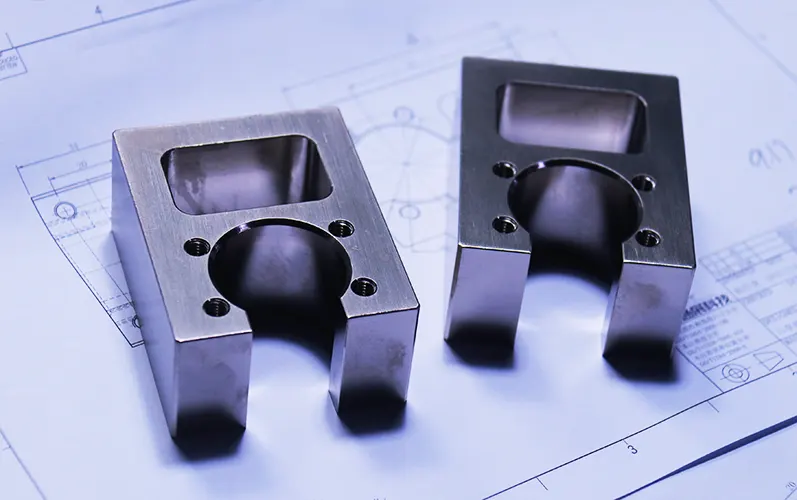
  • Employ V-blocks, locating pins, and positioning sleeves for accurate alignment of holes, threads, and features.


3. Control Tooling and Tool Paths

  • Use high-quality cutting tools with the appropriate geometry and coating for the material.

  • Monitor tool wear and replace tools before they degrade accuracy.

  • Optimize tool paths using CAM software to minimize sharp changes in direction, tool deflection, and unnecessary passes.


4. Maintain Thermal Stability

  • CNC machining accuracy can be affected by heat from machines and the environment.

  • Implement coolant systems, temperature-controlled environments, and machine warm-up routines.

  • Use materials with low thermal expansion or compensate for expansion in CAM software.


5. Implement Precision Measurement and Feedback

  • Use in-process measurement tools like probes, laser scanners, and coordinate measuring machines (CMM) to verify dimensions during machining.

  • Employ closed-loop systems where measurements feed back into CNC controls to correct deviations in real time.


6. Reduce Setup and Repositioning Errors

  • Minimize the number of setups by machining multiple features in a single clamping operation.

  • Use modular fixtures or multi-jig systems for parts that require drilling, threading, or milling at multiple locations.

  • Ensure coaxiality and alignment using locating sleeves or precision guides for holes and threads.


7. Apply Advanced Software and Process Optimization

  • Use simulation and process planning software to anticipate errors, collisions, and deflection.

  • Apply machining strategies like high-speed machining (HSM) and adaptive feed rates to maintain accuracy and surface finish.

  • Perform tolerance analysis to ensure the design can be machined accurately with the available tools and processes.


8. Regular Maintenance and Calibration

  • Keep machines, spindles, and linear axes well-maintained and calibrated to prevent drift.

  • Replace worn ball screws, guideways, and bearings to maintain positional accuracy.


9. Skilled Operators and Continuous Training

  • Train operators to understand machine behavior, tool selection, and best practices for complex parts.

  • Encourage consistent monitoring and fine adjustments during machining.


Summary:
Improving CNC machining accuracy for complex parts is a combination of precision equipment, proper fixturing, optimized tooling, real-time measurement, thermal control, software planning, and skilled operation.

Integrating these elements reduces errors, improves repeatability, and ensures high-quality parts even for intricate designs.

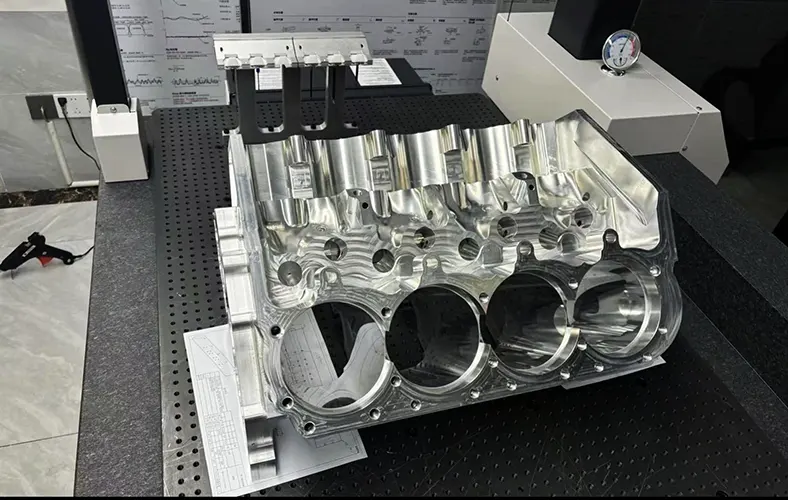
Advanced Strategies for Optimizing Multi-Axis Toolpaths in Engine Block Machining

With the rapid development of the automotive industry, the sector’s demands for engine block CNC machining quality and efficiency continue to rise. As one of the core components of an engine, the engine block features complex free-form surfaces that require high-precision machining using five-axis machining centers.

Advanced Strategies for Optimizing Multi-Axis Toolpaths in Engine Block Machining Read More »

Engine Block
Scroll to Top