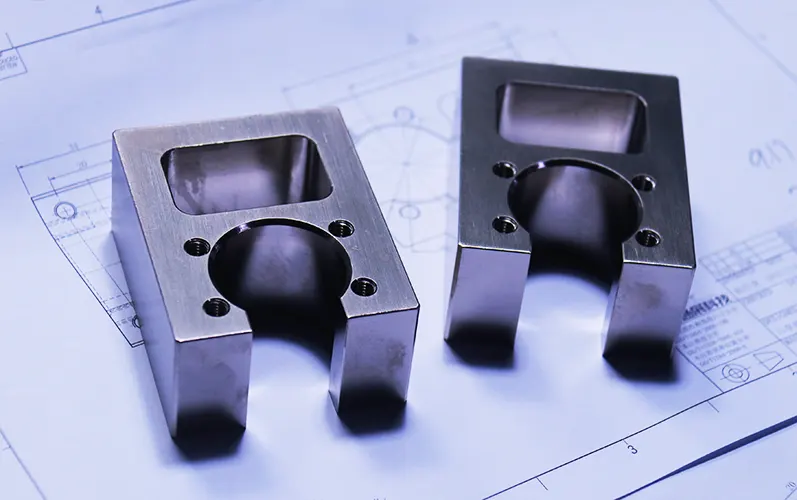
carbide end mill machining
Carbide end mill machining refers to the process of cutting, shaping, or finishing metal and other materials using end mills made from tungsten carbide — a super-hard material known for its excellent wear resistance and heat tolerance.
End mills are rotating cutting tools used on CNC milling machines or manual mills to remove material from a workpiece. Carbide versions can handle high-speed cutting and hard materials far better than traditional high-speed steel (HSS) tools.
⚙️ Why Use Carbide End Mills?
| Feature | Benefit |
|---|
| High hardness (~90 HRA) | Maintains sharpness even at high temperatures |
| Excellent heat resistance | Allows higher spindle speeds and feed rates |
| Wear resistance | Longer tool life, fewer tool changes |
| Rigidity | Reduces vibration and improves surface finish |
| Precision geometry | Achieves tight tolerances and fine finishes |
🛠️ Common Machining Applications
Carbide end mills are used for:
Slotting, contouring, and profiling
Drilling and plunging operations
Finishing molds, dies, and precision components
Machining hard materials like stainless steel, titanium, or Inconel
High-speed machining of aluminum and composites
🔩 Types of Carbide End Mills
| Type | Description | Best For |
|---|
| Flat End Mill | Square cutting edge | Slotting, roughing |
| Ball Nose End Mill | Spherical tip | 3D contouring, surface finishing |
| Corner Radius End Mill | Rounded edges | Stronger edges, better tool life |
| Roughing End Mill | Serrated flutes | Fast material removal |
| Micro End Mill | Small diameter | Precision machining and micro parts |
⚡ Key Machining Parameters
To optimize carbide end mill performance, control the following:
| Parameter | Description | Typical Range |
|---|
| Cutting Speed (Vc) | Surface speed (m/min) | 80–500 m/min (depends on material) |
| Feed Rate (f) | Feed per tooth (mm/tooth) | 0.02–0.3 mm/tooth |
| Depth of Cut (ap) | Axial cutting depth | 0.2–2× tool diameter |
| Coolant/Lubrication | Reduces heat and wear | Air blast, MQL, or coolant flow |
🔍 Best Practices
✅ Use rigid tool holders to reduce runout.
✅ Optimize spindle speed and feed for material type.
✅ Apply coatings (TiAlN, AlCrN, etc.) to enhance wear resistance.
✅ Avoid tool overload — use multiple passes for deep cuts.
✅ Perform toolpath simulation in CAM software to prevent collisions.
🚘 Industries and Applications
Carbide end mill machining is crucial in:
Aerospace — precision titanium or Inconel parts
Automotive — aluminum engine blocks, mold making
Medical devices — stainless steel surgical components
Electronics — copper and composite machining
🔧 In Short
Carbide end mill machining combines the hardness of tungsten carbide with advanced CNC control to achieve fast, precise, and efficient material removal.
It’s a core process for modern manufacturing that demands tight tolerances, high productivity, and superior surface quality.