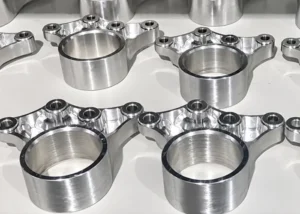
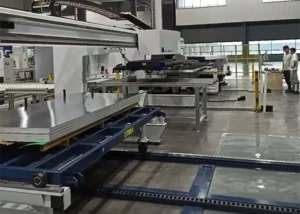
Sheet metal fabrication is extremely widespread in people’s daily lives; the production of virtually all kinds of household goods requires sheet metal fabrication.
Traditional sheet metal fabrication primarily relies on manual methods, which are not only inefficient but also prone to dimensional errors in the actual manufacturing process due to improper control, thereby affecting the functionality of the finished parts.
Therefore, it is essential to enhance the automation of sheet metal fabrication production lines to ensure that these operations are completed efficiently and with high precision.
Characteristics of Sheet Metal Fabrication
High Efficiency
In the sheet metal fabrication process, computer-controlled machinery can be used for mass-produced items, enabling precise and automated production operations and shortening fabrication lead times.
At the same time, the entire fabrication process can be carried out using a modular approach, which enhances the standardization of sheet metal fabrication.
Technological Innovation
Sheet metal fabrication technology continues to evolve with scientific and technological progress.
Various new technologies and equipment are being applied to sheet metal fabrication operations, creating more opportunities for the industry.
Through the use of advanced technologies such as CNC machine tools, complex sheet metal fabrication tasks can be completed efficiently and with high precision.
Furthermore, with the introduction of intelligent production systems, subsequent sheet metal fabrication operations can be managed automatically, thereby ensuring the rationality of the manufacturing process.
High Formability
Sheet metal fabrication can be shaped through various processes, including cutting, stamping, and bending.
Sheet metal materials can be rapidly formed into different shapes and structures.
This high degree of malleability gives sheet metal fabrication significant advantages during production, which is why it is widely used across various industries.
High Degree of Automation
Sheet metal fabrication processes can be easily integrated with technologies such as computers and precision measurement, allowing subsequent processing operations to be completed automatically.
Currently, in the sheet metal fabrication process, programming can be used to implement the necessary controls, enabling the rapid completion of complex sheet metal fabrication tasks involving a wide range of dimensions.
Furthermore, during sheet metal fabrication, the control precision of the spot diameter can reach the micrometer level, and the beam divergence angle is small;
Therefore, this technology can be applied in the field of precision manufacturing.
Advantages and Disadvantages of Automated Sheet Metal Processing Production Lines
Advantages
1. Improved Production Efficiency
Automated sheet metal fabrication production lines can operate continuously during actual production, ensuring that the fabrication process is not interrupted.
This significantly shortens the production cycle and enables production tasks to be completed efficiently.
For example, when mass-producing sheet metal components for automobiles, automated production lines can rapidly produce large quantities of standard-compliant sheet metal parts in a short period of time according to design specifications.
2. Improved Product Quality
When using automated production lines for sheet metal fabrication, the entire process can be flexibly adjusted based on actual conditions, and appropriate controls can be implemented to ensure that the final sheet metal parts meet expected quality standards.
This prevents the production of a large number of defective parts caused by operator error during the fabrication process.
For example, during actual production, utilizing an automated sheet metal processing production line ensures that the entire production process strictly adheres to specifications, preventing operational errors that could result in substandard parts and compromise their subsequent use.
3. Reducing Processing Costs
During actual operation, automated production lines reduce the reliance on manual labor in sheet metal fabrication and further improve the precision of various operations.
At the same time, they optimize production control to prevent significant waste of energy and materials during the sheet metal fabrication process.
For example, when fabricating sheet metal parts, the required materials can be prepared in advance, and processing specifications can be clearly defined to ensure that the entire fabrication process strictly follows the specifications, thereby reducing costs while maintaining processing quality.
4. Enhancing Corporate Competitiveness
Utilizing automated production lines improves the quality and efficiency of sheet metal fabrication, enabling companies to gain a competitive edge in the fiercely competitive market and achieve success.
Disadvantages
1. High Initial Investment
The construction and maintenance of automated production lines require significant human and financial resources, particularly during the initial construction phase, which demands substantial capital investment.
Therefore, during actual operations, companies must comprehensively assess their financial strength and specific market demands, develop appropriate plans, ensure the rationality of their investments, and avoid losses during operations caused by irrational investment decisions.
2. Limited Flexibility
Based on the actual operation of automated production lines, their application in sheet metal fabrication can provide a high degree of flexibility to the entire production process, allowing for rapid process switching according to production tasks.
However, in practice, the use of automated sheet metal fabrication production lines faces significant challenges when handling diversified, small-batch orders.
3. High Technical Requirements
Once an automated production line is put into operation, it must be operated by personnel with strong professional skills, and proper maintenance must be performed.
If staff members do not meet the required competency standards, the operation of the automated production line will inevitably be affected.
Therefore, companies must invest resources in training staff and providing technical support for the operation of the automated production line.
Only in this way can they ensure that the automated production line operates normally as required, completing sheet metal fabrication tasks efficiently and with high quality.
Modifications to the Automated Sheet Metal Processing Production Line
Production Line Configuration
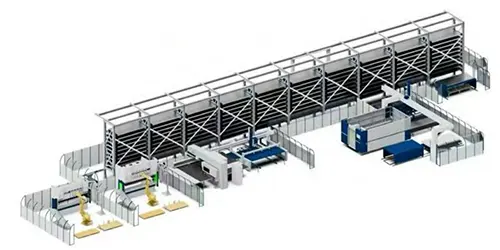
As shown in Figure 1, the automated sheet metal processing production line primarily consists of multiple components, including a material storage area, an automatic loading platform, a laser cutting machine, a CNC punch press, and an automatic press brake.
The performance of each component directly affects the smooth execution of subsequent sheet metal processing operations.
Therefore, during the design process, it is essential to ensure that every element meets the design requirements.
Only in this way can we ensure that subsequent sheet metal processing operations are carried out strictly in accordance with requirements, thereby guaranteeing that the quality of the produced sheet metal meets the standards required for practical applications.
Electrical Control
1. Principles of Electrical Control
The control system uses a PLC (Programmable Logic Controller) as its control core to ensure that machining control tasks are properly executed during the sheet metal fabrication process.
To ensure the normal and stable operation of the control system, both a master station and slave stations must be configured, with communication between the stations facilitated through network protocols.
During sheet metal fabrication operations, a production status display is used to transmit production process information—such as sheet metal processing status and material flow status—to the industrial control computer quickly and accurately.
Once the information is transmitted, it must be synchronized and forwarded to the remote monitoring center.
During the actual machining process, an information network for the production execution system is established using Ethernet communication, and this network is utilized to scientifically control sheet metal machining operations.
2. Control Logic
The upgraded system primarily features two operating modes: manual and automatic.
During sheet metal processing, when production operations proceed normally, multiple slave stations can operate simultaneously; communication between different stations is facilitated via the RS485 serial fieldbus and Ethernet.
Under the control of the master station, the system can perform various operations, including data transmission and interlocking.
The upper-level touchscreen in the system monitors the specific operating status of each slave station.
If any abnormalities are detected during monitoring, adjustments must be made promptly to ensure the smooth progress of sheet metal processing.
1) Master-Slave Station Hardware Connection and Fieldbus Communication
The specific connection between the master and slave stations in the system is primarily achieved through I/O boards, which use the fieldbus to receive signals generated by equipment such as loading/unloading robots, machine tools, and variable frequency drives during system operation, and perform the corresponding processing to ensure the stable operation of the automated sheet metal processing production line.
2) PLC Motion and Sequence Control for Sheet Metal Production
The role of the PLC in an automated sheet metal processing production line is primarily reflected in the following aspects.
The PLC controls the start and stop of various equipment on the production line, while also enabling speed regulation and sequence control.
This enhances the responsiveness of the production line during operation, reduces the occurrence of malfunctions, and prevents production disruptions caused by prolonged downtime.
With the aid of pulse output modules, the PLC can not only precisely position equipment but also plan complex motion trajectories, thereby ensuring the rationality of production.
For example, in a stamping shop, PLC operation can precisely control contactors and solenoid valves, ensuring that stamping dies open and close accurately during the production process and that sheet metal is precisely positioned, thereby producing qualified sheet metal parts in accordance with requirements.
3) HMI Monitoring and Production Data Management of PLC Systems
PLC systems are typically equipped with a human-machine interface (HMI), allowing operators to dynamically monitor production status and make corresponding adjustments during the production process.
PLCs feature data logging and storage capabilities. By utilizing these functions, production data can be comprehensively recorded and analyzed in detail, with the collected data applied to future maintenance, production optimization, and other tasks, thereby ensuring the efficiency of production.
Key Points of an Automated Sheet Metal Processing Production Line
1. Material Positioning Frame
For the material positioning frame in the production line, during the actual retrofitting process, it is necessary to comprehensively consider cost as well as the rationality and convenience of subsequent processing operations, and to adopt the principle of gravity-based centering.
In the layout design, frictionless steel balls are used, and electromagnets are installed in the lower stop plates along both the X-axis and Y-axis.
This design ensures that all material edges are precisely aligned during subsequent sheet metal processing, thereby preventing the final sheet metal parts from failing to meet design requirements due to improper control during the manufacturing process.
2. Production Control
By utilizing sensors installed along the production line, precise control is achieved over the presence of materials on the material table.
This clearly defines the specific pickup locations for the robot during sheet metal processing operations, ensuring the robot can pick up materials normally and preventing any disruption to sheet metal processing due to a lack of materials.
Using the open communication ports provided by machine tool manufacturers, raw materials are transported to the laser cutting machines or punch presses on the production line for subsequent processing.
Using the PLC control panel, dimensions are adjusted as needed to ensure they are appropriate.
During operation, the PLC can call up pre-programmed sequences for the punch press, ensuring that the machine operates normally in accordance with design requirements during subsequent sheet metal processing.
By using a PLC controller to moderately adjust the bending coefficient and employing various design approaches to clarify every detail of the design, sheet metal fabrication tasks can be completed through flexible production methods.
This not only improves sheet metal fabrication efficiency but also reduces fabrication costs.
3. Bending Fixture
During sheet metal processing, if multi-directional bending operations are required—such as when using a 6-axis robot—the process may not be completed successfully due to limitations on the size of the robot’s end-effector or singularities in the robot arm’s motion.
The positioning fixture used during the process can only assist with bending operations in a single direction.
To address this issue, the bending positioning rack must be redesigned to ensure its structural integrity and allow for adjustment of the spacing between horizontal material channels.
When setting up the material channels, operators can install multiple frictionless rollers.
These rollers help protect the surfaces of materials used in sheet metal fabrication—such as mirror-finished stainless steel and film-coated sheets—preventing damage that could adversely affect subsequent fabrication processes.
Results of the Sheet Metal Processing Automated Production Line Retrofit
The results of the retrofit have been remarkably significant.
In terms of floor space, the overall production area has been reduced by approximately 30%;
In terms of sheet metal processing operations, production capacity has been significantly increased, with a capacity boost ranging from 25% to 40%.
The upgraded automated sheet metal processing production line offers strong scalability.
During sheet metal processing operations, the entire processing sequence can be appropriately adjusted based on specific circumstances.
For example, the order of bending and punching can be adjusted to ensure optimal processing.
Furthermore, during the actual processing, the application of information technology allows for adjustments to production schedules, ensuring efficient production.
At the same time, appropriate management measures can be implemented during the production process.
Based on specific market demands for sheet metal parts, an intelligent processing system tailored to these needs can be established to better meet market requirements regarding quality, specifications, performance, and other aspects.
Conducting practical training and research activities focused on auxiliary tooling, machinery, and other related areas helps enhance the comprehensive capabilities of relevant staff, enabling them to competently perform sheet metal fabrication tasks and, in turn, provide greater talent support for the development of the entire industry.
Trends in the Development of Automated Sheet Metal Processing Production Lines
In recent years, various technologies—such as big data and artificial intelligence—have advanced rapidly, which has, to a certain extent, driven the development of automated sheet metal processing production lines.
In practice, these production lines are primarily evolving in the following directions.
Intelligence: In practical applications, automated production lines feature multiple functions, including self-diagnosis and self-learning.
The use of these production lines enables intelligent sheet metal processing operations.
Digitalization: During the operation of automated production lines, managers can utilize digital methods to carry out their work, leveraging data to drive production operations.
This ensures that sheet metal fabrication is completed smoothly under the precise guidance of data, thereby improving production efficiency and machining accuracy.
Flexibility: Automated production lines can adapt to the processing needs of sheet metal parts of various sizes and shapes, enabling the entire production process to be carried out in a flexible manner.
Environmental Sustainability: Automated production lines prioritize energy conservation and environmental protection during operation, and the increased application of green technologies during sheet metal processing helps promote sustainable development across the entire industry.
Automated sheet metal processing production lines represent the primary direction for the development of the sheet metal processing industry;
Their implementation drives sheet metal processing operations toward greater intelligence and precision.
Furthermore, with continuous technological advancements, automated sheet metal processing production lines will undoubtedly play a vital role in the future, thereby generating greater economic benefits for the manufacturing sector.
Conclusion
In summary, sheet metal fabrication will continue to evolve toward greater precision and automation.
Throughout the sheet metal fabrication process, it is essential to prioritize the use of advanced technologies and equipment to efficiently complete fabrication tasks, reduce energy consumption, improve the quality of sheet metal fabrication, and promote the stable development of the entire industry.