
How do different types of axis systems affect machining capabilities?
TonZaMaking
Introduction
Axis systems play a crucial role in machining capabilities, as they dictate the movements and orientations of the cutting tools in a manufacturing process. Different types of axis systems offer unique advantages and limitations that can significantly impact the precision, efficiency, and complexity of machined parts.
3-Axis Machining
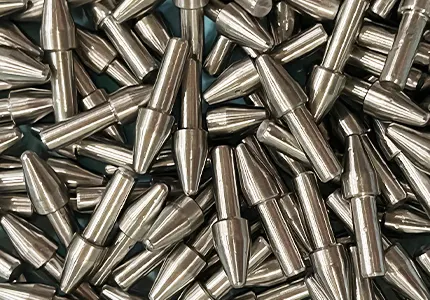
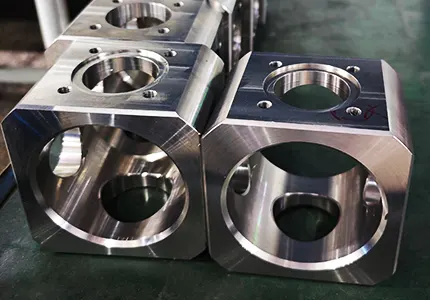
3-axis machining is the most basic form of machining, where the cutting tool moves along three linear axes: X, Y, and Z. This system is ideal for simple and flat surfaces, but it has limitations when it comes to machining complex geometries with undercuts, curved surfaces, and intricate details.
3-axis machines are commonly used for milling, drilling, and cutting operations on conventional materials such as metals, plastics, and wood.
Despite its limitations, 3-axis machining is cost-effective, easy to program, and widely available, making it a popular choice for a wide range of manufacturing applications.
Engineers and machinists often use 3-axis machines for prototyping, low-volume production, and simple parts that do not require complex machining operations.
4-Axis Machining
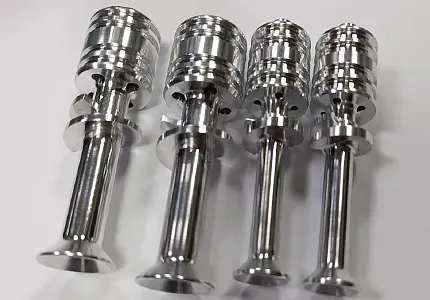
4-axis machining adds a rotary axis to the traditional 3-axis system, allowing the cutting tool to move along four axes: X, Y, Z, and a rotational axis. This additional axis enables machining operations on more complex geometries, including cylindrical parts, contoured surfaces, and multi-sided components.
4-axis machines are commonly used for manufacturing parts with features that require rotation, such as radial holes, threads, and undercuts.
By incorporating a rotary axis, 4-axis machining increases the flexibility and versatility of the machining process, reducing the need for multiple setups and tool changes. This results in improved accuracy, efficiency, and productivity, especially for parts with intricate designs and tight tolerances.
5-Axis Machining
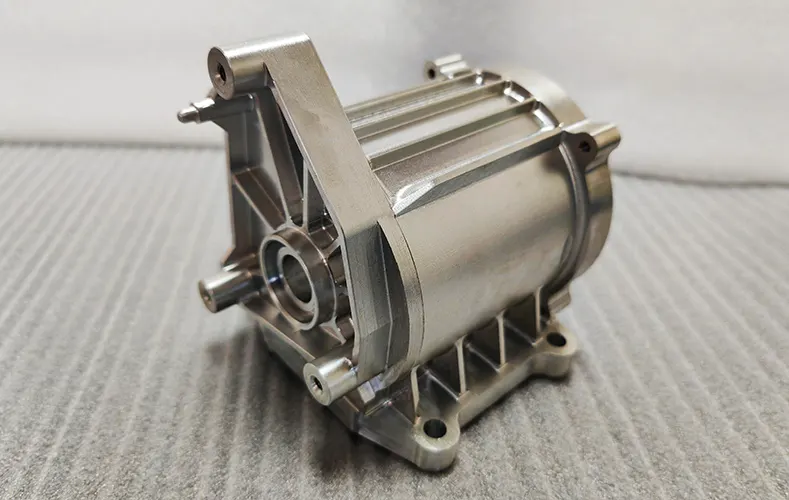
5-axis machining takes complexity to the next level by adding two rotary axes to the traditional 3-axis system, allowing the cutting tool to move along five axes: X, Y, Z, and two rotational axes.
This advanced axis system offers unparalleled capabilities for machining highly intricate and precise parts with complex geometries, compound angles, and sculpted surfaces.
5-axis machines are essential for the aerospace, automotive, and medical industries, where parts with intricate contours, tight tolerances, and challenging materials are common.
By leveraging the full range of motion provided by 5-axis machining, engineers and machinists can achieve superior surface finishes, geometrical accuracy, and part quality.
Comparison of Axis Systems
| Axis System | Advantages | Limitations |
|---|---|---|
| 3-Axis | Cost-effective, easy to program, suitable for simple parts | Limited capabilities for complex geometries, undercuts, and curved surfaces |
| 4-Axis | Increased flexibility, reduced setup time, ability to machine cylindrical parts | May require specialized tools, more complex programming |
| 5-Axis | Unparalleled precision, superior surface finishes, ability to machine complex geometries | Higher cost, specialized training required, longer programming time |
Conclusion
Understanding the impact of different types of axis systems on machining capabilities is crucial for engineers in the manufacturing industry.
Whether working with simple parts or complex geometries, choosing the right axis system can significantly influence the quality, efficiency, and cost-effectiveness of the machining process.
By leveraging the advantages of 3-axis, 4-axis, and 5-axis machining, engineers can optimize their manufacturing operations and achieve superior results for a wide range of applications.