
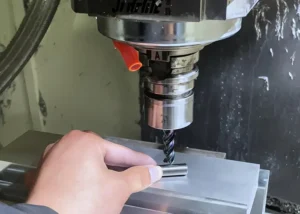
Can I CNC 316 stainless steel?
TonZaMaking
For engineers with a manufacturing background, the question of whether or not you can CNC 316 stainless steel is a common one. Stainless steel is known for its durability and resistance to corrosion, making it a popular choice in many industries.
However, because of its hardness and toughness, some people may be unsure if it is suitable for CNC machining.
Properties of 316 Stainless Steel
Before we delve into the machinability of 316 stainless steel, let’s first examine its key properties:
- High corrosion resistance
- Excellent strength and toughness
- Good weldability
- Non-magnetic
- High temperature resistance
Machinability of 316 Stainless Steel
When it comes to CNC machining, 316 stainless steel can be more challenging to work with compared to other materials.
This is due to its high hardness and toughness, which can cause tool wear and chip breaking issues during machining.
However, with the right tools and techniques, it is possible to CNC 316 stainless steel successfully.
One of the main factors to consider when CNC machining 316 stainless steel is the cutting speed. It is important to use a slow cutting speed to prevent overheating and premature tool wear.
Additionally, using a high-pressure coolant can help to improve chip control and extend tool life.
Tips for CNCing 316 Stainless Steel
Here are some tips to help you successfully CNC 316 stainless steel:
- Use carbide cutting tools with a high helix angle
- Opt for a slow cutting speed and high feed rate
- Use a high-pressure coolant to improve chip control
- Ensure proper fixturing to minimize vibrations
- Monitor tool wear regularly and replace as needed
Conclusion
While CNCing 316 stainless steel may require more attention to detail and the use of specialized tools, it is definitely possible with the right approach.
By understanding the properties of 316 stainless steel and following the tips outlined in this article, engineers with a manufacturing background can successfully machine this material for their applications.
Remember to always test your cutting parameters and adjust as needed to achieve the best results.
1 thought on “Can I CNC 316 stainless steel?”
Clear enough for my kid, deep enough for me.