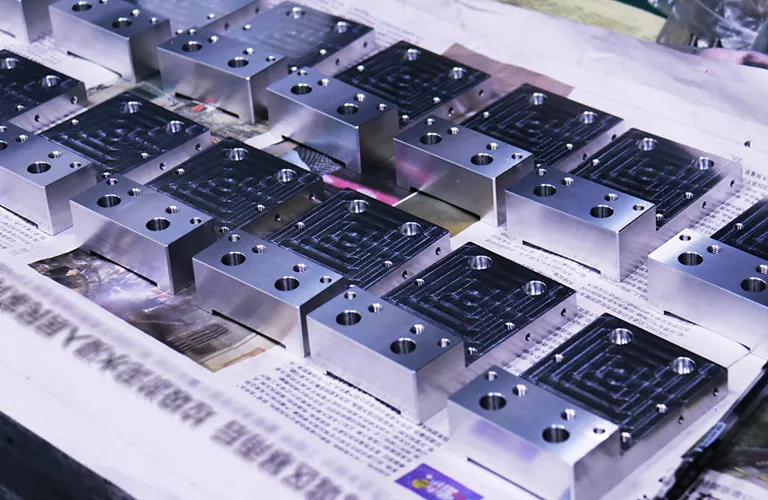
Fixture Optimization
Fixture Optimization refers to the systematic process of improving fixture design, clamping strategy, structural performance, and manufacturing efficiency to achieve higher accuracy, greater stability, lower cost, and improved machining productivity.
In CNC machining, fixtures directly affect:
-
Part precision
-
Tool access
-
Cutting stability
-
Cycle time
-
Machine safety
-
Automation compatibility
Optimizing fixtures ensures maximum machining performance and minimum operational risk, especially in high-value industries such as aerospace, automotive, medical devices, robotics, and precision mold manufacturing.
Why Fixture Optimization Is Important
A poorly designed or outdated fixture can lead to:
Optimization solves these issues by refining both the design and the use of fixtures.
Key Components of Fixture Optimization
1. Structural Optimization
Improves rigidity, weight, and durability:
-
Finite Element Analysis (FEA) for stress and deformation control
-
Topology optimization to reduce unnecessary mass
-
Material upgrades (steel → alloy steel → composite)
-
Stiffness enhancement through ribs, supports, and better geometry
2. Clamping Force Optimization
Ensures stable machining without part distortion:
-
Selecting correct clamping points
-
Adjusting clamping force magnitude
-
Using hydraulic, pneumatic, or servo-controlled clamps
-
Adding anti-deformation pads or floating supports
Predictive simulation is often used to study force distribution.
3. Precision and Repeatability Enhancement
Focuses on positioning accuracy:
This reduces setup time and improves part consistency.
4. Fixture Layout Optimization
Improves productivity and tool access:
-
Designing for multi-face machining
-
Minimizing tool interference and collision risk
-
Allowing better chip evacuation and coolant flow
-
Supporting simultaneous machining (multi-station fixtures)
5. Process Integration Optimization
Aligns the fixture with the CNC process design:
-
Compatible with 3-axis, 4-axis, or 5-axis machining
-
Enables full toolpath coverage
-
Reduces tool changes and repositioning
-
Matches fixture stiffness with cutting parameters
6. Automation & Digitalization Optimization
Modern manufacturing often optimizes fixtures for:
-
Robotic loading/unloading
-
Pallet automation systems
-
RFID tracking
-
Smart sensors (clamping force, vibration, pressure)
-
Digital twins for virtual machining verification
7. Cost Optimization
Reduces manufacturing and operational costs by:
-
Using modular fixture systems
-
Reducing non-value-added machining time
-
Extending fixture service life
-
Simplifying structure for lower manufacturing cost
-
Minimizing downtime with quick-change designs
Benefits of Fixture Optimization
| Benefit |
Explanation |
| Higher machining accuracy |
Better rigidity and precision location |
| Increased productivity |
Faster setups, multi-station machining |
| Longer tool life |
Reduced vibration and stable cutting |
| Lower scrap and rework |
Improved repeatability |
| Enhanced safety |
Stronger, more stable fixtures |
| Reduced manufacturing cost |
Less downtime, easier operation |
| Supports automation |
Ready for robotic or palletized systems |
Applications of Fixture Optimization
Fixture Optimization is widely used in:
-
CNC milling and turning
-
4-axis and 5-axis machining
-
Automotive engine block fixtures
-
Aerospace structural component fixtures
-
Medical device micro-machining
-
Mold and die manufacturing
-
Composite material machining
Summary
Fixture Optimization is the engineering process of improving fixture structure, clamping, precision, accessibility, and cost-efficiency to achieve the best possible machining performance. By integrating simulation, automation, and modern engineering tools, manufacturers can significantly enhance machining stability, quality, and productivity.