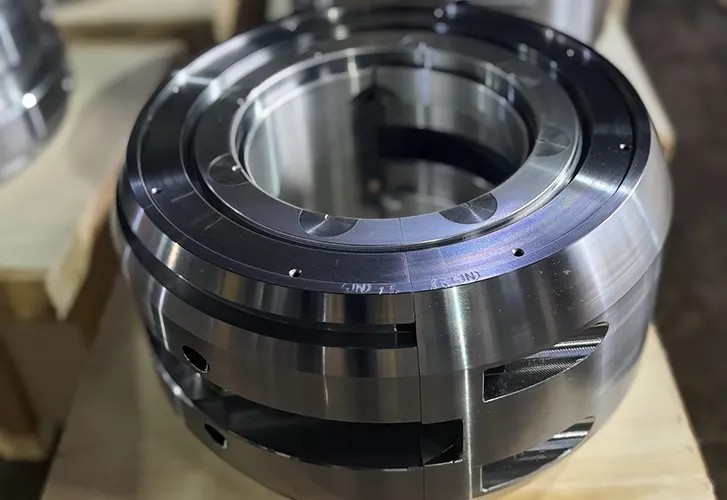
Deformation Prediction Modeling
Ever wondered how engineers predict whether a bridge will sag, a jet wing will flex, or a car frame will bend under load — before any metal is even cut? That’s the magic of deformation prediction modeling.
In today’s high-tech world, we can simulate how materials will deform under stress, heat, or time. This not only prevents failure but also saves money, reduces waste, and makes designs smarter and safer.
Let’s dive into what deformation prediction modeling really is, how it works, and why it’s reshaping modern engineering.
Understanding Deformation in Engineering
What Is Deformation?
Deformation simply means a change in shape or size of a material when a force, temperature, or other condition is applied. It’s everywhere — from the bending of a beam under weight to the warping of a 3D-printed part as it cools.
Types of Deformation (Elastic, Plastic, Thermal, etc.)
-
Elastic Deformation: Temporary and reversible — like stretching a spring.
-
Plastic Deformation: Permanent change, such as metal bending.
-
Thermal Deformation: Expansion or contraction caused by temperature.
-
Creep Deformation: Slow, time-dependent deformation under long-term stress.
-
Residual Deformation: Deformation that remains after loads or heat are removed.
Why Predicting Deformation Matters
Because deformation can lead to:
-
Dimensional inaccuracies
-
Mechanical failure
-
Reduced product lifespan
Predicting it helps engineers design components that perform predictably, avoiding costly trial-and-error experiments.
The Concept of Deformation Prediction Modeling
What Is Deformation Prediction Modeling?
It’s a computational or analytical process used to forecast how a structure or material will deform under specific conditions. Think of it as a “digital twin” that lets you see stress and strain before real-world testing.
Goals and Advantages of Predictive Modeling
-
Optimize design before manufacturing.
-
Predict failures and weak zones early.
-
Reduce material waste and development time.
-
Improve reliability and safety.
In short, it’s the backbone of smart, data-driven engineering.
Core Principles Behind Deformation Prediction
Material Behavior and Stress-Strain Relationships
At the heart of every model lies the stress-strain curve, which defines how materials react under load. Understanding yield strength, modulus of elasticity, and ductility is essential for accurate prediction.
Boundary Conditions and Loading
These define where and how forces are applied. Boundary conditions act like anchors — get them wrong, and your simulation results will be meaningless.
Heat Transfer and Thermal Effects
Temperature changes cause materials to expand or contract. Models must include thermal-mechanical coupling for realistic deformation forecasting.
Data and Inputs for Deformation Models
Material Properties
Elastic modulus, Poisson’s ratio, yield stress, and thermal conductivity — these define how your material behaves.
Geometric Features of Components
Sharp corners, thin walls, or complex curves can concentrate stress and increase deformation risk.
Environmental and Operational Conditions
External factors such as temperature, vibration, humidity, and load cycles directly affect deformation.
Experimental and Simulation Data Sources
Engineers use data from:
Techniques Used in Deformation Prediction Modeling
Analytical Models
These use classical equations of elasticity, plasticity, and beam theory. Analytical models are fast but limited to simple shapes and load conditions.
Finite Element Analysis (FEA)
The gold standard for modern engineering. FEA divides complex structures into small “elements” and computes stress and strain in each one. It’s precise, scalable, and visual.
Machine Learning and AI-Based Models
AI is changing the game. Using historical data, neural networks can predict deformation without running full FEA simulations, saving massive computation time.
Hybrid Approaches (Physics + AI)
The latest trend merges physical equations with AI models — combining accuracy with speed. These “physics-informed” models learn from data and obey the laws of mechanics.
Steps in Developing a Deformation Prediction Model
Step 1 – Define the Objective
Clarify what you’re trying to predict — elastic deflection, plastic strain, or thermal distortion? The purpose defines the modeling approach.
Step 2 – Gather Data and Parameters
Collect all material, geometry, and load data. More accurate data = more reliable predictions.
Step 3 – Build the Mathematical or Simulation Model
Using FEA or another method, simulate how your component reacts to expected loads and conditions.
Step 4 – Validate with Experimental Results
Compare your model predictions with lab or real-world test data. Adjust parameters until your model matches reality.
Step 5 – Optimize and Iterate
Once validated, use your model to run what-if scenarios — tweaking materials, shapes, or processes to improve performance.
Common Challenges in Deformation Modeling
Nonlinear Material Behavior
Real materials rarely behave linearly. Plasticity, creep, and strain hardening introduce nonlinearities that make models complex.
Complex Boundary Conditions
In reality, loads are rarely uniform or predictable. Simulating accurate boundary conditions is a major challenge.
Computational Cost and Accuracy Trade-Off
High-fidelity models can take hours or days to compute. Engineers must balance speed vs. precision.
Applications of Deformation Prediction Modeling
Manufacturing and Metal Forming
Predicting deformation helps optimize forging, rolling, extrusion, and stamping — ensuring dimensional accuracy and tool life.
Aerospace and Automotive Design
Used to forecast wing flex, body panel warping, and frame distortion under dynamic loads, improving safety and aerodynamics.
Civil and Structural Engineering
Deformation models help engineers predict bridge deflection, column buckling, and thermal expansion under environmental loads.
Additive Manufacturing (3D Printing)
Thermal stresses in 3D printing cause part warping. Predictive models help compensate and correct deformation during the print process.
Recent Advances in Predictive Modeling
AI-Enhanced Simulation Tools
AI-driven solvers can predict deformation patterns in seconds — accelerating product development cycles.
Real-Time Deformation Monitoring with Sensors
Integrating IoT sensors with predictive models allows for real-time feedback loops, adjusting loads before damage occurs.
Digital Twins for Predictive Maintenance
A “digital twin” mirrors a physical asset’s behavior, continuously updating based on sensor data to forecast and prevent failures.
Future of Deformation Prediction Modeling
Integration of Big Data and Cloud Computing
Cloud-based simulation platforms allow massive, distributed computations — ideal for complex deformation models.
Adaptive Learning Models
AI systems that learn from each new test or sensor reading, becoming smarter and more accurate over time.
Sustainable Design and Predictive Optimization
By reducing waste, overdesign, and failed prototypes, deformation prediction modeling supports greener, more efficient engineering.
Conclusion
Deformation prediction modeling is the digital crystal ball of modern engineering. It lets designers see how materials behave before reality happens, turning guesswork into data-driven confidence.
Whether through physics-based simulations or AI-powered models, the goal remains the same: to predict, prevent, and perfect.
As technology advances, deformation modeling will continue to evolve — blending the precision of science with the intelligence of data — shaping the next generation of safer, smarter, and more sustainable designs.