Cutting Parameters Optimization
Have you ever wondered why two machinists using the same machine and tool can get totally different results? The secret often lies in how well they optimize their cutting parameters.
Cutting parameters—like speed, feed, and depth—determine the performance, precision, and cost-effectiveness of machining operations. Get them right, and you’ll boost productivity, extend tool life, and achieve smoother finishes. Get them wrong, and you’ll face excessive wear, poor quality, and wasted resources.
This guide breaks down everything you need to know about cutting parameters optimization — from the fundamentals to advanced AI-driven methods used in smart factories today.
What Are Cutting Parameters?
The Core Parameters in Machining
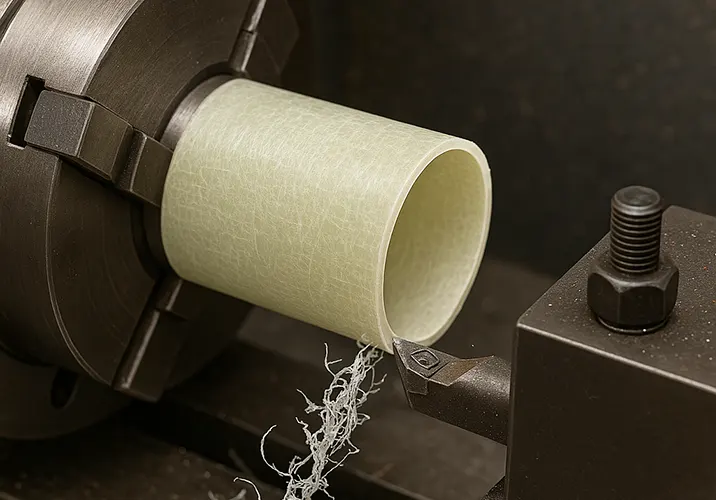
Every machining operation—turning, milling, drilling, or grinding—relies on a few fundamental parameters that control the interaction between the tool and the workpiece.
Cutting Speed (Vc)
This is the speed at which the cutting edge moves relative to the workpiece surface, usually expressed in meters per minute (m/min) or surface feet per minute (SFM).
Higher cutting speeds remove material faster but can increase tool wear if not managed properly.
Feed Rate (f)
Feed rate determines how much the tool advances per revolution or per tooth. It affects chip thickness, surface finish, and overall cutting force. A small change here can make a huge difference in finish quality.
Depth of Cut (ap)
Depth of cut is the thickness of material removed in one pass. Increasing it raises material removal rate but also raises cutting forces and tool stress.
Tool Geometry and Material
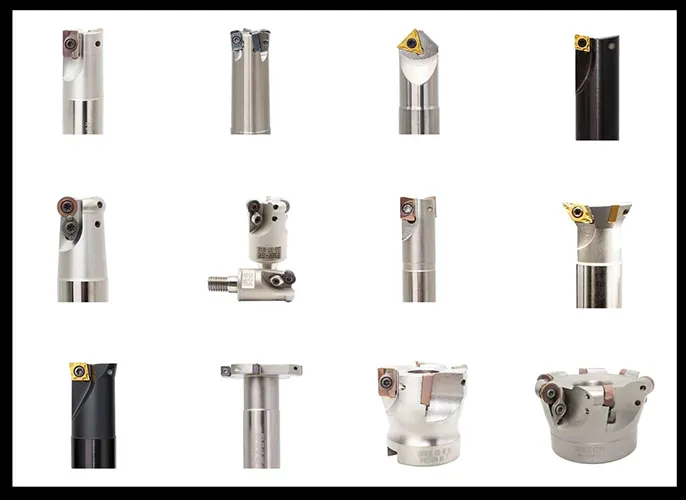
The tool’s shape, angle, and material (like carbide, HSS, or coated inserts) influence cutting efficiency. The right geometry helps reduce friction, improve chip flow, and minimize vibration.
The Importance of Cutting Parameter Optimization
Balancing Productivity and Tool Life
The eternal trade-off: faster cutting means higher output, but also faster tool wear. Optimization finds the sweet spot where maximum productivity meets minimum wear.
Cost Efficiency and Energy Savings
Machining is energy-intensive. By fine-tuning parameters, you reduce power consumption, coolant usage, and rework — saving time and money.
Achieving Precision and Surface Quality
The smoother the operation, the better the surface finish and dimensional accuracy. Proper optimization minimizes chatter, thermal deformation, and burr formation.
Factors Influencing Cutting Parameters
Workpiece Material Properties
Hardness, toughness, and thermal conductivity dictate how aggressive your parameters can be.
For instance:
Aluminum: Allows high cutting speeds, low tool wear.
Titanium or Inconel: Require lower speeds and higher lubrication due to poor heat conductivity.
Tool Material and Coating
Modern coatings like TiAlN, TiCN, or diamond-like carbon reduce friction and resist heat, enabling higher cutting speeds.
Machine Tool Capability
No matter how well you plan your parameters, they’re limited by the machine’s rigidity, power, and vibration characteristics.
Cooling and Lubrication Conditions
Proper cooling dissipates heat, while lubrication reduces friction. The right coolant allows you to safely increase speed and feed without overheating.
Desired Surface Finish and Tolerance
If you’re machining aerospace or medical parts, tight tolerances demand precision — and therefore, conservative parameters.
Methods of Optimizing Cutting Parameters
Empirical and Experimental Methods
Traditionally, machinists relied on trial and error—changing one variable at a time to see what worked best. While simple, it’s time-consuming and often wasteful.
Analytical Models and Formulas
Mathematical models (like Taylor’s tool life equation) predict how cutting speed affects tool life:
VcTn=CV_c T^n = CVcTn=C
Where Vc is cutting speed, T is tool life, n is a constant, and C is a material-dependent coefficient.
Such formulas provide useful starting points for optimization.
Taguchi Method (Design of Experiments)
The Taguchi method uses statistical design of experiments (DOE) to find optimal parameter combinations with minimal tests. It’s a smart way to analyze the impact of multiple factors at once.
Response Surface Methodology (RSM)
RSM builds mathematical models to study relationships between variables and responses (like surface roughness or tool wear). It’s powerful for multi-variable optimization.
Artificial Intelligence and Machine Learning Approaches
The latest frontier! AI systems analyze massive machining data to predict performance under various conditions. Neural networks and genetic algorithms can identify optimal cutting parameters automatically—no guesswork required.
Optimization Techniques in Practice
Multi-Objective Optimization (Tool Life vs. Productivity)
Sometimes, maximizing one goal hurts another. For instance, increasing speed improves productivity but shortens tool life. Multi-objective algorithms help find balanced solutions—often represented as Pareto-optimal fronts.
Use of Simulation Tools and CAD/CAM Software
Modern software like Mastercam, Siemens NX, and Fusion 360 integrates simulation modules that optimize cutting paths, speeds, and feeds virtually before you even touch the workpiece.
Real-Time Monitoring and Adaptive Control
Smart CNC systems equipped with sensors can monitor forces, temperature, and vibration during cutting and automatically adjust parameters in real-time — a game-changer for precision machining.
Common Challenges in Optimization
Uncertainty in Material Properties
Even within the same batch, material properties can vary, causing unpredictable results. This makes consistent optimization tricky.
Machine Vibration and Tool Wear
As tools wear, they behave differently. If parameters aren’t adjusted, this leads to rough surfaces or broken inserts.
Inconsistent Cooling or Lubrication
Poor coolant flow or blocked nozzles can ruin an otherwise perfect setup, causing localized overheating or poor chip evacuation.
Case Studies: Practical Examples of Optimization
CNC Turning of Stainless Steel
Stainless steel tends to harden when cut. Using lower cutting speeds with high feed rates and ample lubrication optimizes performance.
Taguchi analysis showed that cutting speed has the greatest effect on tool wear, while feed rate most affects surface roughness.
High-Speed Milling of Aluminum Alloys
For aluminum, optimization focuses on maximizing cutting speed (up to 600 m/min) while controlling tool temperature. Synthetic coolants and sharp carbide tools yield optimal results.
Hard Turning of Tool Steels
When machining hardened steels (above 50 HRC), small depths of cut and moderate feed rates are key. Using ceramic or CBN tools allows dry machining at high speeds while maintaining excellent finish.
Future Trends in Cutting Parameter Optimization
Smart Manufacturing and IoT Integration
In the era of Industry 4.0, machines are connected and data-driven. IoT sensors track spindle load, tool wear, and vibration — feeding data to AI systems that optimize parameters automatically.
Data-Driven Optimization with Digital Twins
A digital twin is a virtual replica of your machining setup. It lets you test and tweak parameters digitally before applying them on the shop floor — saving time and resources.
Sustainability and Green Machining
Future optimization isn’t just about speed or cost — it’s about reducing environmental impact. Combining MQL systems, biodegradable fluids, and low-energy machining will define the next generation of manufacturing.
Conclusion
Cutting parameters optimization isn’t just a technical adjustment — it’s the heartbeat of efficient machining. By fine-tuning speed, feed, and depth of cut, you can unlock massive improvements in productivity, surface quality, and sustainability.
Whether you rely on hands-on experience or advanced AI-driven models, the goal remains the same: cut smarter, not harder. The future of manufacturing belongs to those who master the science — and art — of optimization.