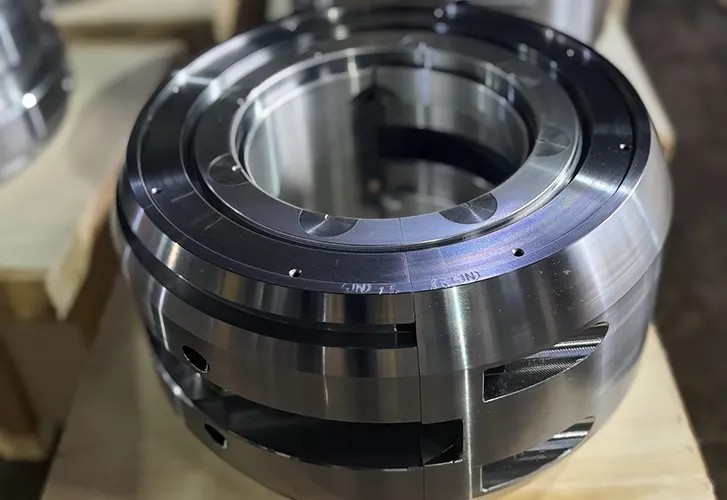
Corner Transition Deformation
Have you ever noticed how the corners of metal or structural parts sometimes warp, bend, or lose their intended shape after manufacturing or use? That’s corner transition deformation — a phenomenon that may seem small but can cause big headaches in engineering and design. Whether it’s the corner of an aircraft wing, a car chassis, or even a building beam, this type of deformation affects performance, safety, and longevity.
In this article, we’ll unpack what corner transition deformation is, why it happens, how to prevent it, and where modern technology is making strides to keep those corners crisp and reliable.
Understanding Corner Transition Deformation
What Is Corner Transition Deformation?
Corner transition deformation refers to the distortion or warping that occurs at the intersection or curve between two surfaces — usually corners or edges — during or after manufacturing, loading, or thermal exposure. Simply put, it’s when corners don’t stay the way you designed them to be.
Why It Happens
Corners naturally act as stress concentrators. When force, heat, or pressure is applied to a material, corners bear the brunt because they interrupt the smooth flow of stress. Imagine squeezing a balloon — the bulge forms where the pressure isn’t evenly distributed. Corners behave the same way.
Material Stress and Strain
Different materials respond differently to applied forces. Metals, plastics, and composites each have their thresholds for elastic (temporary) and plastic (permanent) deformation. When stress exceeds the material’s elastic limit, permanent corner warping occurs.
Environmental and Mechanical Factors
Temperature fluctuations, vibration, and mechanical load cycles accelerate corner deformation. In manufacturing, even tool misalignment or uneven cooling can create residual stresses that cause corners to twist or bend later on.
The Science Behind Corner Transitions
The Role of Stress Concentration
Corners amplify stress. A sharp corner can have stress levels up to three times higher than flat surfaces. Engineers often use fillets (rounded edges) to reduce these concentrations and distribute stress more evenly.
Plastic vs. Elastic Deformation
When stress is applied:
Understanding this boundary helps designers determine safety margins and material choices.
Common Areas Where It Occurs
Metal Forming and Manufacturing
Processes like bending, stamping, or welding can cause localized deformation in corners. During cooling, metals shrink unevenly, causing visible corner transitions to deform.
Civil and Structural Engineering
Corners in concrete beams or steel frames face heavy loads, thermal expansion, and environmental wear. Over time, this can lead to cracking, chipping, or bending at corners.
Automotive and Aerospace Applications
In cars and aircraft, corner deformation can affect aerodynamics and structural stability. Even a millimeter of warping in an aircraft panel can change airflow dynamics or reduce fuel efficiency.
Effects of Corner Transition Deformation
Impact on Structural Integrity
Deformation weakens load paths, reduces stiffness, and can lead to fatigue failure over time. Once corners start to deform, the entire component might fail prematurely under repeated loading.
Aesthetic and Functional Issues
Beyond performance, deformation also impacts appearance — uneven panels, visible cracks, or misaligned joints can compromise both looks and assembly quality.
Methods to Predict and Measure Deformation
Finite Element Analysis (FEA)
FEA is a simulation technique used to predict how materials will react to forces, heat, and pressure. By modeling the corner’s geometry and material properties, engineers can forecast where and how deformation will occur.
Simulation and Modeling Tools
Software like ANSYS, SolidWorks Simulation, and Abaqus help visualize stress distribution and corner performance under different scenarios, allowing design adjustments before real-world production.
Experimental Techniques
Strain gauges, digital image correlation (DIC), and 3D scanning allow real-time measurement of deformation during testing. These methods bridge the gap between simulation and reality.
How to Prevent Corner Transition Deformation
Material Selection and Design Optimization
Choosing materials with high yield strength and thermal stability reduces deformation risks. Design-wise, using rounded corners, proper thickness transitions, and gradual radius changes helps distribute stress evenly.
Stress-Relief Techniques
Heat Treatment and Annealing
Post-manufacturing heat treatments like annealing relieve internal stresses that lead to corner deformation. Think of it as giving the material a “spa day” to relax after the intense stress of forming or welding.
Fillet Radius Optimization
By increasing the fillet radius — the rounded transition between surfaces — stress concentrations can be reduced dramatically. The larger the radius, the smoother the stress flow.
Real-World Examples and Case Studies
Aerospace Components
Aircraft engine mounts and wing joints are notorious for corner deformation due to extreme pressure and temperature cycles. Advanced alloys and predictive modeling are used to minimize warping and maintain precision.
Automotive Panels and Chassis
Car door frames, bumpers, and chassis corners experience repeated impacts and vibrations. Manufacturers use hydroforming and multi-phase steels to keep corners strong yet flexible.
Building Corners and Joints
Concrete structures face corner deformation due to shrinkage and thermal movement. Engineers counter this with expansion joints, reinforcement bars, and fiber-reinforced concrete.
Future Trends and Innovations
Smart Materials and Adaptive Designs
The future is all about materials that can “heal” or adapt under stress. Shape-memory alloys and self-healing polymers are being tested to automatically restore corner shapes when deformed.
AI and Machine Learning in Predictive Analysis
Machine learning algorithms can analyze large datasets from sensors and simulations to predict deformation patterns with remarkable accuracy — often before they even happen. It’s like giving engineers a crystal ball for stress management.
Conclusion
Corner transition deformation may seem like a niche topic, but it’s one that impacts nearly every engineered product you see — from the car you drive to the buildings around you.
Understanding how and why corners deform allows engineers to design stronger, longer-lasting, and more efficient structures.
With modern simulation tools, smart materials, and predictive AI, the battle against corner deformation is steadily being won — one corner at a time.