
With the rapid advancement of advanced manufacturing equipment and simulation analysis technologies, the lightweight design and manufacturing of components have become feasible.
Such components typically feature thin walls, low rigidity, and high precision.
During machining, improper selection of process methods, cutting parameters, and clamping methods, coupled with the release of residual stresses, can easily lead to deformation exceeding tolerances.
This paper investigates precision machining processes using a specific carrier rocket docking frame as a case study.
It addresses machining challenges arising from the part’s large diameter, thin walls, and low rigidity.
The analysis focuses on the influence of blank forming processes and cutting force deformation.
By optimizing the overall process plan, selecting appropriate process parameters, and implementing supplementary temperature differential measurements alongside stress relief aging, the product’s machining accuracy was enhanced.
Product Structure and Analysis
Structural Characteristics
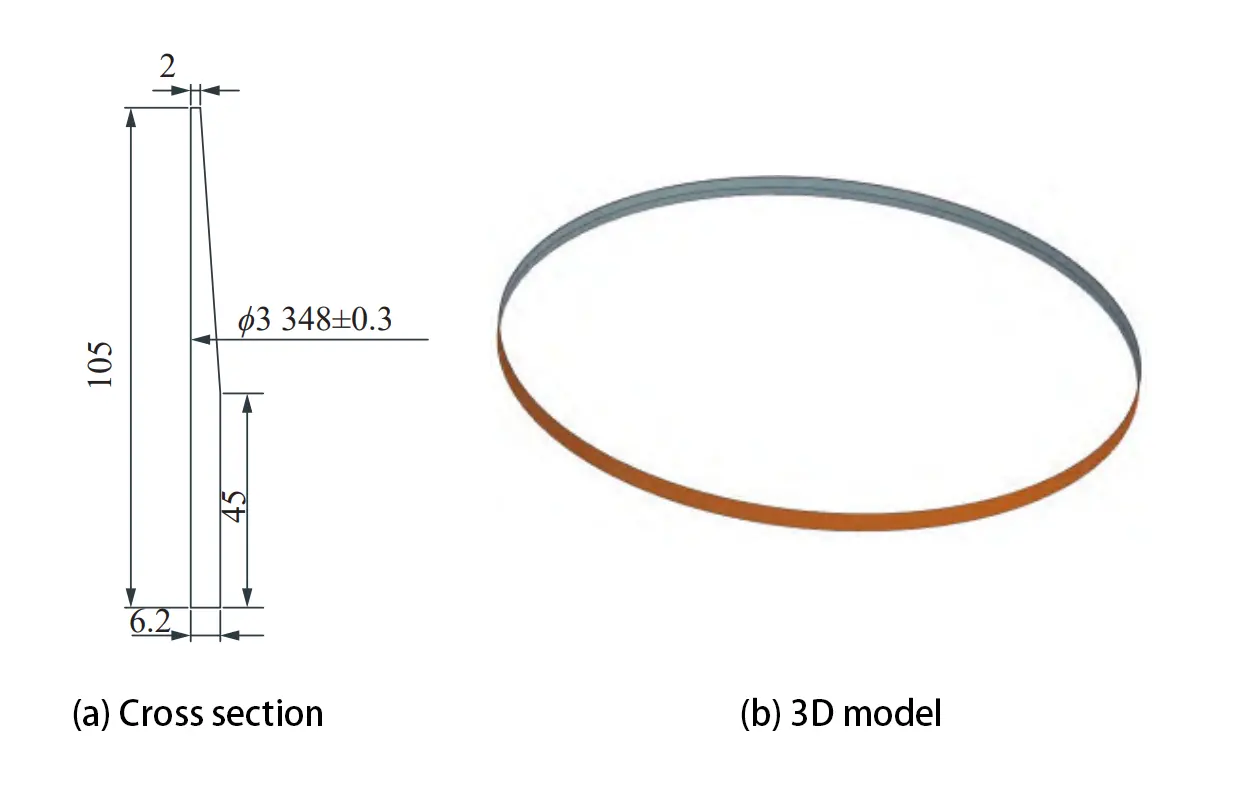
The cross-section and 3D model of a thin-walled ring frame component for a launch vehicle are shown in Figure 1. The part is fabricated from 2A14-T6 aluminum alloy.
Its cross-section closely resembles a right-angled trapezoid, with an upper wall thickness of 2 mm and a lower wall thickness of 6.2 mm.
The total height of the part is 105 mm, the outer diameter is ϕ3348 mm ± 0.3 mm, and the finished part weighs approximately 15.1 kg.
The part structure exhibits the following characteristics:
(1) Thin-walled, low rigidity.
The part’s diameter-to-thickness ratio (outer diameter divided by wall thickness) is as high as 540 (3348 ÷ 6.2 = 540), while the maximum aspect ratio at the cross-section is only 16. 9 (105:6.2 ≈ 16.9), making it a typical large-diameter, thin-walled, low-rigidity ring frame structure with poor resistance to deformation.
During machining, it is highly susceptible to deformation due to the effects of internal residual stresses, cutting tool forces, and fixture clamping forces.
(2) High precision requirements.
The outer diameter and lower end wall thickness of this part have explicit tolerance specifications, while its inner diameter is constrained by a tolerance chain.
This means both the outer and inner diameters must meet stringent tolerances during actual machining.
Furthermore, the outer diameter tolerance zone width is only 0.6 mm, meaning machining and measurement errors cannot exceed 0.018%.
(3) Significant random deformation.
During machining, as material is progressively removed, factors such as cutting forces, clamping forces, and frictional heat cause redistribution of internal residual stresses, resulting in irreversible plastic deformation.
Furthermore, due to variations in wall thickness across the part’s cross-section, material anisotropy, and residual stress distribution, deformation tendencies differ at various locations.
Consequently, the resulting random deformation cannot be accurately predicted.
Part Deformation Analysis
Deformation in thin-walled aluminum alloy parts is primarily influenced by stresses, which often originate from residual internal stresses in the blank, cutting forces generated during machining, and clamping forces from positioning fixtures.
Although the magnitude and direction of these stresses vary and exhibit complex coupling mechanisms, they generally exist in a self-balancing state.
During machining, the original internal stress equilibrium is disrupted by material removal.
A new internal stress equilibrium re-establishes itself under the altered geometry, inducing corresponding deformation tendencies.
Deformation occurs when the part’s inherent rigidity is insufficient to counteract these forces.
Therefore, reducing part stresses effectively minimizes deformation risks in thin-walled components and enhances manufacturing precision.
(1) Reduce residual stresses in the blank.
Select appropriate blank forming processes to control the distribution of initial residual stresses.
Eliminate quenching residual stresses in advance to avoid localized stress concentrations.
Release or homogenize residual stresses through methods such as heat treatment, aging, deep cryogenic treatment, or pre-stretching deformation.
(2) Minimize cutting stresses.
During tool-part contact, thermal-mechanical coupling generates cutting forces.
Improving blank material utilization and reducing cutting parameters effectively minimizes processing stresses.
Optimizing cutting tools and process parameters can adjust force distribution patterns, mitigating their impact on part deformation.
(3) Optimize fixture clamping force distribution.
First, rationally adjust the fixture structure to increase contact area with the part, preventing localized stress concentration.
Second, adopt flexible clamping methods to reduce rigid “hard-on-hard” support, avoiding dimensional rebound after fixture removal.
Blank Forming Process
The blank of a part significantly impacts subsequent machining processes and quality control.
If the blank allowance is excessive, more time is required to remove it, not only wasting resources but also generating increased cutting stresses that cause machining deformation.
If the blank allowance is insufficient, more precise equipment, tooling, and gauges are needed to control product deformation.
Given the rotational forming characteristics of ring-frame components along their central axis, common blank forming methods include forging, spinning, and welding.
Forging Process for Ring-Frame Blanks
Forging remains the most prevalent blank forming process for ring-frame parts, with domestic production achieving aluminum alloy rings up to 10 m in diameter.
However, aluminum alloy forging imposes specific requirements on the diameter-to-thickness ratio.
Taking this component as an example, the thickness of a ϕ3 m-class forged ring typically does not fall below 30 mm.
Thus, the recommended blank specifications for this part are ϕ3372 mm × ϕ3302 mm × 125 mm, weighing approximately 128.1 kg. The material removal rate for the finished part reaches as high as 88.2%.
The excessive material allowance in the blank not only leads to raw material waste and increased procurement costs but also causes the accumulation of cutting stresses during machining, resulting in part deformation.
Spinning Process Characteristics and Limitations
Spinning technology for aluminum alloys has been extensively applied in aerospace, enabling the spinning of propellant tank bottoms for launch vehicles at scales of ϕ3,350 mm and ϕ5,000 mm.
Due to significant material flow deformation during spinning, the original sheet must possess high elongation at fracture.
However, the elongation after fracture of 2A14-T6 aluminum alloy typically does not exceed 10%, making it unsuitable for direct spinning.
Therefore, 2A14-O aluminum alloy is generally used for spinning, followed by solution treatment and aging heat treatment to transform it into the 2A14-T6 condition, achieving the final properties required for the component.
To mitigate the impact of deformation caused by rapid cooling during the blank’s solution heat treatment on subsequent machining, the common approach is to increase the wall thickness allowance of the blank.
This method also results in excessive material allowance.
Roll Bending and Welding Forming Method
Friction stir welding offers advantages such as high weld strength coefficient, minimal weld deformation, and low defect rates.
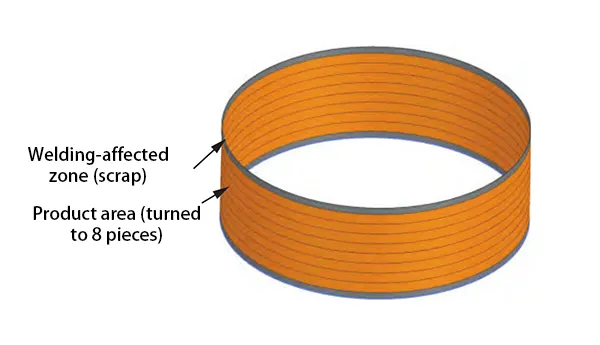
Therefore, the blank for this component employs friction welding technology. Using a “roll bending + welding” process on 2A14-T6 aluminum alloy plates (see Figure 2).
This approach avoids blank deformation caused by solution heat treatment after forging and spinning, enabling the use of thinner plates.
Consequently, material removal during machining is reduced, minimizing machining deformation.
To facilitate mass production, this process allows the simultaneous production of multiple blanks in a single operation, further lowering manufacturing costs.
The main process flow is shown in Table 1.
Aluminum Plate Rolling and Welding Process Flow
| Process Name | Main Content | Main Equipment | Remarks |
|---|---|---|---|
| Material Cutting | Cut aluminum plates; single sheet size: 3100 mm × 1200 mm | Plate shearing machine | |
| Rolling Bending | Plate rolling and bending; pitch circle angle 90° | Three-roll bending machine | |
| Welding | Weld curved aluminum plates into cylindrical sections | Friction stir welding equipment | |
| Non-Destructive Testing | X-ray and ultrasonic phased array inspection | X-ray inspection device, ultrasonic phased array detector | |
| Secondary Rolling | Correct cylindrical section shape and reduce weld deformation | Three-roll bending machine | |
| Cutting | Remove the welding heat-affected zone; about 80 mm from both upper and lower sections. The cylinder is divided into 8 segments, each 125 mm high | CNC vertical lathe | Cutting method shown in Figure 2 |
Table 1. Aluminum Plate Rolling and Welding Process Flow
In summary, Table 2 compares the three blank forming processes—forging, spinning, and “roll bending + welding”—based on blank specifications, material removal rate, heat treatment methods, and cost.
The analysis indicates that the “roll bending + welding” process using 2A14-T6 plate offers greater advantages.
| Item | Forging | Spinning | Roll Bending + Welding |
|---|---|---|---|
| Specification (mm) | φ3 372 × φ3 302 × 125 | φ3 364 × φ3 314 × 125 | φ3 356 × φ3 326 × 125 |
| Blank Weight (kg) | 128.1 | 91.6 | 55 |
| Material Removal Rate (%) | 88.2 | 83.5 | 72.5 |
| Heat Treatment Method | Solution Treatment + Aging | Solution Treatment + Aging | — |
| Manufacturing Cycle (days) | 25 | 15 | 10 |
| Estimated Cost (10,000 CNY) | 8 | 6 | 4 |
Table 2 Comparison of blanks with different forming processes
Influence of Cutting Forces on Deformation
Cutting Force Calculation
During part machining, the tool experiences cutting force F. This force is decomposed into three component forces: Fx, Fy, and Fz, as shown in Figure 3.
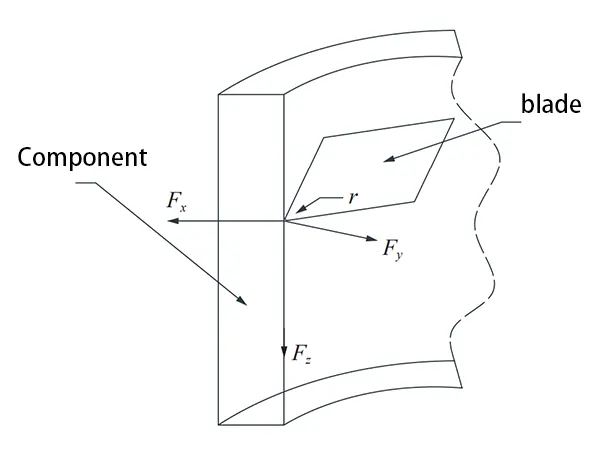
Among these, Fx is perpendicular to the cutting plane and acts along the part’s diameter direction, serving as one of the primary factors affecting surface roughness.
Fy is the component force acting along the part’s tangential direction.
Fz is the component along the tool feed direction, representing the vertical primary cutting force, primarily used to verify tool rigidity and cutting power.
Empirical formulas indicate that:

In the equation, F represents the cutting force or the component force in a specific direction (N);
r denotes the tool radius (mm);
vc indicates the cutting speed (m/min);
ap signifies the cutting width (mm);
f represents the feed rate (mm/r);
K, k1, k2, k3, k4 are fitting coefficients.
Cutting speed is:

In the formula, n represents the machine tool rotational speed (r/min); D denotes the part’s rotational diameter (mm).
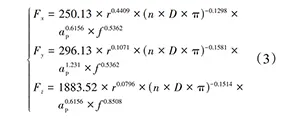
Based on material cutting tests conducted by previous scholars, the cutting component forces in each direction are as follows:
Deformation Analysis Under Cutting Forces
Part deformation during machining is closely related to cutting parameters.
To ensure stable cutting conditions, appropriate cutting parameters must be selected.
This part is a typical rotary body manufactured via turning.
Due to its minimal stock allowance and high dimensional accuracy requirements, a rough-finish turning process is employed.
Rough turning primarily removes excess material rapidly to prepare for subsequent processes, while finish turning controls deformation to achieve dimensional accuracy, meeting drawing requirements and good surface quality.
Relationship Between Cutting Parameters and Cutting Forces
By consulting a machining handbook and selecting different cutting parameters, the cutting component forces in each direction are shown in Table 3.
| No. | Spindle Speed (r/min) | Tool Nose Radius (mm) | Cutting Speed (m/min) | Depth of Cut ap (mm) | Feed Rate f (mm/r) | Radial Force Fr (N) | Tangential Force Ft (N) | Main Cutting Force Fz (N) | Material Removal Rate Q (mm³/min) |
|---|---|---|---|---|---|---|---|---|---|
| 1 | 30 | 0.4 | 315.54 | 0.1 | 0.2 | 2.92 | 8.09 | 25.70 | 6.31 |
| 2 | 30 | 0.4 | 315.54 | 0.1 | 0.3 | 10.05 | 3.55 | 36.48 | 9.47 |
| 3 | 30 | 0.4 | 315.54 | 0.1 | 0.4 | 11.73 | 4.08 | 46.79 | 12.62 |
| 4 | 30 | 0.4 | 315.54 | 0.2 | 0.3 | 15.41 | 8.33 | 65.80 | 18.93 |
| 5 | 30 | 0.4 | 315.54 | 0.2 | 0.4 | 17.98 | 9.57 | 84.38 | 25.24 |
| 6 | 30 | 0.8 | 315.54 | 0.2 | 0.3 | 20.91 | 8.97 | 69.53 | 18.93 |
| 7 | 30 | 0.8 | 315.54 | 0.2 | 0.4 | 24.40 | 10.31 | 89.17 | 25.24 |
| 8 | 35 | 0.8 | 368.13 | 0.3 | 0.3 | 26.31 | 14.42 | 95.91 | 33.13 |
| 9 | 35 | 0.8 | 368.13 | 0.3 | 0.4 | 30.70 | 16.57 | 122.99 | 44.18 |
Table 3. Relationship between cutting force and material removal rate
Further analysis of the influence of rotational speed n, depth of cut ap, and feed rate f on radial force Fx indicates that feed rate f exerts a more pronounced effect.
Comparing cutting parameters in Table 3 between entries 1 and 2, when the feed rate f decreases from 0.3 mm/r to 0.2 mm/r, Fx significantly reduces by 29% while the material removal rate Q decreases by 67%.
Finite Element Analysis of Cutting Deformation
To fully validate the influence of cutting forces on turning deformation, a local section of the part was selected for stress analysis.
Key properties of the 2A14-T6 aluminum alloy are listed in Table 4.
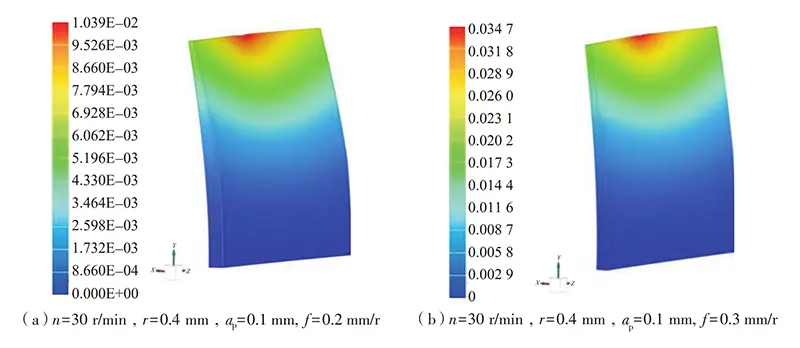
Assuming the large end of the part is fixed while the small end remains free, three-directional cutting component forces were applied to the small end, resulting in the deformation shown in Figure 4.
It can be observed that the central region of the simulation model is the primary stress point.
The maximum deformation under cutting parameter sequence 1 (Table 3) is approximately 0.010 mm, while that under sequence 2 is about 0.035 mm.
The deformation in the regions on both sides of the small end is minimal, far below the influence of part measurement errors.
Therefore, it can be concluded that the cutting force has a negligible impact on the edges of the simulation model.
| Item | Content |
|---|---|
| Hole Diameter | 0.2 mm |
| Board Thickness | 1.6 mm |
| Entry Board | 0.5 mm Phenolic Entry Board |
| Backup Board | 1.5 mm Phenolic Backup Board |
| Stack-up | 1 board per stack |
| Tool Life Limit | 400 |
| Number of Holes per Run | 25 |
| Evaluated Defect | Hole Roughness |
Table 4 Performance parameters of 2A14-T6 aluminum alloy
Optimization of Cutting Parameters
Additionally, the material removal rate Q exhibits a positive correlation with cutting forces.
Cutting forces in all directions increase as the material removal rate rises.
A higher material removal rate Q enhances machining efficiency and shortens production cycles.
Considering both cutting efficiency and the impact of cutting force deformation, the parameters listed in Table 5 were adopted for machining this part.
| Level | Factor A: S (krpm) | Factor B: F (IPM) | Factor C: R (IPM) |
|---|---|---|---|
| 1 | 140 | 65 | 500 |
| 2 | 110 | 50 | 400 |
| 3 | 80 | 35 | 300 |
Table 5 Recommended cutting parameters
Practical Application
Process Route
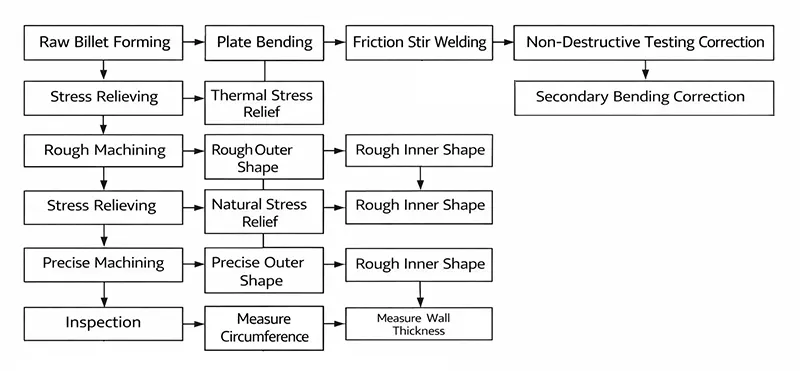
The part processing route is determined by comprehensively considering production cycle, manufacturing costs, and product quality, as shown in Figure 5.
A rational process route not only shortens the part manufacturing cycle and reduces cost expenditures but also achieves superior product quality.
Clamping Fixture
With a maximum wall thickness of only 6.2 mm, this part lacks sufficient structural rigidity to counteract cutting forces from the tool.
A fixture must therefore be employed to assist with clamping and positioning.
Although the part’s structural features are simple, its relatively large diameter increases the contact area with the fixture, making precise fitment challenging.
Furthermore, excessive deformation during clamping can cause springback after fixture removal, leading to dimensional deviations.
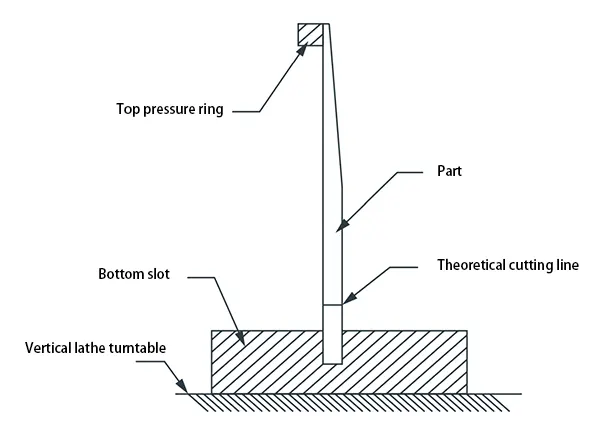
A simple yet reliable clamping fixture was designed, primarily consisting of a top clamping ring and a bottom retaining groove.
The top clamping ring is a solid circular ring made of the same material, fitted with a clearance generally not exceeding 0.2 mm.
Structural adhesive bonding is used for connection, effectively preventing uneven stress distribution caused by single-point clamping.
The bottom clamping groove is prefabricated from an aluminum plate with a width of 6.2 mm.
The larger end of the part is embedded into the fixture and secured using structural fasteners.
The clamping groove is uniformly pressed onto the top of the lathe turret using clamping plates, with no fewer than 32 clamping points.
The clamping structure is shown in Figure 6.
Temperature Difference Measurement Compensation
Given the high precision requirements and large diameter of the component, to further mitigate the impact of measurement errors, the influence of varying temperatures on measurement accuracy must be considered.
Based on the principle of linear expansion, assuming both the component and measuring tool operate at a standard temperature of 20°C, the component dimensions are adjusted using an empirical formula as follows:

In the formula, δ represents the diameter change caused by temperature (mm);
t₁ denotes the actual temperature of the part (°C);
α₁ is the linear expansion coefficient of the part (/°C);
t₂ indicates the actual temperature of the gauge (°C);
α₂ denotes the linear expansion coefficient of the gauge (/°C); D represents the reference diameter value of the part at 20°C (mm).
To facilitate rapid reference during production, a correction compensation table for components under different temperature differentials has been established (see Table 6).
The thermal expansion coefficient α₁ for 2A14 aluminum alloy is approximately 2.32 × 10⁻⁵/°C, while that for stainless steel gauges is approximately 1.5 × 10⁻⁵/°C.
| Part Temperature t₁ (°C) | Measuring Tool Temperature t₂ (°C) | Variation δ (mm) | Corrected Diameter D′ (mm) |
|---|---|---|---|
| 5 | 5 | -0.41 | 3347.59 |
| 5 | 10 | -0.66 | 3347.34 |
| 10 | 10 | -0.27 | 3347.73 |
| 10 | 15 | -0.53 | 3347.47 |
| 15 | 15 | -0.14 | 3347.86 |
| 15 | 20 | -0.39 | 3347.61 |
| 20 | 15 | 0.25 | 3348.25 |
| 20 | 20 | — | 3348.00 |
| 25 | 20 | 0.39 | 3348.39 |
| 25 | 25 | 0.14 | 3348.14 |
| 30 | 20 | 0.78 | 3348.78 |
| 30 | 25 | 0.53 | 3348.53 |
| 30 | 30 | 0.27 | 3348.27 |
Table 6. Temperature Compensation Measurement Quick Reference
Stress Relieving
During rolling, welding, and machining processes, internal stresses in components continuously accumulate.
To prevent deformation caused by stress release during subsequent storage of finished parts and to enhance manufacturing precision, stress relief must be performed proactively during processing.
Common stress-relieving methods include vibration stress relief, cryogenic treatment, thermal stress relief, and natural aging.
Vibration stress relief utilizes resonance principles to apply periodic excitation forces, increasing molecular kinetic energy to reduce and homogenize residual stresses.
However, this component exhibits typical thin-walled, low-rigidity characteristics with a maximum width of only 6.2 mm and minimal mass, making it unsuitable for clamping by an eccentric motor.
Designing a dedicated fixture position could cause significant deformation due to the motor’s self-weight.
Deep cryogenic treatment primarily employs liquid nitrogen immersion, utilizing temperature differentials to rapidly release residual stresses within the part.
However, the large dimensions of this component necessitated a custom-built, oversized liquid nitrogen tank.
Furthermore, with liquid nitrogen boiling at -196°C, significant evaporation during the aging process resulted in substantial waste.
After reviewing relevant technical literature and drawing on experience from thin-walled aluminum alloy part production, two stress-relief aging processes were incorporated into the manufacturing sequence.
Immediately following the welding of the blank, thermal aging was applied to rapidly release internal residual stresses.
Before finishing, natural aging was employed by positioning the part with the small end upward for 48 hours.
Detailed process parameters are provided in Table 7.
| Process Name | Heating Temperature (°C) | Holding Time (h) | Heating Method | Cooling Method |
|---|---|---|---|---|
| Thermal Aging | 140 ± 5 | ≥ 4 | Heated with the furnace (furnace ramp-up) | Air cooling |
| Natural Aging | Room temperature | ≥ 48 | — | — |
Table 7. Stress-Relief Aging Process Parameters
Product Precision
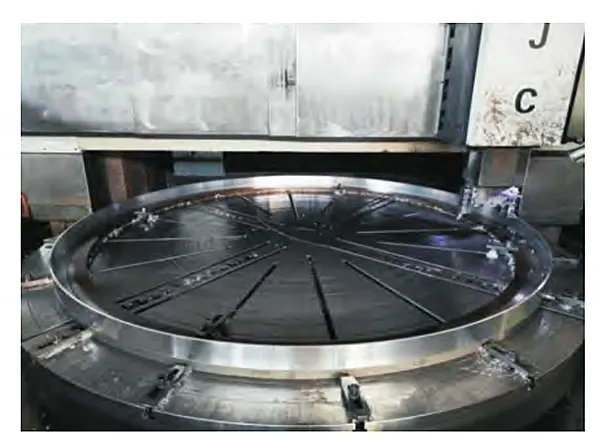
This process plan was applied to the actual machining process, utilizing a CNC double-column vertical lathe for turning operations, as shown in Figure 7.
To further mitigate the impact of cutting forces, cutting fluid was used during machining to thoroughly cool the tool tip, reducing the influence of tool cutting heat.
Simultaneously, chips were promptly removed to prevent friction between chips, tools, and parts, maintaining a clean and tidy working environment.
After machining, the part was divided into three zones along its height: upper, middle, and lower.
Wall thickness was measured using a micrometer, while outer diameter was inspected with a caliper.
Results are shown in Table 8.
This demonstrates that after implementing the aforementioned series of measures, the part’s precision meets drawing requirements and deformation control achieves the desired effect, proving the feasibility and effectiveness of this process solution.
| Position | Wall Thickness Design (mm) | Wall Thickness Measured (mm) | Outer Diameter Design (mm) | Outer Diameter Measured (mm) |
|---|---|---|---|---|
| Upper End | 2 ± 0.2 | 1.96 – 2.08 | Φ3348 ± 0.3 | Φ3347.80 |
| Middle Section | 6.2 ± 0.2 | 6.24 – 6.34 | Φ3348 ± 0.3 | Φ3347.92 |
| Lower End | 6.2 ± 0.2 | 5.81 – 6.38 | Φ3348 ± 0.3 | Φ3348.04 |
Table 8: Measured Values of the Part
Conclusion
This paper investigates precision machining processes using a large-diameter thin-walled aluminum alloy ring frame as a case study.
It analyzes factors such as blank forming processes and cutting forces, establishes an integrated process flow, and employs methods including plate welding forming, stress relief aging, and temperature measurement compensation machining.
By selecting appropriate cutting parameters and optimizing clamping fixtures, cutting deformation is minimized and manufacturing accuracy is enhanced.
This process solution also provides valuable insights for machining thin-walled, low-rigidity components.