
These fasteners are primarily used when one component is thick and a compact structure is required, or when frequent disassembly makes conventional bolt connections impractical. Studs are typically threaded at both ends (single-end studs have threading at one end only).
In everyday life, we often mention bolts, screws, and nuts. What exactly is the difference between them? Actually, technically speaking, there are no such things as “screws” or “nut caps.” ‘Screw’ is a colloquial term; anything with external threads can be called a “screw.”
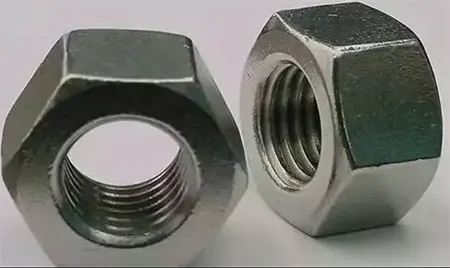
Nuts are typically hexagonal in shape, with internal threads in their bore, designed to mate with bolts to secure components together.
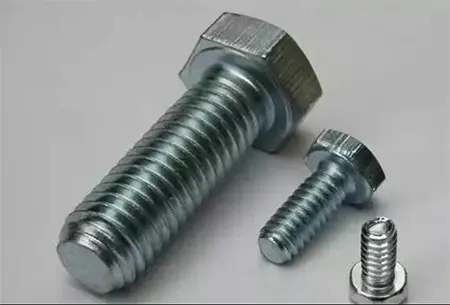
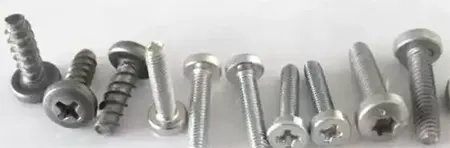
“Screw cap” is a colloquial term; the standard designation is “nut.” Bolts typically feature a hexagonal head and external threads along the shaft. Screws are smaller, with head types including flat or Phillips, and external threads along the shaft.
Studs should technically be called “double-ended studs,” featuring external threads at both ends with a smooth shaft in between. The longer threaded end connects to deep holes, while the shorter end mates with nuts.
Standard fasteners are categorized into twelve major types. Selection depends on the application environment and functional requirements.
Types
♦ Bolts
Bolts are widely used in mechanical manufacturing for detachable connections, typically paired with nuts (often supplemented by one or two washers).
♦ Nuts
♦ Screws
Screws are usually used alone (sometimes with washers) for fastening or securing purposes, requiring insertion into internal threads of a body.
♦ Studs
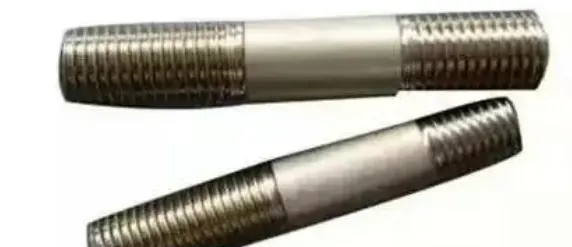
One threaded end is firmly screwed into the component body, while the other end mates with a nut to provide connection and fastening. They also significantly serve as spacers.
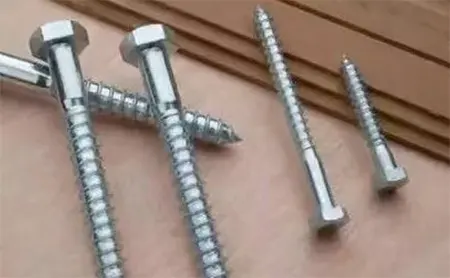
♦ Wood Screws
Wood screws are designed to be driven into wood for joining or fastening purposes.
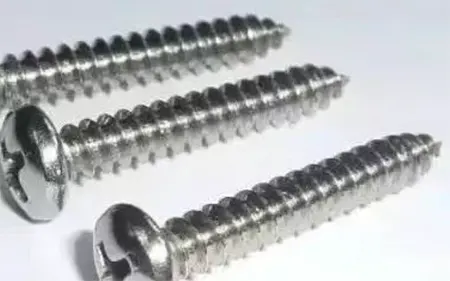
♦ Self-Tapping Screws
Workpiece holes for self-tapping screws do not require pre-tapping. As the screw is driven in, it simultaneously forms the internal threads.
♦ Washers
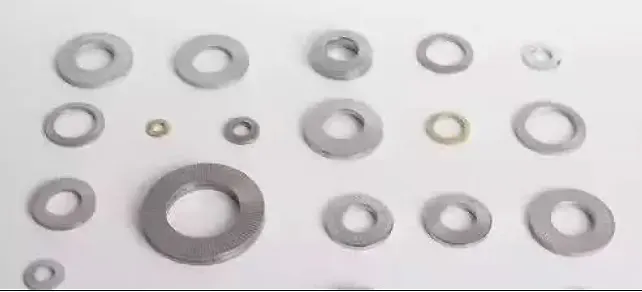
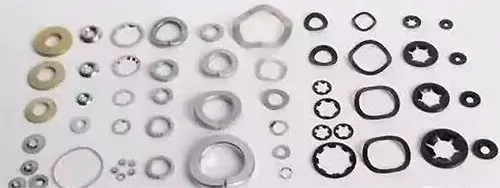
Lock washers are placed between the bearing surface of bolts, screws, nuts, etc., and the workpiece bearing surface to prevent loosening and reduce bearing surface stress.
♦ Retaining Rings
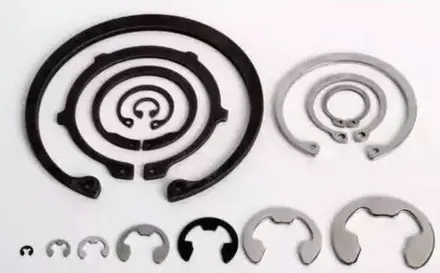
Retaining rings primarily position, lock, or prevent parts from moving on shafts or in holes.
♦ Pins
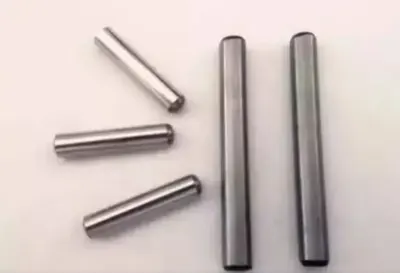
Pins are typically used for positioning, but can also connect or lock parts, or serve as overload shear elements in safety devices.
♦ Rivets
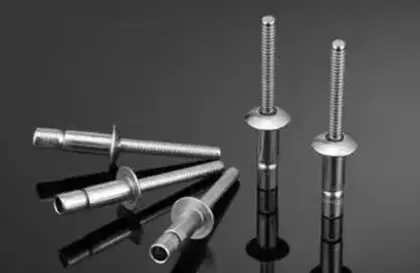
Rivets feature a head at one end and a smooth, unthreaded shaft. During installation, the shaft is inserted into holes in the parts to be joined, then the head is riveted to secure the connection.
♦ Fastener Assembly
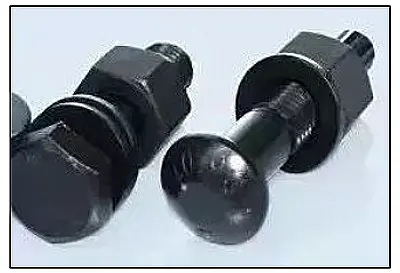
A fastener assembly refers to the combination of a screw, bolt, or self-tapping screw with a washer. When installed on a screw, the washer must rotate freely on the screw (or bolt) without falling off. It primarily serves to secure or fasten.
♦ Others
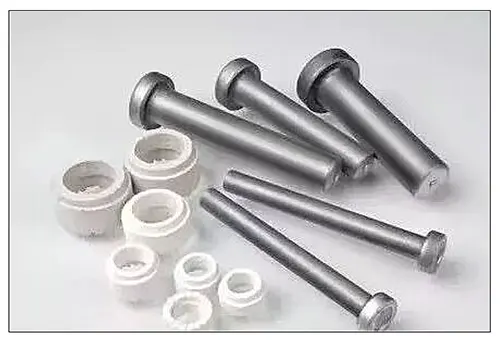
Primarily includes items such as studs.
Determining Varieties
(1) Principles for Variety Selection
① For processing and assembly efficiency, minimize the number of fastener varieties used within the same machinery or project.
② For economic considerations, prioritize commercially available fastener varieties.
③ Determine the selected variety based on the fastener’s intended usage requirements, considering aspects such as type, mechanical properties, precision, and thread specifications.
(2) Types
① Bolts
a) General-purpose bolts:
Available in numerous varieties, including hex head and square head types. Hex head bolts are the most common, categorized into product grades A, B, and C based on manufacturing precision and quality.
Grades A and B are most widely used, primarily for critical applications requiring high assembly precision or subjected to significant impact, vibration, or variable loads.
Hex head bolts are further categorized into standard hex head and large hex head types based on head bearing area and mounting dimensions. Variants with holes in the head or shank are available for applications requiring locking.
Square-head bolts feature a larger square head with a substantial bearing surface, facilitating wrench engagement or support against other components to prevent rotation.
They are commonly used in rough structures and occasionally in T-slots, allowing for adjustment of the bolt position within the slot. See GB8, GB5780-5790, etc.
b) Tapped Hole Bolts:
These bolts are tightly fitted into tapped holes during use to prevent workpiece misalignment. See GB27, etc.
c) Locking bolts:
Available with square necks or tenons. See GB12–15, etc.
d) Special-purpose bolts:
Includes T-slot bolts, union bolts, and anchor bolts. T-slot bolts are primarily used in frequently disassembled connections; anchor bolts secure frames or motor bases in concrete foundations. See GB798, GB799, etc.
e) High-strength bolt connection sets for steel structures:
Generally used for friction-type connections in steel structures such as buildings, bridges, towers, pipe supports, and lifting machinery. See GB3632, etc.
② Nuts
a) General-purpose nuts:
Available in numerous varieties, including hex nuts and square nuts. Hex nuts paired with hex bolts are the most widely used.
They are categorized into product grades such as A, B, and C based on manufacturing precision and quality.
Hex thin nuts serve as lock nuts in anti-loosening devices to provide locking functionality, or are used in threaded connections primarily subjected to shear forces.
Hex nuts with thick flanges are primarily used in connections requiring frequent disassembly.
Square nuts are paired with square-head bolts. Their shape allows wrenches to grip securely without slipping, making them suitable for rough, simple structures. See GB41, GB6170–6177, etc.
b) Slotted Nuts:
Primarily refers to hex slotted nuts, featuring a slot machined into the top of a hex nut.
They are used with stud bolts and cotter pins to prevent relative rotation between the bolt and nut. See GB6178–6181, etc.
c) Locking nuts:
Nuts with locking functions, including nylon insert hex lock nuts and all-metal hex lock nuts.
Hexagonal nylon insert lock nuts offer highly reliable anti-loosening capability. T
hey can operate at temperatures ranging from -60°C to +100°C under certain media conditions without damaging bolts or connected components, and allow frequent assembly/disassembly. See GB889, GB6182–6187, etc.
d) Special-purpose nuts:
Examples include wing nuts, cap nuts, knurled nuts, and insert nuts.
Wing nuts typically require no tools for assembly/disassembly and are commonly used in applications requiring frequent disassembly and low stress loads.
Cap nuts are used where end threads require covering. See GB62, GB63, GB802, GB923, GB806, GB807, GB809, etc.
③ Screws
a) Machine Screws:
Classified into numerous varieties based on head type and slot configuration. Head types include cylindrical, pan, countersunk, and semi-countersunk. Head slots are typically slotted (slotted), cross-recessed, or hexagon socket.
Cross-recessed screws offer superior alignment during tightening and greater head strength than slotted screws, making them less prone to stripping.
They are commonly used in mass production. Hex socket screws and hex socket cap screws can transmit higher tightening torques, provide greater joint strength, and allow the head to be countersunk into the workpiece.
They are suitable for connections requiring compact structures and smooth surfaces. See GB65, GB67–69, and GB818–820, etc.
b) Set screws:
Set screws secure relative positions of components. Head types include slotted, hex socket, and square.
Square heads permit higher tightening torque and greater clamping force, resist stripping, but their larger size prevents embedding within parts, posing safety risks—especially in moving components.
Slotted and hex socket types facilitate countersinking into components. Set screw ends vary based on application requirements, with the most common being tapered, flat, and cylindrical. Tapered ends suit low-hardness components;
When using blunt tapered screws, a recess must be machined into the clamping surface to ensure the tapered face rests against the recess edge. Flat-end screws offer a large contact area and do not damage surfaces when tightened.
They are used for securing high-hardness flat surfaces or in applications requiring frequent position adjustments.
Cylindrical-end screws do not damage surfaces and are often used to secure components mounted on shafts or thin-walled parts.
When driven into shaft bores, their cylindrical ends resist shear forces, enabling transmission of substantial loads. See GB71, GB73-75, GB77-78, etc.;
c) Hexagon socket screws:
Suitable for limited installation space or applications requiring recessed screw heads. See GB70, GB6190-6191, GB2672-2674, etc.;
d) Special-purpose screws:
Such as locating screws, captive screws, and eye bolts. See GB72, GB828–829, GB837–839, GB948–949, and GB825, etc.
④ Studs
a) Unequal-length double-ended studs:
Suitable for applications where one end is screwed into a component body for connection or fastening purposes. See GB897–900;
b) Equal-length double-ended studs:
Suitable for applications where both ends are paired with nuts for connection or spacer functions. See GB901, GB953, etc.
⑤ Wood Screws
Classified into numerous varieties based on head type and slot configuration. Head types include round head, countersunk head, and semi-countersunk head; head slots are available as slotted (slotted) or cross-slotted. See GB99–101, GB950–952.
⑥ Self-tapping Screws
a) Standard self-tapping screws:
Threads conform to GB5280 with coarse pitch, suitable for thin steel plates, copper, aluminum, and plastics. See GB845–847, GB5282–5284, etc.
b) Self-tapping locking screws:
Threads conform to standard coarse metric threads, suitable for applications requiring vibration resistance. See GB6560–6564.
⑦ Washers
a) Flat washers:
Used to compensate for uneven workpiece support surfaces and increase the stress-bearing area. See GB848, GB95–97, and GB5287;
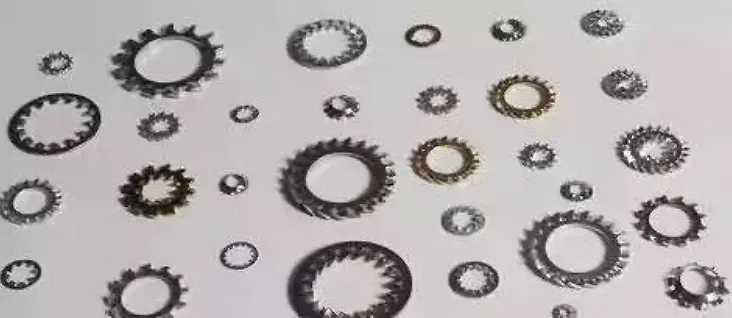
b) Spring (Elastic) Washers:
Prevent fastener loosening through elastic force and beveled friction, widely used in frequently disassembled connections.
Internal-tooth elastic washers and external-tooth elastic washers feature numerous sharp elastic teeth around their circumference that press into the support surface, preventing fastener loosening.
Internal tooth washers are used under screw heads with smaller dimensions; external tooth washers are primarily used under bolt heads and nuts.
Toothed washers are smaller than standard spring washers, distribute fastener forces evenly, and reliably prevent loosening. However, they are not suitable for frequently disassembled applications. See GB93, GB859–860, and GB955;
c) Lock washers:
Includes internal-tooth lock washers, external-tooth lock washers, single-ear lock washers, double-ear lock washers, and lock washers for round nuts.
Single-ear and double-ear lock washers allow nuts to be locked in any tightened position, but fasteners should ideally be positioned near the edge. See GB861–862, GB854–855, GB858, etc.
d) Tapered washers:
Tapered washers are used to compensate for the inclination of working support surfaces.
Square tapered washers level inclined surfaces like channel steel or I-beam flanges, ensuring the nut’s support surface remains perpendicular to the stud shaft. This prevents bending forces on the stud during nut tightening. See GB852–853, etc.
⑧ Retaining Rings
a) Spring Retaining Rings:
Spring retaining rings for shafts and bores are clamped into shaft grooves or bore grooves to prevent rolling bearings from moving after installation.
Additionally, open-end retaining rings for shafts are primarily used to clamp into shaft grooves for part positioning but cannot withstand axial forces. See GB893–894 and GB896;
b) Wire retaining rings:
Includes bore-type (shaft-type) wire retaining rings and wire lock rings.
When installed in shaft or bore grooves for component positioning, wire retaining rings can also withstand certain axial forces. See GB895.1–.2, GB921;
c) Locking Retaining Rings for Shaft Components:
Includes tapered pin-locked rings and screw-locked rings, primarily preventing axial movement of shaft-mounted components. See GB883–892.
d) Shaft End Retaining Rings:
Includes screw-fastened shaft end retaining rings and bolt-fastened shaft end retaining rings, primarily securing components fixed at the shaft end. See GB883–982.
⑨ Pins
a) Cylindrical pins:
Primarily used for securing components on shafts, transmitting power, or as locating elements. Available with various diameter tolerances to meet different fit requirements.
Typically secured in holes via interference fit, making frequent disassembly inadvisable. See GB119–120, GB878–880, etc.;
b) Tapered pins:
Featuring a 1:50 taper, tapered pins facilitate alignment and provide self-locking capability.
They are commonly used as locating and connecting elements, particularly in applications requiring frequent disassembly.
Internal threaded tapered pins and tapered pins with threaded shanks are used in non-through holes or holes where pin removal is difficult.
Open-ended taper pins expand at the end after insertion to prevent slippage from the hole. See GB117-118, GB881, and GB877, etc.
Holes for cylindrical pins and various taper pins generally require reaming. Repeated assembly and disassembly reduces positioning accuracy and connection tightness, limiting load capacity.
Elastic cylindrical pins possess inherent elasticity, maintaining tension within the hole to resist loosening while facilitating easy disassembly without affecting fit characteristics.
The pin hole requires no reaming. Both slotted pins and pin shafts are used in hinged connections.
c) Split pins:
Split pins serve as anti-loosening devices for connecting components. They are inserted into the pin holes of nuts, bolts with pin holes, or other connecting parts, then spread apart. See GB91.
⑩ Rivets
a) Hot-forged rivets:
Typically larger in size, commonly used in locomotives, ships, boilers, etc. Usually require hot forging to form the head. See GB863–866;
b) Cold-headed rivets:
Typically 16mm in diameter, their heads are formed through cold heading. See GB867–870, GB109, etc.
c) Hollow and semi-hollow rivets:
Hollow rivets are used in areas subject to minimal shear forces, commonly for joining non-metallic parts such as plastics, leather, wood, and canvas.
| Fastener Category | Sub-Type | Key Characteristics | Typical Applications | Common Standards (Examples) |
|---|---|---|---|---|
Bolts | General-purpose bolts (hex, square) | External threads, used with nuts and washers; grades A/B/C based on precision | Detachable mechanical connections, vibration or impact-loaded joints | GB8, GB5780–5790 |
| Tapped-hole bolts | Tight fit in tapped holes to prevent misalignment | Precision assemblies | GB27 | |
| Locking bolts | Square neck or tenon prevents rotation | Anti-rotation joints | GB12–15 | |
| Special-purpose bolts | T-slot, union, anchor bolts | Machine tools, foundations, adjustable structures | GB798, GB799 | |
| High-strength bolt sets | High preload, friction-type joints | Steel structures, bridges, towers | GB3632 | |
Nuts | General-purpose nuts (hex, square) | Paired with bolts; grades A/B/C | Standard threaded connections | GB41, GB6170–6177 |
| Thin nuts | Used as lock nuts or shear-loaded joints | Anti-loosening applications | GB6170 | |
| Slotted nuts | Used with cotter pins | Anti-rotation locking | GB6178–6181 | |
| Lock nuts | Nylon insert or all-metal locking | Vibration-resistant joints | GB889, GB6182–6187 | |
| Special-purpose nuts | Wing, cap, knurled, insert nuts | Tool-free or protective applications | GB62, GB63, GB802 | |
Screws | Machine screws | Various head/slot types; internal drive | Electronics, machinery, mass production | GB65, GB67–69, GB818–820 |
| Set screws | Used for positioning; tapered, flat, or cylindrical ends | Shaft locking, component positioning | GB71, GB73–75 | |
| Hex socket screws | High torque, recessed head | Compact structures | GB70, GB6190–6191 | |
| Special-purpose screws | Captive, locating, eye bolts | Specialized mechanical functions | GB72, GB828–829 | |
Studs | Unequal-length studs | One end fixed into body, other with nut | Thick components, frequent disassembly | GB897–900 |
| Equal-length studs | Both ends with nuts; spacer function | Structural spacing, alignment | GB901, GB953 | |
Wood Screws | Various head/slot types | Designed for wood penetration | Wood structures, furniture | GB99–101, GB950–952 |
Self-tapping Screws | Standard self-tapping | Forms threads during installation | Thin metal, plastics | GB845–847, GB5282–5284 |
| Locking self-tapping | Enhanced vibration resistance | Dynamic assemblies | GB6560–6564 | |
Washers | Flat washers | Load distribution, surface protection | General fastening | GB848, GB95–97 |
| Spring / toothed washers | Elastic anti-loosening | Vibration-prone joints | GB93, GB859–860 | |
| Lock washers | Ear, tooth, round-nut types | Positive locking | GB861–862, GB854–855 | |
| Tapered washers | Compensate inclined surfaces | I-beams, channel steel | GB852–853 | |
Retaining Rings | Spring retaining rings | Fit into grooves, prevent axial movement | Bearings, shafts | GB893–894, GB896 |
| Wire retaining rings | Elastic, withstand axial load | Shafts and bores | GB895.1–.2, GB921 | |
| Locking retaining rings | Pin- or screw-locked | Shaft-mounted components | GB883–892 | |
| Shaft-end retaining rings | Fixed at shaft ends | End-face retention | GB883–982 | |
Pins | Cylindrical pins | Interference fit, positioning | Power transmission, alignment | GB119–120, GB878–880 |
| Tapered pins | Self-locking, easy alignment | Repeated assembly | GB117–118, GB881 | |
| Elastic pins | Elastic retention, no reaming | Hinged connections | GB879 | |
| Split pins | Anti-loosening | Locking nuts and bolts | GB91 | |
Rivets | Hot-forged rivets | Large size, hot installation | Ships, boilers, locomotives | GB863–866 |
| Cold-headed rivets | Smaller size, cold forming | General structures | GB867–870 | |
| Hollow / semi-hollow rivets | Low shear capacity | Plastics, leather, wood | — |
How to CNC Machine Bolts and Screws
CNC machining of bolts and screws is a precision-driven manufacturing process that converts raw bar stock or wire rod into standardized or custom threaded fasteners with controlled geometry, mechanical strength, and surface quality.
While many high-volume fasteners are produced by cold heading and thread rolling, CNC machining remains essential for low-volume production, large-diameter fasteners, high-strength materials, special geometries, and applications requiring tight tolerances or non-standard features.
Material Selection and Preparation
The process typically begins with material selection based on mechanical and environmental requirements. Common materials include carbon steel, alloy steel, stainless steel, and special alloys.
CNC machining is particularly suitable for stainless steel and high-strength alloy bolts and screws where forming processes are limited by material hardness or complexity.
Raw material is usually supplied as round bar stock with controlled diameter and straightness to ensure dimensional consistency during machining.
CNC Machining Operations for Bolts and Screws
For bolts, CNC turning is the primary operation. The bar stock is clamped in a CNC lathe, where the shank diameter, under-head fillet, and threaded section are precisely machined.
The bolt head—such as hexagonal, flange, or custom profiles—is produced either by milling operations on a CNC mill or by live tooling on a CNC turning center.
In the case of hex-head bolts, milling ensures accurate wrench flats and consistent bearing surfaces. Chamfering of thread starts and edges is performed to improve assembly and reduce stress concentrations.
Screws follow a similar machining approach but often involve smaller diameters, finer threads, and more varied head styles.
CNC turning forms the shank and thread profile, while milling or secondary operations produce head types such as pan, countersunk, socket, or specialty designs.
For precision screws, particularly in electronics or medical devices, maintaining tight concentricity between the head, shank, and thread is critical and closely controlled during machining.
Thread Machining Methods
Thread production is a key step in CNC machining of both bolts and screws.
Engineers can single-point cut threads on a CNC lathe to achieve maximum flexibility and precision, especially for large diameters or non-standard thread forms.
Thread milling often produces internal or external threads with superior surface finish, precise depth control, and reduced cutting forces.
Compared with thread rolling, machined threads offer higher dimensional accuracy and are suitable for hardened materials, though they typically have lower fatigue strength than rolled threads.
Post-Processing, Surface Treatment, and Quality Control
After machining, bolts and screws often undergo secondary processes to achieve final performance requirements. Heat treatment enhances strength and hardness in alloy and martensitic steels.
Stainless steel fasteners may undergo passivation to enhance corrosion resistance by strengthening the protective oxide layer.
Engineers select surface treatments such as plating, coating, or polishing based on corrosion exposure, appearance, and functional requirements. Quality control is an integral part of CNC fastener production.
Dimensional inspection verifies thread pitch, major and minor diameters, head geometry, and concentricity. Engineers may conduct mechanical testing to confirm tensile strength and hardness, especially for safety-critical fasteners.
Custom or high-performance bolts and screws often require traceability of material and process parameters.
In summary, CNC machining of bolts and screws provides unmatched flexibility for producing high-precision, custom, or low-volume fasteners.
While not always the most economical method for mass production, CNC machining is indispensable for applications that demand exact geometry, specialized materials, tight tolerances, or complex designs beyond the capability of traditional forming processes.
Conclusion
Fasteners may appear simple in everyday use, but from an engineering and manufacturing perspective, they form a highly structured and standardized system that underpins almost all mechanical assemblies.
In everyday language, people often use terms such as “screw,” “bolt,” or “nut cap” interchangeably; however, in technical contexts, each category differs in function, geometry, load-bearing behavior, and applicable standards.
Understanding these distinctions is essential for correct selection, safe design, and reliable long-term performance.
Roles and Types of Fasteners
Bolts, nuts, screws, studs, washers, pins, retaining rings, and rivets each serve unique mechanical roles.
- Bolts and nuts enable detachable, high-strength clamping connections;
- screws provide direct fastening into threaded bodies;
- studs offer structural efficiency and improved serviceability in thick or frequently disassembled components;
- washers distribute load and prevent loosening; pins and retaining rings ensure accurate positioning and axial retention;
- Rivets create permanent joints where disassembly is not required.
Each category further subdivides into numerous standardized types designed to meet specific mechanical, environmental, and assembly requirements.
Principles of Selection and Standardization
The selection of fasteners is not arbitrary. It must consider load conditions, vibration, temperature, corrosion environment, installation space, assembly frequency, and economic factors.
Standardization principles emphasize minimizing variety, prioritizing commercially available components, and matching fastener precision, strength, and thread specifications to functional needs. National and international standards ensure interchangeability, manufacturing consistency, and safety across industries.
In practical engineering applications, a clear understanding of fastener classification and proper terminology enables better communication between designers, manufacturers, and maintenance personnel.
More importantly, it reduces the risk of assembly errors, premature failures, and unnecessary costs.
As mechanical systems continue to evolve in complexity, the correct selection and application of fasteners remains a fundamental engineering discipline—quietly essential, yet critical to the reliability and integrity of modern machinery and structures.