
Table of Contents
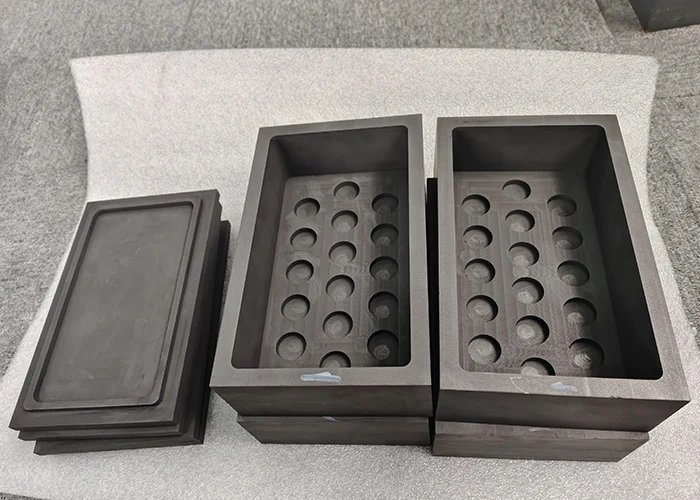
At present, graphite is widely used as a material that is easy to machine, and due to its favorable machining properties, processes such as turning, milling, and grinding are commonly employed in its fabrication.
However, as technology has advanced, these traditional methods can no longer meet the new demands driven by accompanying developments.
Consequently, advanced machining technologies have garnered widespread attention and importance across various sectors of society.
To meet the application requirements of graphite materials in mechanical manufacturing, chip manufacturing, chemical production, and metallurgical smelting, it is necessary to select more suitable machining methods.
- Select appropriate cutting tools and cutting parameters.
- Carefully control every aspect of the machining process.
- Fully leverage the advantages of graphite materials.
- Elevate the standard of graphite machining.
Analysis of the Characteristics of Graphite Machining
The characteristics of graphite machining include the following points. First, there is lower cutting resistance.
Generally, graphite materials contain certain microcrystalline defects, primarily due to dislocations in the material’s crystal structure.
This issue results in insufficient strength, preventing the material from meeting theoretical strength requirements.
Affected by this issue, graphite machining is often subject to external forces, triggering diffusion problems and ultimately leading to situations such as graphite chipping during cutting.
Therefore, during graphite machining, it is necessary to select more suitable cutting tools and processes, and to strictly control cutting resistance. Secondly, this generally causes severe tool wear.
During the cutting process, the tool may generate fine chips that can adhere directly to the surface or components, thereby affecting the final product quality.
Furthermore, during production, the quality of the cutting edge may be degraded due to impact friction, ultimately hindering the effective performance of the cutting process.
Finally, a significant amount of graphite dust may be generated during machining.
The presence of this dust poses a risk to human health and may also impact the surrounding environment.
During the cutting process, dust can also cause severe damage to machine tool components, ultimately shortening the machine’s service life.
Therefore, when selecting a cutting process, it is essential to install dedicated dust extraction systems within the machine tool to minimize the spread of dust.
Analysis of Key Technical Points in Graphite Machining
-
Selecting Appropriate Machining Conditions
Selecting appropriate machining conditions can effectively extend tool life.
First, an appropriate cutting method must be chosen; typically, either face milling or bottom milling can be selected.
During face milling, cutting vibrations can be effectively controlled, whereas cutting vibrations are more pronounced during bottom milling; the choice should be made based on specific circumstances.
For face milling, it is necessary to ensure that the tool’s depth of cut can be gradually reduced until it reaches zero; furthermore, after the tool engages the workpiece, one must avoid tool deflection caused by the inability to chip material, thereby ensuring the workpiece’s process rigidity.
For up-milling, the tool’s cutting depth must gradually increase.
During the initial cutting phase, because the material being cut is thin, the tool will first come into contact with the workpiece surface.
At this stage, it is essential to ensure there are no hard particles or chip fragments beneath the cutting edge to prevent issues such as tool deflection.
Secondly, the blowing and suction processes must be carefully controlled to immediately remove graphite dust from the workpiece surface.
This effectively prevents secondary wear on the tool, thereby extending its service life, and also reduces the adverse effects of graphite dust on the operation of the guideways.
Finally, select an appropriate high spindle speed and control the feed rate effectively.
As can be seen, factors such as tool material, cutting angle, edge reinforcement, and machining conditions are all critical aspects of mechanical processing.
They all influence tool life and machining accuracy, thereby affecting the overall results of graphite machining.
-
Mastering the Key Points of Machining Processes
Graphite is a special material; to improve the machining quality of graphite components, it is essential to strictly control the key aspects of the machining process.
To this end, during rough machining, cutting tools can be used directly on the components, and cutting parameters can be appropriately increased.
During finish machining, to prevent chipping, cutting tools with a certain degree of wear resistance should generally be selected.
At the same time, the depth of cut must be controlled to ensure it remains within half the tool diameter.
Additionally, when machining both sides, accelerated machining should be employed.
During machining, special attention should be paid to controlling the tool path, particularly during the machining of inner and outer contours.
A circular cutting approach should be adopted, and cutting accuracy must be maintained to ensure that the force distribution is uniform and of sufficient strength, thereby preventing component fracture.
When performing flat milling and grooving operations, the tool should be fed using a diagonal approach whenever possible.
Care must also be taken to prevent the formation of protrusions on the workpiece surface and to avoid direct cutting on the surface.
In addition, the choice of cutting method can significantly impact the machining process; therefore, an appropriate cutting method should be selected based on actual requirements.
Finally, when machining components with complex structures, in addition to implementing the above measures to optimize the machining process, it is necessary to implement special protective measures based on actual conditions to ensure that the machining operation achieves more significant results.
-
Strictly Control Cutting Parameters and Tool Paths
During graphite machining, if strict requirements are not imposed on the tool’s entry and exit directions, cutting parameters should be appropriately increased to minimize quality issues during the rough machining stage.
During this phase, particular attention should be paid to adjusting the feed rate.
Especially for finish machining, to reduce chipping, it is necessary to prioritize the use of coated tools with higher wear resistance.
When using conventional machine tools, operators must carefully control the entry and exit phases and appropriately reduce the cutting speed.
When using CNC machine tools, operators should focus on controlling the feed rate knob or add program blocks during the programming stage to enable intelligent control of the cutting speed.
Additionally, scientifically designed toolpaths can also improve cutting efficiency.
When machining internal and external contours, contour-following cutting can be employed to significantly increase the stress resistance of the machined area and prevent part chipping.
For flat surface and slot machining, spiral or ramp-in cutting methods should be used, while taking care to prevent the “island effect” on the workpiece surface.
If fine surface patterns are present, they may be caused by factors such as tool chatter or machine tool rigidity.
Therefore, when selecting CNC machines for machining, automated programming is essential, and the root causes of issues should be identified by focusing on the following points:
First, adjust system settings to prioritize high-precision machining mode, combined with post-processing techniques; second, when setting toolpaths, opt for two-axis interpolation whenever possible to avoid three-axis interpolation, as this significantly improves machining results and prevents tool marks.
-
Selecting the Right Cutting Tools
During machining operations, factors such as the hardness of graphite, high-speed cutting, and intermittent cutting processes can lead to significant alternating stresses during graphite machining, resulting in impact vibrations.
This can cause severe tool wear, which in turn affects the overall service life of the tool.
Therefore, when machining graphite—especially during high-speed machining—it is essential to ensure that the selected tools possess excellent wear resistance and impact resistance.
Among these, diamond tools offer excellent hardness and wear resistance, along with a low coefficient of friction, making them particularly effective for graphite machining.
Additionally, during graphite machining, it is crucial to ensure the tool geometry is optimized to reduce vibration, improve machining quality, and minimize wear.
Current research on cutting mechanisms indicates a close relationship between the tool’s rake angle and cutting efficiency.
A negative rake angle cutting method increases stress, thereby improving material fragmentation and machining efficiency, and also prevents the formation of large graphite fragments.
Currently, common tool types used in high-speed cutting include end mills, end mills, and ball-nose end mills.
Among these, end mills combine the advantages and characteristics of other cutting tools and can be used to machine both curved and flat components; end mills are typically used for machining flat components and some simple curved components; ball-nose end mills are primarily used for machining curved components.
It is evident that selecting the appropriate cutting tool not only improves cutting efficiency but also reduces tool wear and ensures machining quality.
-
Designing a High-Speed Machining Center for Graphite
During the machining of graphite, a significant amount of dust is often generated, which can pollute the work environment, pose health risks to workers, and adversely affect the service life of the machine tool.
Therefore, machining centers typically require specialized dust-proofing facilities and dust collection systems.
Since graphite is a conductor of electricity, measures must also be taken to protect the machine’s electrical components to prevent graphite dust from being blown into the machine during machining and coming into contact with electrical components, which could cause short circuits.
High-Speed Machining Center Design Requirements
When designing high-speed machining centers, high-speed electric spindles are typically selected to increase machining speed.
To mitigate machine vibration, the machine structure should be designed with a low center of gravity, and high-precision ball screw feed mechanisms should be adopted, while the dust collection system should be optimized.
Generally, the spindle speed of high-speed machining centers can reach 10,000–60,000 rpm, with feed rates up to 60 m/min.
During finishing operations, the radial depth of cut must be controlled within 0.2 mm.
This effectively enhances surface machining efficiency and precision, thereby elevating the standard of graphite machining.
Today, graphite has found widespread application.
Coupled with the rapid development of high-speed machining technology, China has developed machining equipment with superior performance, while similar equipment from other countries also offers many design highlights worth emulating.
Industry Examples of Advanced Machine Tool Design
For example, China’s VMC-7G1 incorporates a dust-proofing method based on the concept of a water curtain seal, while also installing a dust separation device.
It is equipped with dedicated protective covers at multiple locations, such as the lead screw and guideways, and features an optimized chip scraper, ensuring the machine tool maintains stable operation at all times.
Similarly, Japan’s OKK GR400 machine features a low-center-of-gravity design and a bridge-type structure, effectively reducing mechanical vibration.
It also utilizes C3-grade precision lead screws and guideways, further ensuring machining speed and effectively shortening processing cycles.
Additionally, splash guards have been installed, and the entire machine employs flanged sheet metal construction, effectively preventing contamination caused by graphite dust.
Industry Trend Toward High-Performance Machining Centers
Currently, as the manufacturing industry begins to widely adopt graphite materials, the development of high-speed machining centers has garnered increased attention.
Consequently, designing machining centers with higher performance and efficiency, coupled with the adoption of scientific machining processes, has become a mainstream trend.
This is the key to improving graphite machining efficiency and quality, and it fundamentally elevates the level of machining capabilities.
Conclusion
In summary, graphite is currently a critically important material across various fields.
However, due to the frequent occurrence of various quality issues during processing, mechanical machining—as a highly efficient and precise processing method—has gradually become the primary approach for graphite processing.
During the mechanical machining of graphite, tool wear is a common problem, which ultimately leads to the fracture or chipping of the workpiece.
Therefore, it is essential to thoroughly investigate the key technical aspects of machining and select appropriate processing methods based on actual conditions and specific requirements.
As this study demonstrates, the first step in machining is to select suitable processing conditions to ensure cutting efficiency and quality.
It is also crucial to master the key technical points and every stage of the machining process, while strictly controlling cutting parameters and toolpaths.
This approach ensures both improved processing efficiency and guaranteed quality.
Finally, it is crucial to effectively manage the key technical aspects of high-speed machining, scientifically select cutting tools, and establish high-speed machining centers capable of delivering both high efficiency and high precision.
Only in this way can the overall efficiency and quality of graphite machining be improved.
FAQ
Impedit egestas aliquet?
Lorem ipsum dolor sit amet, consectetur adipiscing elit. Ut elit tellus, luctus nec ullamcorper mattis, pulvinar dapibus leo.
Sapien class quo temporibus?
Lorem ipsum dolor sit amet, consectetur adipiscing elit. Ut elit tellus, luctus nec ullamcorper mattis, pulvinar dapibus leo.
Elementum voluptate sodales?
Lorem ipsum dolor sit amet, consectetur adipiscing elit. Ut elit tellus, luctus nec ullamcorper mattis, pulvinar dapibus leo.
Graphite Machining: Key Technical Methods, Tool Selection, and Process Optimization Strategies
April 9, 2026 No Comments
6061 Aluminum Heat Sink Machining: Optimized Multi-Layer Milling for Ultra-Thin Structures
April 3, 2026 No Comments