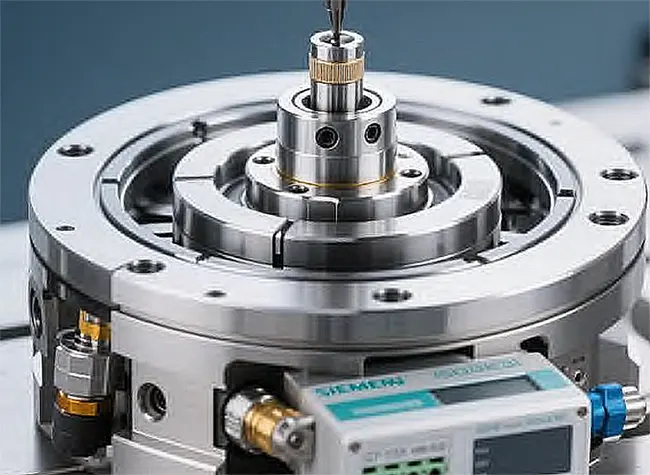

How do servo motors and drives control the axis system in a CNC machine?
TonZaMaking
How Servo Motors and Drives Control the Axis System in a CNC Machine
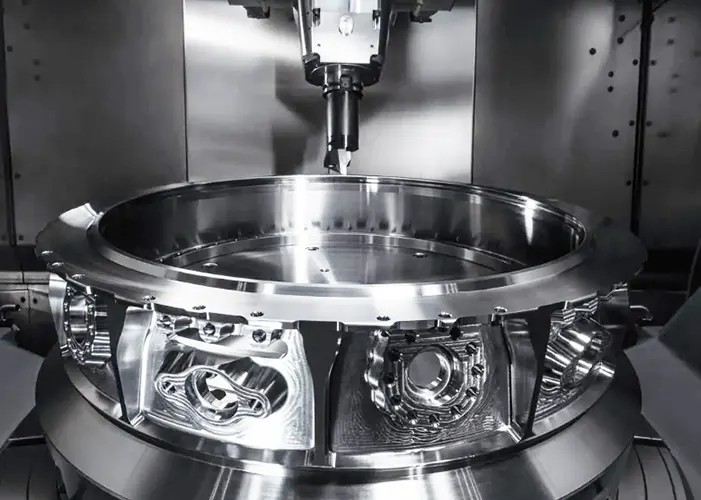
In the realm of manufacturing and precision engineering, Computer Numerical Control (CNC) machines play a vital role in automating processes and achieving impeccable accuracy.
At the heart of every CNC machine lies the intricate control system that dictates its movements with pinpoint precision. Servo motors and drives form the backbone of this control system, providing the necessary torque and speed control to maneuver the machine along its various axes.
Servo Motors: The Powerhouses of Precision
These motors are specialized motors designed to provide precise control over angular or linear position, velocity, and acceleration. These motors are equipped with built-in feedback mechanisms, such as encoders or resolvers, that constantly relay information about the motor’s actual position and speed back to the control system.
This feedback loop allows servo motors to make real-time adjustments to maintain the desired position and velocity, making them ideal for applications where accuracy and responsiveness are critical.
One of the key characteristics of servo motors is their high torque-to-inertia ratio, which enables them to accelerate and decelerate rapidly while maintaining precise control over their movements.
This high dynamic response makes servo motors well-suited for tasks that require frequent changes in speed and direction, such as cutting, drilling, and milling in CNC machining.
In a CNC machine, servo motors are typically used to drive the various axes, such as the X, Y, and Z axes, as well as any rotational axes. Each axis is controlled by a dedicated servo motor, which receives commands from the CNC controller based on the desired toolpath generated by the CAM software.
The servo motor then translates these commands into precise movements by adjusting its speed and torque to reach the target position within the specified tolerance.
Servo Drives: The Command Center of Control
While servo motors provide the physical power to drive the axis system, servo drives serve as the brain of the control system, translating commands from the CNC controller into electrical signals that regulate the motor’s speed and torque.
Servo drives are equipped with sophisticated algorithms that calculate the optimal voltage and current required to achieve the desired motion profile, taking into account factors such as acceleration, deceleration, and inertia.
One of the key functions of servo drives is to regulate the motor’s speed and torque based on the feedback signals received from the motor’s encoder or resolver. By comparing the actual position and velocity of the motor with the desired target position, the servo drive can make adjustments to ensure that the motor stays on track and follows the prescribed toolpath accurately.
Additionally, servo drives are responsible for monitoring the motor’s temperature, voltage, and current levels to prevent overheating or overloading. In the event of a fault or error, the servo drive can quickly shut down the motor to prevent damage to the system and ensure the safety of operators and equipment.
Collaboration between Servo Motors and Drives
Together, servo motors and drives form a tightly integrated system that enables precise and responsive control over the axis system in a CNC machine. The servo drive receives commands from the CNC controller and translates them into electrical signals that are sent to the servo motor to initiate the desired motion.
The feedback signals from the motor are constantly monitored and used to make real-time adjustments to ensure that the motor stays on course and follows the intended toolpath with utmost accuracy.
By working in tandem, servo motors and drives can execute complex machining operations with speed and precision, achieving results that would be impossible with conventional motors.
Whether it’s high-speed milling, intricate engraving, or precise contouring, the collaboration between servo motors and drives is essential in unlocking the full potential of a CNC machine and pushing the boundaries of manufacturing excellence.
Conclusion
In conclusion, servo motors and drives play a critical role in controlling the axis system in a CNC machine, providing the power and precision necessary to execute intricate machining operations with unparalleled accuracy.
Servo motors deliver the torque and responsiveness needed to move the machine along its various axes, while servo drives serve as the control center that coordinates the movements and ensures that the machine follows the programmed toolpath with precision.
By harnessing the synergy between servo motors and drives, manufacturers can unleash the full capabilities of their CNC machines, producing high-quality parts and products with efficiency and consistency.
As technology continues to advance, servo motors and drives will only grow more sophisticated, enabling even greater levels of control and precision in the manufacturing industry.