
With the rapid advancement of industrial manufacturing technologies, additive manufacturing and CNC machine tools have become vital tools driving innovation and development in modern manufacturing.
Additive manufacturing, particularly 3D printing technology, demonstrates immense potential across numerous fields due to its high design flexibility, minimal material waste, and rapid prototyping capabilities.
Meanwhile, CNC machine tools maintain a significant presence in many traditional machining sectors through their high-precision, high-efficiency processing capabilities.
Although differing in operating principles and application models, their integration has gradually emerged as a significant trend in manufacturing due to continuous technological advancements.
By combining the rapid prototyping capabilities of additive manufacturing with the precision machining capabilities of CNC machine tools, the manufacturing industry can not only enhance production efficiency but also provide superior solutions for complex designs and high-precision component manufacturing.
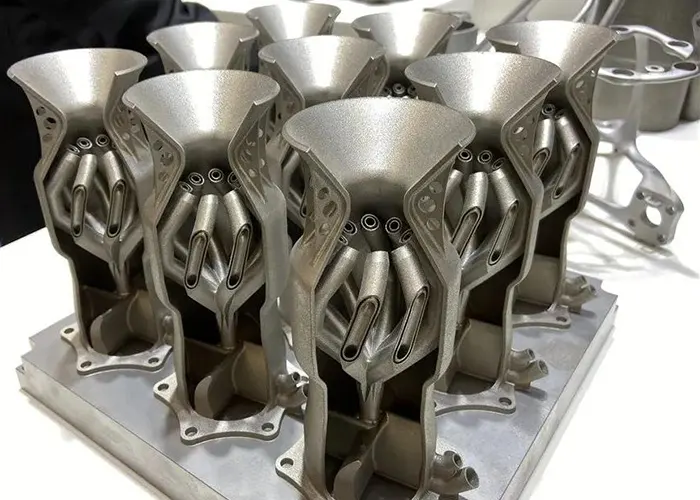
Technological Integration Trends
Current Applications of Additive Manufacturing and CNC Machine Integration
With continuous advancements in industrial manufacturing technology, the integration of additive manufacturing and CNC machines is increasingly applied across various sectors.
Particularly in aerospace, automotive manufacturing, and medical device industries, their combination offers new solutions for high-precision, high-efficiency production.
Additive manufacturing can rapidly produce components with complex geometric structures, addressing shape challenges unattainable through traditional manufacturing processes.
However, when used alone, additive manufacturing often faces issues such as poor surface quality and insufficient dimensional accuracy—areas where CNC machine tools excel.
CNC machine tools enable precise post-processing of additively manufactured components, ensuring superior surface finish and dimensional accuracy.
Today, an increasing number of additive manufacturing systems are being integrated with CNC machine tools to form multifunctional integrated equipment.
This allows both additive manufacturing and subsequent machining to be completed on the same production line, reducing time losses and costs throughout the manufacturing process.
Enhanced Production Efficiency Through Technology Integration
The integration of additive manufacturing and CNC machines is not merely a technical complement but also significantly boosts production efficiency.
Through integrated equipment, enterprises can simultaneously manufacture complex components and perform post-processing within a continuous production flow, thereby eliminating the time and costs associated with multiple equipment changes in traditional processes.
Furthermore, this integration minimizes material waste. Additive manufacturing precisely deposits material only where needed, avoiding the waste generated by removing excess material in traditional manufacturing.
CNC machine tools ensure post-processing components meet high-precision requirements, eliminating the need for secondary machining and further boosting manufacturing efficiency.
Most importantly, this integration makes manufacturing processes more flexible, better adapting to customized and personalized production demands.
In traditional production models, each modification often requires retooling equipment.
By integrating AM with CNC machine tools, production systems can rapidly adjust to meet evolving market demands.
Technological Convergence Trends in Additive Manufacturing and CNC Machining
Current Applications of Additive Manufacturing and CNC Machining Integration
With continuous advancements in industrial manufacturing technology, the convergence of additive manufacturing and CNC machining has found widespread application across numerous industries.
Particularly in sectors like aerospace, automotive manufacturing, and medical devices, this integration offers new pathways for high-precision, high-efficiency production.
Additive manufacturing can produce complex geometric components in extremely short timeframes, resolving challenges where traditional machining methods cannot fabricate specific shapes.
However, when used alone, additive manufacturing often faces issues such as poor surface quality and insufficient dimensional accuracy. This is where CNC machine tools play a crucial role.
They enable post-processing of additive-manufactured parts, ensuring the final surface quality and dimensional precision of the product.
Enhanced Production Efficiency Through Technological Integration
The integration of additive manufacturing and CNC machine tools not only demonstrates technological complementarity but also serves as a method to boost operational efficiency.
These technologies can be integrated into a single device, enabling the simultaneous production and post-processing of complex components within a continuous manufacturing process.
This significantly reduces tooling changeover time while offering lower operational costs compared to traditional production methods.
Furthermore, this integration minimizes material waste by precisely depositing material only where needed—eliminating the wasteful removal of excess material inherent in traditional manufacturing.
CNC machining achieves higher precision, eliminating the need for secondary processing and substantially boosting efficiency.
Crucially, the seamless combination of these technologies makes the entire production process more flexible and adaptable, enabling greater customization to meet individualized requirements.
Previously, production modifications required retooling for new products.
However, by integrating these two technologies—using this combined approach for production—new products can be incorporated immediately.
Challenges and Future Development Directions
Although the integration of additive manufacturing and CNC machining has yielded numerous technological breakthroughs, several challenges remain to be addressed.
The first challenge is compatibility between equipment and systems, where integration remains a technical hurdle.
Additive manufacturing and CNC machines employ distinct control systems with incompatible programming languages, creating a barrier to seamless communication.
Second is material selection. Different material types are required for additive manufacturing and CNC machining.
Choosing suitable materials and optimizing existing ones for dual compatibility presents a complex issue.
Third is the high cost of equipment. While integrating these technologies could significantly boost production efficiency, the exorbitant investment and maintenance costs make it unaffordable for many small and medium-sized enterprises.
Application Cases of Additive Manufacturing and CNC Machine Integration
Aerospace Application Case
The aerospace sector combines both technologies, utilizing additive manufacturing to rapidly produce complex internal cavity structures unattainable through traditional methods.
This approach not only reduces component weight but also enhances performance characteristics.
For instance, a domestic aerospace manufacturer employs additive manufacturing to produce intricate turbine blades, followed by CNC machining for surface finishing.
This process significantly improves blade precision and surface quality, The entire manufacturing cycle is substantially shortened, meeting the aerospace industry’s demands for high-precision, complex components.
By leveraging the rapid prototyping capabilities of AM and the precision machining of CNC tools, manufacturers can drastically reduce production cycles and costs while ensuring quality, thereby boosting aerospace engine productivity and reliability.
Application Cases in Automotive Manufacturing
In automotive manufacturing, the integration of additive manufacturing and CNC machines demonstrates distinct advantages for producing low-volume customized components with complex structural geometries.
For instance, automotive engines contain numerous parts featuring intricate structural shapes.
For these components, additive manufacturing can first produce parts with intricate internal passages and cavities, followed by CNC machining to refine external geometries, ensuring dimensional accuracy and surface quality.
One automotive parts manufacturer employed this approach for engine turbine housing components: first creating the intricate internal structure via additive manufacturing, then performing post-processing with CNC machines to meet precision machining and surface finish requirements.
Application Cases in the Medical Industry
Within the medical sector, technologies like additive manufacturing and CNC machining bridge the gap between medical device production and personalized medical equipment fabrication.
For instance, additive manufacturing is extensively used in printing prosthetics, implants, and surgical models.
It enables rapid production of customized medical devices tailored to patient needs, followed by CNC machining for final processes like grinding and polishing to ensure surface finish and dimensional accuracy.
For example, a medical device company employs additive manufacturing to customize specialized orthopedic implants for clients.
Utilizing CNC machine tools for final surface finishing, detailed machining, and other post-processing steps, it delivers fully ergonomic, personalized implant products.
This approach achieves precise preoperative diagnosis and rapid postoperative recovery while enabling tailored product designs and solutions based on individual patient requirements, significantly enhancing treatment outcomes and improving patient quality of life.
Technical Challenges and Solution Strategies
Equipment Integration and System Compatibility Issues
The primary challenge lies in integrating equipment and ensuring system compatibility.
CNC machine control systems, programming languages, and operating platforms differ significantly from those of additive manufacturing equipment, making direct interchangeability impossible.
Achieving seamless integration between the two presents a complex problem.
Significant differences exist between the two types of machinery.
For instance, additive manufacturing equipment primarily employs layer-by-layer printing to build objects, whereas CNC machine tools typically perform cutting operations based on pre-designed drawings, removing excess material to achieve the desired form.
Furthermore, since both types of machinery are designed for specialized user groups, their operating platforms also differ significantly.
For instance, additive manufacturing equipment primarily relies on specialized 3D printer control software for operation, while CNC machines often employ highly programmed methods.
These differences create substantial barriers to technical communication between devices.
To address these challenges, most manufacturers are now pursuing cross-functional integration designs. The goal is to enable multifunctional equipment to perform diverse tasks.
When equipment shares a common application control platform and adheres to unified data format requirements, it can perform both types of processing within a single workflow.
This reduces changeover time between machines and enhances overall efficiency.
Material Selection and Optimization Challenges
Additive manufacturing and CNC machining impose distinct material requirements. Selecting suitable materials and achieving seamless integration when combining these technologies presents a significant challenge.
Generally, additive manufacturing favors materials with flowability, plasticity, or formability that can rapidly solidify during 3D printing.
CNC machine tools, however, prioritize materials whose hardness, strength, and wear resistance meet high-precision machining demands.
Additionally, materials commonly used in additive manufacturing include plastics and metal powders, while CNC machining primarily processes metals and hard materials.
The disparity in materials used can lead to potential processing issues.
Consequently, new materials are sometimes developed to achieve both excellent forming results after additive manufacturing and superior mechanical properties after CNC machining.
Precision and Surface Quality Control Issues
Although additive manufacturing and CNC machines possess distinct advantages and limitations regarding precision and surface quality, integrating them while resolving their respective precision and quality control challenges remains a significant hurdle.
Additive manufacturing can produce complex geometries but typically suffers from surface roughness and lower dimensional accuracy. Post-processing with CNC machines can compensate for these shortcomings.
Additionally, compared to traditional CNC machining, additive manufacturing typically starts with lower initial precision and surface quality.
The layered material deposition process, coupled with limited controllability, can lead to deformation or micro-cracks.
Therefore, hybrid processing methods can be employed during integrated manufacturing.
Following additive manufacturing, high-precision CNC machines perform post-processing to control dimensional accuracy and surface finish.
Conclusion
The technological integration of additive manufacturing and CNC machine tools opens new possibilities for manufacturing, particularly in producing high-precision, highly complex parts where their combined capabilities demonstrate significant advantages.
Although current integration faces challenges such as equipment integration, material optimization, and precision control, advancements in intelligent and automated technologies will enhance future integration efficiency and accuracy.
Innovations in materials and the application of composite materials will further expand the integration domains of additive manufacturing and CNC machine tools, driving practical implementation across more industries.
Looking ahead, as technologies mature and equipment costs decrease, the integration of additive manufacturing and CNC machine tools will become a key driver for the transformation and upgrading of manufacturing, propelling innovation and development in the global manufacturing sector.