
Table of Contents
Sheet metal processing occupies an important position in manufacturing. It finds extensive applications across multiple industries. Typical fields include automobiles, electronics, construction and household appliances.
Market demands grow more diverse alongside technical progress. Conventional sheet metal processes fail to satisfy new requirements.
Modern production calls for high efficiency, high precision and customized output. Intelligent manufacturing becomes a major development trend for sheet metal processing. Smart technologies bring multiple benefits to production.
They lift efficiency and cut manufacturing costs. Product quality also gets improved. Manufacturers can respond better to personalized orders. These advantages help enterprises boost market competitiveness.
An Overview of Sheet Metal Fabrication Technology
Sheet metal fabrication serves as the core technology for metal sheet processing. It covers a set of complex and accurate working procedures.
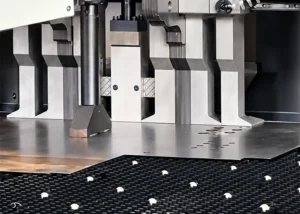
These procedures include cutting, blanking, punching, bending and press forming. Precise process parameters are essential for these operations.
Engineers also study structural design and optimization of cold stamping dies. They adjust process parameters accordingly. Operators need to master the working principles of sheet metal equipment.
They must learn proper operation and control methods. Such knowledge helps raise processing efficiency and guarantee product quality.
With the continuous evolution of technology, the sheet metal fabrication industry has embraced numerous emerging stamping technologies and new processes;
These innovations have injected strong momentum into the industry’s sustained development.
Sheet metal fabrication possesses outstanding advantages. It features high power density, reliable controllability and great flexibility.
The technology also covers a broad application scope. It stands as the preferred processing approach for cutting-edge sectors. Related fields include intelligent manufacturing equipment, flexible production lines, robots and information management systems.
Faced with growing market demand and technical challenges, the sheet metal fabrication industry is undergoing profound transformation. Automated production brings remarkable improvements to sheet metal manufacturing.
It greatly raises production efficiency and cuts labor costs. Precision machining technology has also achieved major breakthroughs. These advances push processing accuracy to new heights.
The widespread adoption of environmentally friendly production concepts is driving the industry toward greener and more sustainable practices.
At the same time, the rise of customized services has met customers’ increasingly diverse needs, further expanding the scope of sheet metal fabrication applications. The sheet metal fabrication industry will keep evolving in the coming years.
Its development targets higher precision and productivity. Environmental sustainability also becomes a core pursuit.
This trend supports the steady progress of human industrial capacity.
The Application of Intelligent Technology in Sheet Metal Processing
The Application of Intelligent Manufacturing Equipment in Sheet Metal Processing
Intelligent manufacturing equipment represents a highlight of modern manufacturing. It breaks the boundaries of conventional manufacturing systems. It acts as a core engine for industrial innovation.
This information-driven era witnesses rapid intelligent upgrading. Smart manufacturing equipment merges multiple advanced technologies.
These technologies include manufacturing, information, computer, and intelligent techniques. Cross-technology integration and innovation bring profound changes.
Manufacturing industries achieve intelligent, digital, and networked transformation. These advances supply strong momentum for modern manufacturing development.
1. Connotation and Technical Characteristics of Intelligent Manufacturing Equipment
The advancement of smart manufacturing equipment is primarily reflected in its technological integration and innovation.
It brings together a variety of cutting-edge technologies—such as high-precision machining, automated control, and digital simulation—making manufacturing processes more precise and efficient.
At the same time, through functions such as sensing, analysis, reasoning, decision-making, and control, smart manufacturing equipment enables real-time monitoring and intelligent regulation of production processes, thereby ensuring the stability and reliability of product quality.
The application of smart manufacturing equipment has significantly improved production efficiency and reduced production costs.
In traditional manufacturing, labor costs account for a significant portion of expenses;
However, through automated and intelligent production methods, smart manufacturing equipment has substantially reduced labor requirements and lowered production costs.
Furthermore, smart manufacturing equipment enables rapid mold changes and adjustments, shortening production cycles and improving production efficiency.
This gives enterprises a competitive edge in the market and lays a solid foundation for their future development.
2. Economic Benefits of Intelligent Manufacturing Equipment
More importantly, the development of smart manufacturing equipment has driven the manufacturing sector toward high quality, high efficiency, and high-value-added production.
With the adoption of smart manufacturing equipment, manufacturing methods have undergone a fundamental shift, transitioning from traditional labor-intensive to technology-intensive processes.
This transformation not only enhances the technological content and value-added of products but also encourages enterprises to place greater emphasis on product quality and brand building.
At the same time, the application of smart manufacturing equipment has also facilitated industrial upgrading and structural adjustment in the manufacturing sector, propelling it toward higher-end and smarter development.
3. Industrial Upgrading Effect of Intelligent Manufacturing Equipment
Today, the level of smart manufacturing equipment has become a key indicator of a nation’s industrialization.
A country’s level of development in smart manufacturing equipment directly reflects the competitiveness and innovation capacity of its manufacturing sector.
Globalization reshapes the landscape of industrial competition. Smart manufacturing equipment has turned into a key competition focus for countries.
Governments worldwide roll out supportive policies. These policies expand investment and support for smart manufacturing equipment.
They aim to boost the development of China’s manufacturing industry. China ranks among the world’s major manufacturing countries. A robust manufacturing sector underpins national economic growth.
It supports economic transformation, upgrading and sustainable development. Progress in smart manufacturing equipment delivers multiple benefits.
It strengthens the competitiveness and innovation capacity of China’s manufacturing industry. It pushes the industry toward high-end and intelligent development.
Such progress realizes the transformation and upgrading of the manufacturing sector.
Building Intelligent Flexible Production Lines in Sheet Metal Fabrication
With the rapid development of global manufacturing—particularly the rise of Industry 4.0 and smart manufacturing—the application of intelligent flexible production lines in the sheet metal fabrication sector has become increasingly significant.
These production lines combine state-of-the-art technologies. They integrate advanced manufacturing, information, computer, and intelligent techniques.
They lift sheet metal fabrication to a new level of automation and intelligence. Smart flexible production lines feature outstanding flexibility and high efficiency. They become a leading driving force within the sheet metal industry.
They differ from the old fixed single-function production lines. Operators can quickly tune production parameters and equipment layouts. The systems adapt to fast-changing market needs and diverse product processing requirements.
This high degree of flexibility and adaptability significantly enhances production line efficiency while ensuring the stability and reliability of product quality.
1. Overview of Intelligent Flexible Production Lines for Sheet Metal Fabrication
First, CNC punch presses and laser cutters are among the core pieces of equipment in intelligent flexible production lines.
These machines utilize high-precision CNC systems capable of precisely controlling the depth, angle, and speed of punching and laser cutting, thereby enabling precise processing of sheet metal parts.
Their machining accuracy can reach ±0.1 mm, which significantly ensures product yield rates and reduces the production of substandard and scrap parts.
Second, automatic loading and unloading equipment is also an indispensable part of the smart flexible production line.
These systems use robots or robotic arms to automatically load and unload sheet metal parts, reducing manual labor, lowering physical strain, and simultaneously improving production efficiency.
More importantly, automatic loading and unloading equipment ensures the stability and safety of sheet metal parts during the machining process, preventing equipment damage or safety incidents caused by human error.
Furthermore, automated high-bay warehouses play a crucial role as the storage system for smart flexible production lines. These warehouses utilize advanced warehouse management systems to enable the automatic storage and retrieval of raw materials.
When the production line requires a specific raw material, the system automatically locates it and delivers it to the designated position via robotic arms or conveyor belts.
This not only reduces material handling time and costs but also improves the operational efficiency of the production line.
Finally, the management software for smart flexible production lines is another crucial component.
This software integrates systems such as ERP and MES, enabling functions including production planning, progress monitoring, and the collection and analysis of production data.
This software supports real-time monitoring of production line status for enterprises. Managers can revise production schedules on time. They also optimize manufacturing workflows and keep the production line running steadily.
2. Core Equipment and Supporting Systems of Flexible Production Lines
Smart flexible production lines bring remarkable benefits to sheet metal fabrication. They raise production efficiency and stabilize product quality. These advantages help enterprises gain stronger competitiveness.
Technology keeps advancing, and market demands keep changing. Smart flexible production lines will maintain their important status in manufacturing. They push the whole industry toward higher intelligence, efficiency and green development.
The Application of Robotics in Sheet Metal Fabrication
With their unique intelligent capabilities and exceptional performance, robots are gradually transforming industrial production methods.
Not only can they follow human instructions and execute preset programs, but they can also act autonomously based on artificial intelligence algorithms, making them indispensable assistants in industrial production.
Sheet metal fabrication, as a vital component of the manufacturing industry, involves multiple processes such as welding, grinding, cutting, and bending.
These processes often require high precision and stability, and the advent of robots has perfectly met this need.
1. Application Background of Industrial Robots in Sheet Metal Fabrication
The application of robots is particularly prominent in sheet metal bending.
With their high-precision control systems and advanced algorithms, they achieve bending accuracy of ±0.05 mm—a level far exceeding that of traditional manual bending—significantly enhancing the precision and consistency of sheet metal parts.
At the same time, the high efficiency of robots has led to a significant increase in production efficiency; According to statistics, using robots for bending operations can boost production efficiency by more than 30%.
2. Robotic Bending for Sheet Metal Forming
In the welding process, the application of robots is equally remarkable.
Traditional welding often requires workers to maintain the same posture for extended periods, which is not only physically demanding but also makes weld quality susceptible to human error.
The introduction of industrial robots, however, has automated the welding process through advanced sensors and control systems.
Robots can automatically adjust the angle, speed, and force of the welding torch based on preset programs and parameters, ensuring high-quality welds.
This automation not only boosts production efficiency but also reduces operational complexity, making welding simpler and more efficient.
3. Advantages of Robotic Welding in Sheet Metal Processing
Against the backdrop of industrial upgrading and smart manufacturing, integrated industrial robotic welding technology has brought revolutionary changes to the sheet metal industry.
By combining with other smart manufacturing technologies—such as the Internet of Things (IoT), big data, and cloud computing—integrated robotic welding enables the sheet metal industry to advance toward intelligent and information-driven development.
This not only improves production efficiency and product quality but also reduces production costs, making the sheet metal industry more competitive.
Furthermore, industrial robotic welding integration plays a significant role in energy conservation, environmental protection, and personalized customization.
By optimizing welding parameters and processes, robotic welding integration can reduce energy consumption and minimize environmental pollution.
At the same time, robots can provide personalized customization based on customer needs, producing products that meet specific requirements and enhancing product value.
4. Multidimensional Benefits of Integrated Robotic Welding Systems
In the automotive manufacturing industry, the application of welding robots is particularly widespread.
Welding operations for automotive components such as frames, bodies, and chassis often require high precision and efficiency, and welding robots are ideally suited to meet these demands.
By following preset programs and parameters, they automatically complete welding tasks, thereby improving production efficiency and weld quality.
At the same time, welding robots can adapt to a variety of complex welding processes, reducing operational difficulty and costs.
Implementation of Information Management in Sheet Metal Fabrication
The trend toward automation and intelligent development in sheet metal fabrication technology has undoubtedly brought revolutionary changes to the entire industry.
As technology continues to advance, sheet metal fabrication companies face significant management challenges, and establishing an information management system has become key to addressing these challenges.
An information management system consists of multiple functional modules. These modules cover logistics, production, process technology and quality management.
They also include automated quotation, cost control and safety assurance subsystems. All these modules guarantee efficient and stable enterprise operation.
These systems operate according to pre-planned requirements, ensuring that every stage of the production process is effectively controlled.
1. Overview of Information Management Systems for Sheet Metal Enterprises
However, many large-scale sheet metal fabrication enterprises currently face the dilemma of insufficiently utilizing information after implementing information management systems such as ERP and PAL.
While these powerful management systems offer a wealth of features, their potential remains far from fully realized due to the limited amount of valid information entering the system.
This issue is particularly acute for enterprises that primarily process parts based on externally provided drawings. This is because external drawings vary widely in type and lack uniform standards;
Many drawings are non-compliant in design and representation, fail to adhere to relevant standards, or are even arbitrarily “simplified.” As a result, useful information is lost during transmission, severely impairing the normal operation of information management systems.
To address this issue, there is a growing call for the standardization and normalization of drawings. Only by establishing unified standards and regulating the design and representation of drawings can the integrity and accuracy of information be ensured during transmission.
This will fully unleash the potential of information management systems and improve the management efficiency and production quality of sheet metal fabrication enterprises.
This transformation is not only an inevitable requirement of technological progress but also the key to achieving sustainable development in the sheet metal fabrication industry.
2. Bottlenecks Caused by Non-Standard Drawings and Standardization Demand
As a key driver of transformation and upgrading for modern sheet metal fabrication enterprises, information-based management has become an indispensable path for companies to achieve efficient and intelligent development.
However, enhancing the effectiveness of information-based management cannot be accomplished overnight; It requires in-depth analysis and comprehensive optimization across multiple levels and perspectives.
Following extensive research and in-depth discussions, information-based management in the sheet metal fabrication industry should be implemented through the following three aspects.
First, we must emphasize the importance of overall planning and top-level design. Guided by the enterprise standards system, we should establish a standardized technical management system.
At the same time, we must place product structural design at the core, striving to enhance the quality and professionalism of design documents.
With automation and intelligence as our development goals, we should thoroughly explore process technologies and embed proven process outcomes into production workflows.
Second, during implementation, priorities must be clarified and progress made in stages. Industry-wide defects in product structural design deserve the highest priority.
Researchers and engineers tackle these common problems first. They promote standardized and normalized drawing management.
This practice secures the accuracy and consistency of design documents. Enterprises need to provide more professional training for structural designers.
Such training improves the technical competence of relevant staff. It also lifts the quality of engineering drawings. These efforts raise the overall standardization level of the industry.
Finally, we must place high importance on the critical role of talent in information management.
Enterprises must not only actively recruit, effectively utilize, and continuously train talent but also foster a supportive environment and atmosphere for their professional growth.
Meanwhile, relevant technical institutions should cultivate employees with specialized skills tailored to the actual needs of enterprises, thereby providing a steady stream of talent to the industry.
The Role of Intelligent Technology in Advancing Sheet Metal Processing
Intelligent technologies boost sheet metal processing in multiple aspects. They raise production efficiency and enhance machining precision.
They optimize production management and support personalized customization. These technologies also accelerate industrial upgrading.
Intelligent sheet metal equipment adopts CNC technology and automated production lines. The whole manufacturing workflow becomes automatic and intelligent.
This change brings obvious gains in production efficiency. Intelligent equipment greatly outperforms conventional manual processing.
Its production efficiency reaches two to three times that of manual methods. Enterprises benefit from substantial cuts in production costs.
In terms of improving machining precision, the application of intelligent technologies makes the sheet metal fabrication process more accurate.
The machining precision of intelligent sheet metal equipment far exceeds that of traditional manual methods, enabling it to meet the demands of more complex and high-precision products.
Advanced sensors and IoT systems support real-time production monitoring for enterprises. They help forecast equipment maintenance requirements. Equipment utilization and machining accuracy get improved accordingly.
Information management systems such as ERP and MES optimize production management. Sheet metal manufacturers rely on these platforms. They streamline production scheduling, material circulation, and quality control.
Real-time production data support fast decision-making. Enterprises gain better flexibility and adaptability in manufacturing. Intelligent technologies empower production lines to self-adjust processes.
These automatic optimizations cut energy use and lower scrap rates. IoT and big data technologies keep developing. Automated sheet metal production lines grow more intelligent and flexible.
This trend helps sheet metal firms respond faster to market changes. They deliver customized products and satisfy diversified customer demands.
Intelligent technology application fuels industrial upgrading. It pushes forward the development of sheet metal processing. It also accelerates the transformation of the whole manufacturing industry.
Enterprises introduce advanced equipment and new technologies. Their product quality and market competitiveness improve.
Production costs and energy consumption drop at the same time. These advances pave the way for sustainable development.
Conclusion
Currently, the trend toward intelligent sheet metal processing technology is becoming increasingly pronounced. Technology keeps advancing, and application scenarios keep expanding.
Intelligent sheet metal processing technology will deliver greater value. It boosts production efficiency and cuts manufacturing costs. It improves product quality and satisfies personalized demands.
Enterprises also face new challenges brought by intelligent transformation. They should take proactive measures to tackle these difficulties.
Firms strengthen technological innovation and talent training. They adapt to dynamic market changes and lift their competitiveness.
FAQ
Impedit egestas aliquet?
Lorem ipsum dolor sit amet, consectetur adipiscing elit. Ut elit tellus, luctus nec ullamcorper mattis, pulvinar dapibus leo.
Sapien class quo temporibus?
Lorem ipsum dolor sit amet, consectetur adipiscing elit. Ut elit tellus, luctus nec ullamcorper mattis, pulvinar dapibus leo.
Elementum voluptate sodales?
Lorem ipsum dolor sit amet, consectetur adipiscing elit. Ut elit tellus, luctus nec ullamcorper mattis, pulvinar dapibus leo.
Performance Analysis and Geometric Model of Ring End Mills for Five-Axis CNC Machining
October 22, 2026 No Comments
Comparative Research on Process Thinking Between Conventional Lathes and CNC Lathes for Light Industrial Machinery
October 20, 2026 No Comments