
Thin-walled parts are characterized by lightweight construction, complex structures, and low rigidity, finding extensive applications in aerospace, automotive manufacturing, precision instrumentation, and numerous other fields.
These components demand exceptionally stringent requirements for machining accuracy and surface quality.
Furthermore, their inherently thin-walled structures are prone to elastic deformation, thermal distortion, and vibration, making dimensional control challenging during processing.
During machining, workpieces subjected to cutting forces and clamping forces may develop geometric errors, leading to high scrap rates.
Traditional turning processes often fail to meet modern manufacturing demands for high efficiency, low consumption, and consistent quality due to poor machining accuracy stability, low productivity, and relatively high costs.
CNC turning technology, developed under the advancement of numerical control, effectively addresses these challenges.
Common Issues in Processing
Structural Characteristics of Thin-Walled Parts
Thin-walled components refer to parts where the ratio of wall thickness to length, diameter, or overall dimensions is relatively small.
They are characterized by lightweight construction, complex geometries, and uneven wall thicknesses.
These components are found in applications such as aircraft engine casings, lightweight automotive parts, and precision instrument housings.
Their structural designs demand high manufacturing precision, necessitating stringent requirements for mechanical stability, thermal stability, and clamping rigidity during machining.
The thin-walled structure of these parts offers low rigidity, making them susceptible to elastic deformation under cutting forces.
This can lead to dimensional deviations, surface waviness, and reduced assembly accuracy.
Thermal deformation during machining is common, amplifying processing errors.
Consequently, turning operations demand stricter control over heat sources and allowance allocation.
To prevent anisotropic machining stresses, factors such as toolpaths, cutting sequences, and cutting depth parameters must be meticulously considered throughout the process.
Common Issues in Machining Thin-Walled Parts
During the machining of thin-walled parts, common problems include deformation, vibration, unstable dimensional accuracy, and reduced surface quality.
Due to the high structural flexibility of thin-walled components, the combined effects of cutting forces, clamping forces, and cutting heat often induce “tool deflection” during machining.
Machining vibration arises from the coupling resonance between the low natural frequency of thin-walled parts and the excitation frequency of cutting forces, leading to surface defects such as tool marks, step patterns, and surface tearing.
During turning, the outer diameter expands thermally before the inner bore, causing thermal stresses that induce springback after machining and reduce dimensional accuracy.
Improper clamping can also cause stress concentration or clamping deformation, while positioning errors from repeated clamping lead to dimensional fluctuations in the part.
Application of CNC Turning Technology in Processing Thin-Walled Parts
Optimization of Process Solutions
The scientific and rational nature of the process solution directly determines the success or failure of thin-walled part machining.
Given the inherent structural characteristics of thin-walled components—such as low rigidity, uneven wall thickness, and high sensitivity to deformation—systematic optimization must address three critical dimensions:
cutting force distribution, heat source control, and allowance allocation.
The standard optimization sequence is rough machining → natural aging → semi-finishing → finishing. This multi-stage progressive approach progressively reduces stress effects and controls deformation.
In implementation, sequence planning is paramount.
During roughing, employ high cutting depth and feed rate combinations to rapidly remove bulk stock while preventing localized heat accumulation in vulnerable areas.
The natural aging phase releases residual stresses within the blank, minimizing deformation risks for subsequent operations.
During semi-finishing and finishing operations, progressively adopt combinations of shallow cutting depths, small feed rates, and high cutting speeds to minimize tool cutting forces and thermal input, thereby enhancing machining stability.
During process implementation, coordinate toolpath planning with cooling strategies.
Optimize tool entry routes to bypass structurally vulnerable zones, preventing localized wall thickness variations or cumulative deformation caused by improper sequencing.
Simultaneously employ real-time path adjustment tactics. For instance, prioritize machining high-rigidity areas before transitioning to low-rigidity sections to minimize overall stress transfer.
Based on this, employing high-pressure cooling systems or directional cooling methods to thoroughly cool the cutting zone can effectively reduce thermal deformation caused by cutting heat, thereby improving machining accuracy and surface quality.
Finally, to ensure the feasibility of the optimized solution, computer-aided manufacturing (CAM) software should be utilized for machining simulation analysis and dynamic toolpath preview.
This enables the early detection of potential interference and deformation risks.
Parameters and tool selection are then adjusted based on trial cuts, forming a complete digital machining process.
This data-driven approach not only enhances the efficiency of process design but also lays the foundation for high-quality batch production of thin-walled parts.
Application of Fixtures and Tooling Technology
Fixture design is critical for ensuring stable machining and dimensional accuracy of thin-walled components.
Due to their low rigidity and susceptibility to deformation, traditional rigid fixtures often induce additional stresses during clamping, causing elastic deformation in workpieces and resulting in dimensional deviations.
To address this issue, flexible adjustable fixtures, modular support structures, and multi-point distributed clamping methods should be adopted.
During optimization, clamping forces must be rationally distributed, with direction and magnitude controlled.
Clamping points should be positioned as close as possible to the machining area while maintaining symmetry, thereby reducing uneven stress distribution on the workpiece.
To further mitigate localized stress concentration, soft spacers (e.g., polyurethane, copper washers) should be added to the contact surfaces between the fixture and workpiece.
For thin-walled cylindrical or annular components, hydraulic floating support fixtures or vacuum suction fixtures can achieve low-stress positioning with high repeatability.
These fixtures automatically adjust support force during clamping, dynamically compensating for minor workpiece deformation.
This avoids issues like “flattening” or “deflection” caused by traditional mechanical clamping, significantly enhancing machining stability and repeatability.
High-Performance Tool Selection and Vibration Control
In tool selection, prioritize high rigidity, low vibration, and wear resistance.
Employing precision adjustable tool holders with damping structures for deep cavity or thin-walled bore turning significantly reduces cutting vibration, improving surface finish and tool life.
In practice, vibration-resistant alloy steel tool holders or tools with built-in damping systems are preferred, offering approximately 28% greater rigidity than conventional tools and effectively suppressing resonance.
For difficult-to-machine thin-walled components like stainless steel and titanium alloys, select ultra-fine-grain inserts with titanium aluminum nitride (TiAlN) coatings or polycrystalline cubic boron nitride ( ceramic tools with a cutting edge radius controlled below 0.2 mm.
Combine these with high-pressure internal cooling systems to reduce cutting temperatures, minimize tool wear, and mitigate workpiece work-hardening.
Tool Monitoring and Life Management
Implement tool monitoring and life management systems during operation, using CNC systems to track tool wear, vibration amplitude, and cutting force variations in real time.
Adjust machining parameters or replace tools promptly to achieve dynamic control and preventative maintenance.
This approach extends tool life by 10%–20% and reduces scrap rates caused by sudden tool breakage. enabling dynamic control and preventive maintenance.
This extends tool life by 10%–20% and reduces scrap rates caused by sudden tool breakage.
The synergistic application of flexible fixture design and high-performance tooling technology effectively mitigates deformation and vibration during thin-walled part machining, achieving high stability and repeatability in clamping and cutting.
This establishes a reliable process foundation for subsequent automation and intelligent machining.
CNC Systems and Automatic Programming Applications
Modern CNC systems play an irreplaceable role in machining thin-walled parts due to their high automation and precision control capabilities.
Compared to traditional processes, they achieve precise control over minute tool displacements through high-precision servo drives, motor encoders, and high-resolution feedback systems.
This makes them particularly suitable for machining parts with thin walls and complex structures, where control accuracy typically reaches ±0.001 mm.
This effectively ensures dynamic stability and consistent cutting performance throughout the tool path, minimizing tool path drift and structural deformation during machining.
For path generation, integrated CAD/CAM systems enable seamless transition from 3D modeling to toolpath creation.
Simulation software automatically optimizes cutting strategies by analyzing the workpiece model’s wall thickness distribution, mechanical properties, and thermal sensitivity.
For instance, it generates spiral paths with small depths of cut and multiple passes in vulnerable areas, while reducing cutting forces through “adaptive feed rate control” to effectively mitigate localized deformation.
Pre-processing toolpath simulation identifies potential interference points and cutting blind spots to enhance process reliability.
CNC programs written in G-code embed machining parameters, path logic, and compensation instructions.
Multi-level cutting depths combined with helical interpolation paths and internal cooling systems effectively mitigate thermal coupling effects between tools and parts.
At the intelligent level, the CNC system incorporates real-time machining error compensation mechanisms.
By linking with sensors and servo controllers, it automatically adjusts tool trajectories based on online workpiece inspection data to prevent error accumulation.
The compensation control formula for such errors is:
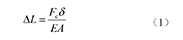
In the formula:
- ΔL represents the axial deformation compensation caused by the applied force on the workpiece.
- Fc denotes the actual cutting force;
- δ is the clamping or workpiece displacement coefficient;
- E is the elastic modulus of the workpiece material;
- A is the effective cross-sectional area subjected to force.
Based on the real-time measured Fc from the CNC system, ΔL is fed back to the system control unit to dynamically correct tool coordinates.
Such adaptive control technology is widely applied in the micro-correction process of high-precision, low-rigidity parts to enhance overall dimensional stability and machining consistency.
CNC systems integrating high-precision control, path simulation optimization, G-code programming, and error compensation models achieve intelligent control throughout the entire process—from preprocessing to finishing—through hardware-software co-design.
This approach has become a critical solution for addressing deformation challenges in thin-walled parts, driving part machining toward higher stability, lower energy consumption, and enhanced traceability.
Application Effect Analysis
To validate the effectiveness of CNC machining technology, this section conducts process optimization practices using a thin-walled component from a sensor housing at a precision instrument factory as an application case.
This part features a typical thin-walled structure made of 6061 aluminum alloy with a single-sided wall thickness of only 2.0 mm.
The machining challenges primarily focus on controlling the dimensional accuracy of the internal bore, ensuring coaxiality between the inner and outer circles, and maintaining wall thickness uniformity.
Improvements in Machining Accuracy and Efficiency
Multiple optimization strategies are employed to significantly enhance machining accuracy and surface quality in CNC processing of thin-walled components, including tool geometry and path optimization, clamping method improvements, and coolant system selection.
High-Rigidity Tool Holder and Vibration Reduction
A high-rigidity, low-vibration precision adjustable tool holder with damping structure—approximately 28% stiffer than conventional holders—was selected to reduce machining vibration and enhance cutting stability.
This effectively suppressed cutting vibration, improved surface finish, and extended tool life.
Optimized Cutting Strategy for Thin-Walled Areas
Employed layered cutting and small-depth-of-cut feed methods.
Particularly in thin-walled areas, spiral paths combined with multiple small-depth feeds reduced single-pass cutting loads, preventing deformation caused by excessive cutting. Simultaneously, precise adjustment of feed rates and cutting depths ensured efficient machining while avoiding thermal deformation.
Employ flexible, adjustable fixtures for thin-walled components prone to deformation.
Incorporate soft spacers like polyurethane or copper washers at contact points to automatically accommodate minor part distortions while maintaining machining stability.
This effectively reduces stress concentration, preventing “flattening” and “bending” issues caused by conventional fixtures.
A high-pressure cooling system directs coolant precisely to the cutting zone, rapidly dissipating heat to minimize thermal deformation caused by temperature fluctuations.
This significantly lowers cutting zone temperatures, ensuring machining accuracy and surface quality.
A comparison of machining accuracy and efficiency for different processing methods on thin-walled parts is shown in Table 1.
| Item | Traditional Machining Method | Optimized Method |
|---|---|---|
| Dimensional Accuracy / mm | ±0.03 | ±0.01 |
| Surface Roughness / µm | 3.2 | 1.6 |
| Coaxiality / mm | 0.050 | 0.015 |
| Single-Part Machining Cycle / min | 12.5 | 8.9 |
| Pass Rate / % | 92.40 | 98.50 |
Table 1. Comparison of Machining Accuracy and Efficiency of Thin-Walled Parts Using Different Processing Methods
Energy Consumption and Cost Control Effectiveness
At the energy-consumption and cost-control levels, through optimizing CNC program parameters, adopting flexible fixture designs, and minimizing excess cutting, equipment idling, and ineffective tool movements, we have successfully achieved energy savings, reduced consumption, and enhanced cost efficiency.
Optimizing the matching of spindle speed, feed rate, and cutting depth:
Adjusting cutting depth and feed rate during machining prevents cutting forces from exceeding appropriate ranges and minimizes unnecessary energy loss during cutting.
Optimizing CNC programs reduces tool idle movements and idle time, thereby enhancing machining efficiency and reducing energy consumption.
Tooling and Fixture Improvements
Implementing flexible fixture designs that not only enhance machining stability but also minimize additional energy consumption during clamping processes;
Employing high-performance tools, precision-adjustable tool holders, and high-rigidity tooling designs substantially reduces tool wear and replacement frequency. Extended tool life lowers unit tooling costs by approximately 22.7%.
Furthermore, using CAD/CAM automated programming systems to generate tool paths minimizes manual intervention and optimizes trajectories, thereby boosting productivity and reducing technical labor costs.
The comparison of energy consumption and costs before and after optimization is shown in Table 2.
| Item | Before Optimization | After Optimization |
|---|---|---|
| Energy Consumption per Unit / (kW·h) | 1.21 | 0.92 |
| Material Removal Rate per Unit / (cm³·min⁻¹) | 54.20 | 67.80 |
| Tool Cost per Unit / Yuan | 4.70 | 3.63 |
| Manufacturing Cost per Unit / Yuan | 38.50 | 30.80 |
Table 2. Comparison of Energy Consumption and Cost Before and After Optimization
Conclusion
With the advancement of smart manufacturing and big data technologies, thin-walled part machining techniques will undergo further optimization.
By refining fixture designs, enhancing the integration of CNC systems with tool monitoring, and implementing real-time adjustments through artificial intelligence, future machining precision and efficiency will be significantly improved.
Future research should focus on tool design, path optimization, material innovation, and the application of intelligent monitoring technologies to propel thin-walled part machining toward higher precision and greater efficiency.