
What is flatness in CNC machining?
TonZaMaking
Introduction
Flatness is a critical aspect in CNC machining that engineers and manufacturers need to pay close attention to. Achieving flatness in machined parts is essential for ensuring proper fit, function, and performance in various applications.
What is Flatness in CNC Machining?
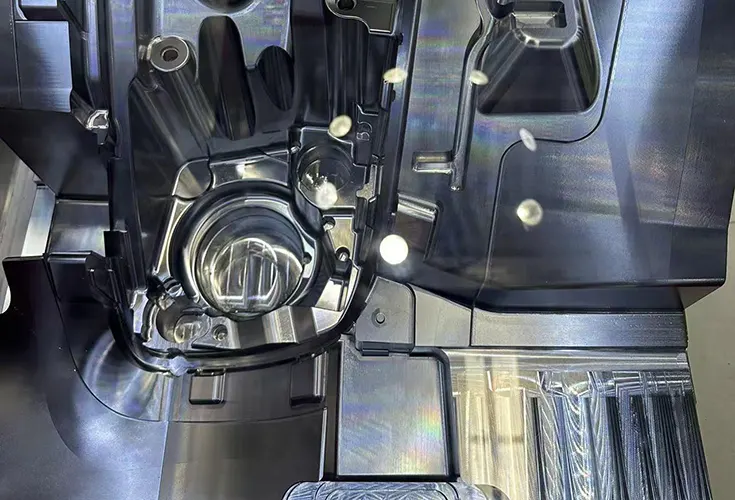
Flatness in CNC machining refers to the deviation of a surface from an ideal flat plane. It is a measure of how level and uniform a surface is across its entire area.
In machining, achieving flatness is crucial for ensuring that parts fit together properly, reduce the risk of leaks, vibrations, or other issues that can arise from uneven surfaces.
Flatness is one of the key geometric tolerances specified in engineering drawings to indicate the allowable deviation from a perfectly flat surface.
It is typically expressed in terms of a specific distance or tolerance zone within which the surface must lie to be considered flat.
Flatness is particularly important in applications where precision and accuracy are critical, such as in aerospace, automotive, medical, and semiconductor industries.
Ensuring flatness in machined parts can have a significant impact on the overall performance and reliability of the end product.
Importance of Flatness in CNC Machining
Flatness is essential in CNC machining for several reasons:
- Proper Fit: Ensuring flatness in machined parts is essential for achieving proper fit and alignment in assemblies. Parts that are not flat can lead to issues such as misalignment, interference, or gaps.
- Sealing: In applications where sealing is critical, such as in gaskets or sealing surfaces, flatness is crucial for ensuring a tight seal and preventing leaks.
- Surface Contact: Flat surfaces provide better contact and distribution of forces, which is important for applications where load-bearing capacity is essential.
- Precision: Flatness is a key factor in achieving overall dimensional accuracy and precision in machined parts.
- Performance: Parts with flat surfaces tend to have better performance in terms of stability, wear resistance, and overall functionality.
Measuring Flatness in CNC Machining
Flatness in CNC machining is typically measured using precision instruments such as coordinate measuring machines (CMMs), surface roughness testers, profilometers, or optical comparators.
The most common method for measuring flatness is by comparing the actual surface profile against a reference plane using established measurement techniques.
Flatness is usually specified as a maximum allowable deviation from the reference plane, expressed in terms of a specific distance or tolerance zone.
For example, a flatness tolerance of ±0.001 inches means that the surface must lie within 0.001 inches of a perfectly flat plane.
Some of the common measurement methods for flatness include:
- Three-Plate Method: This method involves placing three precision plates on the surface to be measured and observing the contact points to determine flatness.
- Surface Profilometer: This method uses a stylus or laser to measure the surface profile and calculate flatness based on deviations from the reference plane.
- CMM Measurement: Coordinate measuring machines can be used to measure flatness by scanning the surface and creating a 3D model to analyze deviations from the reference plane.
- Optical Comparator: This method uses optical magnification and projection to compare the surface profile against a reference plane and assess flatness.
Controlling and Improving Flatness in CNC Machining
Controlling and improving flatness in CNC machining can be achieved through various techniques and strategies. Some of the common methods used to enhance flatness include:
- Proper Fixturing: Ensuring proper fixturing of the workpiece is essential for minimizing distortion and achieving flatness in machining. Using stable and robust fixtures can help reduce vibrations and ensure consistent results.
- Tool Selection: Choosing the right cutting tools and parameters is crucial for achieving flatness in machining. Selecting tools with the appropriate geometry, sharpness, and coatings can help improve surface finish and flatness.
- Optimized Machining Strategies: Implementing optimized machining strategies such as proper toolpath selection, feed rates, and cutting speeds can help reduce tool deflection and improve flatness in machined parts.
- Material Selection: Using materials with good machinability and stability can help achieve better flatness in CNC machining. Selecting materials with low internal stresses and consistent properties is important for minimizing distortions.
- Post-Machining Processes: Utilizing post-machining processes such as grinding, lapping, or honing can help improve flatness by removing surface imperfections and achieving tighter tolerances.
Conclusion
Flatness is a critical aspect in CNC machining that plays a key role in ensuring proper fit, function, and performance in machined parts.
Achieving flatness requires attention to detail, precision, and the use of appropriate measurement techniques and strategies.
By understanding the importance of flatness, measuring it accurately, and controlling and improving it through effective methods, engineers and manufacturers can achieve high-quality and reliable components that meet the most demanding specifications.