
What is facing operation in CNC machining?
TonZaMaking
In CNC machining, a facing operation is a core material-removal process used to generate a flat, accurate surface that is perpendicular to the tool axis or the spindle axis of the machine. It is one of the most frequently applied operations in both CNC milling and CNC turning, and it often serves as the starting point for precision machining.
Facing Operation in CNC Milling
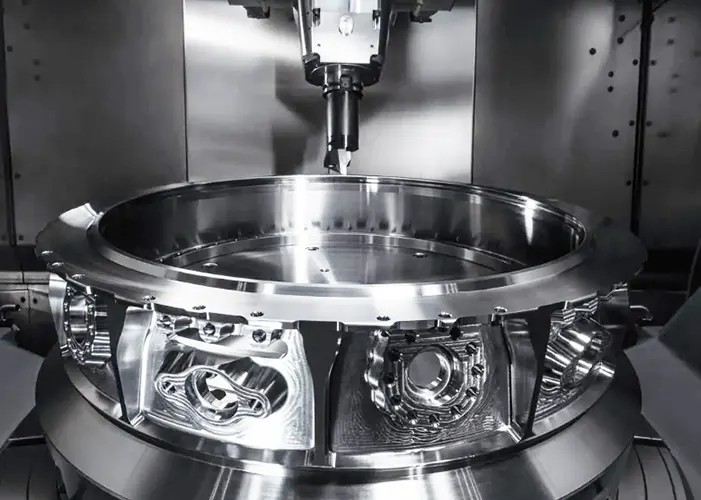
In CNC milling, facing is used to machine the top surface of a workpiece to a uniform height and surface finish. A rotating cutting tool—typically a face mill, shell mill, or large-diameter end mill—moves across the workpiece in programmed tool paths while removing a consistent layer of material.
Process Characteristics
- The cutting tool rotates around its axis while feeding laterally across the surface
- Material is removed evenly to achieve flatness and parallelism
- Multiple passes may be required for rough facing and finish facing
- Tool paths often follow zigzag, one-way, or spiral strategies
Applications
- Creating a flat reference (datum) surface for subsequent machining operations
- Reducing stock thickness to a precise dimension
- Improving surface finish and geometric accuracy
Facing in CNC milling is critical for parts that require tight flatness tolerances, such as machine bases, fixture plates, and structural components.
Facing Operation in CNC Turning (Lathe Facing)
In CNC turning, facing refers to machining the end face of a cylindrical workpiece. The part rotates in the spindle, while a single-point cutting tool moves radially from the outer diameter toward the center of the part.
Process Characteristics
- Produces a flat surface perpendicular to the spindle axis
- Controls and finalizes part length
- Eliminates surface irregularities from sawing, forging, or casting
Applications
- Preparing raw stock before external or internal turning
- Ensuring accurate overall length in shaft-type components
- Improving end-face surface finish and squareness
Facing on a lathe is essential for achieving dimensional consistency and proper alignment in rotating components.
Key Objectives of a Facing Operation
Regardless of the machine type, facing operations are performed to:
- Establish accurate reference surfaces
- Ensure flatness, perpendicularity, and dimensional control
- Improve surface quality and machining stability
- Prepare the workpiece for high-precision follow-up processes
Summary
A facing operation in CNC machining is a foundational process that creates flat, perpendicular surfaces with high accuracy.
Whether performed on a milling machine or a lathe, facing directly affects the precision, repeatability, and overall quality of the finished component, making it indispensable in modern CNC manufacturing.