

What is 3 axis CNC machine?
TonZaMaking
A 3-axis CNC machine is a computer-controlled manufacturing system that moves a cutting tool or workpiece along three linear directions—X, Y, and Z—to precisely remove material and create finished parts.
Despite the rapid adoption of 4-axis and 5-axis technologies, 3-axis CNC machines remain the most widely used equipment in modern manufacturing because they offer an optimal balance between accuracy, cost, flexibility, and ease of operation.
This guide is written for manufacturing engineers, product designers, procurement teams, and industrial buyers who want a clear, technically accurate understanding of 3-axis machining.
By the end of this article, you will understand how 3-axis CNC machines work, what they can and cannot produce, how they compare with multi-axis systems, and when they are the most economical and practical choice for real-world production.
What Is a 3-Axis CNC Machine?
Simple Definition
A 3-axis CNC machine is a numerically controlled machine tool that performs machining operations by moving along three mutually perpendicular linear axes while the cutting tool rotates at high speed.
The machine executes programmed instructions automatically, ensuring consistent geometry, repeatability, and dimensional accuracy across parts.
It is important to distinguish between machine axes and cutting directions. While the cutting tool may approach the workpiece from different directions through repositioning or re-clamping, only three linear axes can move at the same time during machining.
Three Linear Axes Explained
The X-axis controls left-to-right movement, the Y-axis controls front-to-back movement, and the Z-axis controls vertical up-and-down motion. Together, these three axes define all linear positioning in a standard CNC machining system.
Any point in the machine’s working envelope can be reached by combining movements along X, Y, and Z, which is why most prismatic and planar geometries can be manufactured efficiently with 3-axis equipment.
(On a webpage, this section is typically supported by a simple coordinate diagram showing X, Y, and Z directions relative to the table and spindle.)
How Does a 3-Axis CNC Machine Work?
CNC Control and Toolpath Execution
The workflow begins with a digital part model created in CAD software. This model is translated into machining instructions using CAM software, which generates toolpaths and converts them into G-code.
The CNC controller interprets this code and coordinates axis motion, spindle rotation, and feed rates in real time.
Modern CNC controllers can process thousands of blocks per second, ensuring smooth interpolation between axis movements and minimizing positioning errors, even during complex contouring.
Cutting Tool and Spindle Motion
In 3-axis machining, the cutting tool rotates via the spindle while the machine axes control its relative position to the workpiece. Accuracy depends on the balance between spindle speed, feed rate, and depth of cut.
For example, aluminum parts may be machined at spindle speeds exceeding 12,000 rpm, while hardened steel requires lower speeds but higher rigidity.
The controlled interaction between rotation and linear motion allows tight tolerances—commonly ±0.01 mm, and in optimized conditions ±0.005 mm—to be achieved consistently.
Workpiece Fixturing and Setup
Most 3-axis machining follows a single-face machining principle, meaning features are produced from one primary direction. The accuracy of the entire process depends heavily on fixturing quality and setup precision.
Misalignment during setup directly translates into dimensional error, which is why skilled setup practices remain critical even in automated CNC environments.
Types of 3-Axis CNC Machines
3-axis CNC technology appears in several machine categories, each optimized for specific materials and part geometries.
3-axis CNC milling machines are the most common and are ideal for flat surfaces, pockets, and prismatic components.
3-axis machining centers extend milling capability by integrating drilling, tapping, and tool-changing functions, with vertical machining centers (VMCs) being the dominant configuration in general manufacturing.
3-axis CNC lathes with live tooling qualify as 3-axis machines when linear motion along X, Z, and an additional controlled axis is used for milling features on cylindrical parts without removing the workpiece.
3-axis CNC routers are optimized for wood, plastics, composites, and soft metals, prioritizing speed and large work envelopes over cutting rigidity.
Other specialized 3-axis systems include engraving machines and 3-axis plasma or waterjet cutters, where axis motion controls the cutting head rather than a rotating tool.
What Can a 3-Axis CNC Machine Produce?
Typical Part Geometries
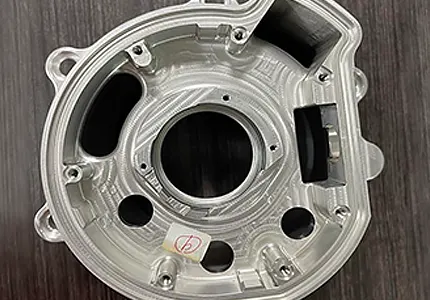
3-axis CNC machines excel at producing flat surfaces, slots, pockets, drilled holes, and straightforward 3D contours. As long as features are accessible from one direction, high precision and excellent surface finish can be achieved.
However, true undercuts or features requiring tool access from multiple angles typically require repositioning or multi-axis equipment.
Common Machining Operations
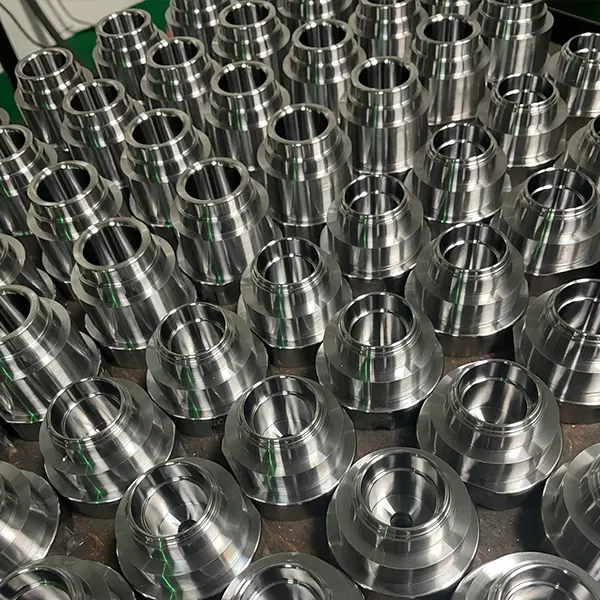
Standard operations include milling, drilling, tapping, facing, and pocketing.
In many industrial environments, over 70% of machined components can be fully produced using these operations on 3-axis equipment alone, making it the backbone of CNC production worldwide.
Industries That Use 3-Axis CNC Machines
In automotive manufacturing, 3-axis CNC machines are widely used for brackets, housings, and structural components. In aerospace, they are applied to non-complex structural parts, panels, and tooling.
The medical device industry relies on 3-axis machining for surgical instruments, fixtures, and precision tooling where repeatability is critical.
Electronics manufacturers use 3-axis CNC machining for heat sinks, frames, and enclosures, while mold and tooling shops rely on it for mold bases, electrodes, and fixtures.
Across general industrial manufacturing, 3-axis CNC machines dominate prototyping and low-to-medium volume production due to their flexibility and cost efficiency.
Advantages of 3-Axis CNC Machines
One of the key advantages of 3-axis CNC machines is their high dimensional accuracy, typically achieving tolerances between ±0.01 mm and ±0.02 mm in standard production environments.
Compared with 5-axis systems, machine acquisition costs are often 30–50% lower, and tooling requirements are simpler and less expensive.
Programming is more straightforward, reducing engineering time and minimizing the risk of errors. Setup is also faster, which makes 3-axis machining particularly effective for prototyping and batch production where lead time is critical.
Limitations of 3-Axis CNC Machines
Despite their versatility, 3-axis CNC machines cannot machine undercuts or complex multi-angle features in a single setup.
Parts with features on multiple faces often require re-clamping, which increases cycle time and introduces cumulative tolerance stack-up.
Tool accessibility is another limitation; deep cavities or steep walls may require long tools, increasing the risk of vibration and reduced surface quality.
Acknowledging these limitations is essential for selecting the right machining strategy and maintaining realistic expectations.
3-Axis vs 4-Axis vs 5-Axis CNC Machines
| Feature | 3-Axis CNC | 4-Axis CNC | 5-Axis CNC |
|---|---|---|---|
| Simultaneous axes | 3 linear | 3 linear + 1 rotary | 3 linear + 2 rotary |
| Part complexity | Low to moderate | Moderate | High |
| Typical tolerance | ±0.01 mm | ±0.01 mm | ±0.005 mm |
| Setup requirements | Multiple for complex parts | Reduced | Minimal |
| Machine cost (relative) | 1.0× | ~1.5× | 2–3× |
| Typical use cases | General machining, prototypes | Indexed features | Aerospace, complex geometry |
A 3-axis machine is often the best choice for cost-sensitive projects, parts with accessible geometries, and situations where fast turnaround outweighs extreme geometric complexity.
How to Choose the Right 3-Axis CNC Machine
Selecting the right machine depends on part geometry, material type, tolerance requirements, production volume, and budget.
Aluminum, mild steel, stainless steel, engineering plastics, and composites are all well-suited for 3-axis machining.
When tolerances tighten below ±0.005 mm or features demand multi-angle access, upgrading to multi-axis machining becomes a practical consideration rather than a luxury.
Is a 3-Axis CNC Machine Right for Your Project?
If your part can be machined from one primary direction, does not require undercuts, and must be produced quickly at competitive cost, a 3-axis CNC machine is often the most efficient solution.
In real-world manufacturing, many successful production programs deliberately avoid unnecessary axis complexity to maintain robustness, predictability, and cost control.
Frequently Asked Questions
A 3-axis CNC machine can handle moderately complex parts but struggles with features requiring multiple approach angles. Most metals and engineering plastics can be machined effectively on 3-axis equipment.
Typical achievable tolerances range from ±0.01 mm to ±0.005 mm under controlled conditions.
In general, 3-axis machining is significantly cheaper than 5-axis machining due to lower machine cost, simpler tooling, and reduced programming time. Lead times are often measured in days rather than weeks for standard components.
Conclusion
3-axis CNC machines remain an essential pillar of modern manufacturing because they deliver reliable accuracy, fast setup, and cost-effective production for a vast range of industrial components.
While multi-axis systems enable greater geometric freedom, 3-axis machining continues to be the smartest choice for many applications.
By understanding both its capabilities and limitations, manufacturers can make informed decisions and achieve optimal results.
If you are evaluating a machining project or exploring CNC manufacturing services, working with an experienced machining partner ensures that the right technology is applied—efficiently, accurately, and economically.
References
- Groover, M. P. Fundamentals of Modern Manufacturing, Wiley.
- ISO 2768 – General tolerances for linear and angular dimensions.
- Kalpakjian, S., Schmid, S. Manufacturing Processes for Engineering Materials, Pearson.
- CNC Machine Tool Performance Standards, ISO 230 Series.

3 axis
What is the difference between 3 axis and 4 axis CNC machine?
Want to know the difference between 3 axis and 4 axis CNC machines? 3 axis machines move in three directions, while 4 axis machines move ...
Read More → 3 axis
What is 3 axis CNC machine?
A 3 axis CNC machine is a type of milling machine that can move in three directions - X, Y, and Z axes. It is ...
Read More → 3 axis
What can a 3 axis CNC machine do?
A 3 axis CNC machine can perform cutting, drilling, and milling operations on a variety of materials with precision and accuracy. This versatile tool is ...
Read More → 3 axis
How 3 axis CNC surface grinding improves productivity?
Learn how implementing 3 axis CNC surface grinding can significantly boost productivity in your manufacturing process. Discover the benefits and advantages of this technology in ...
Read More → 3 axis
How much would a basic 3-axis CNC mill cost?
"How much would a basic 3-axis CNC mill cost? img_url. The price of a basic 3-axis CNC mill can vary depending on the brand and ...
Read More → 3 axis
What file format for 3 axis CNC machine?
When working with a 3 axis CNC machine, it is important to use the correct file format. Common file formats include G-code, DWG, and STL. ...
Read More → 3 axis
What is a 3 axis CNC lathe?
A 3 axis CNC lathe is a cutting-edge machine used in manufacturing processes to shape materials with precision. These lathes operate in three directions simultaneously, ...
Read More →